

How to make the store more like an app, or an app more valuable in-store

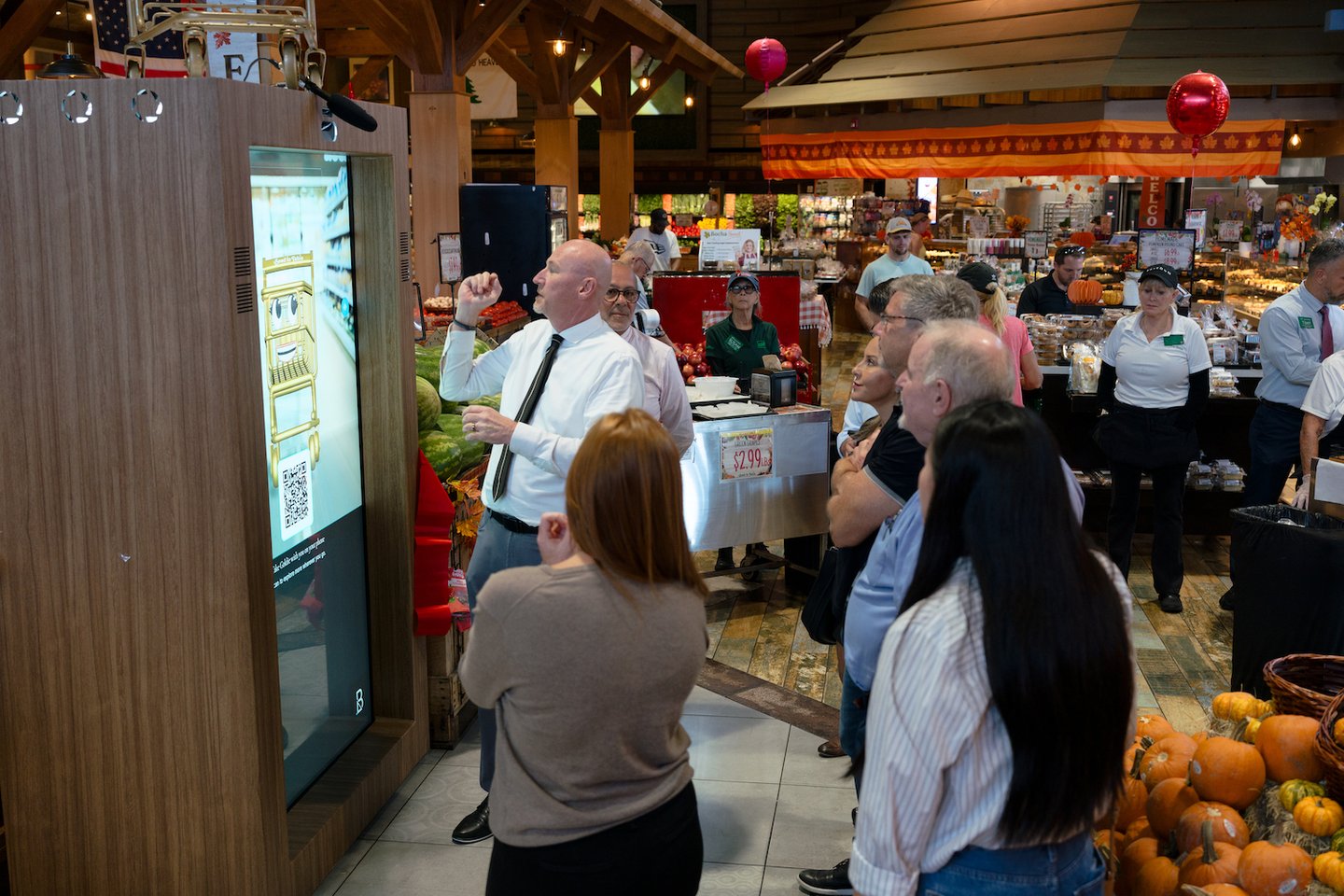
Ahold Delhaize USA, Seed to Table, and Walmart are all using tech to bring their mobile and brick-and-mortar shopping experiences closer together.
Most customers use apps daily, and more than half of online purchases are now made via mobile device. Providing an in-store experience that duplicates or integrates with shopping with an app is a good way to respond to the mobile-centric lives many consumers lead.
Let’s follow up on how Ahold Delhaize USA and Seed to Table are providing app-like store environments, and how Walmart is connecting its stores to its app.
Ahold Delhaize USA - kiosks
Ahold Delhaize USA is in the midst of major enterprise-wide efforts to update its technology infrastructure. These include in-store “Savings Stations” discount kiosks. Located near store entrances, Savings Stations enable customers to scan their loyalty card or enter the phone number associated with their account to instantly load weekly digital coupons, activate personalized rewards offers, print customized savings lists and enroll in loyalty programs.
Savings Stations kiosks bring functionalities typically associated with an app into the store and let customers manually take advantage of them. They make the brick-and-mortar store itself function more like a mobile app, reducing “app fatigue”; and also open access to the benefits of an app for customers who would rather not download one or are not comfortable using one.
The grocery conglomerate is also building on its deployment of NCR Voyix technology by implementing the Voyix Commerce platform to help modernize key store capabilities including POS, self-checkout, pharmacy, and fuel operations. The rollout is underway with new POS technology now available in 100 stores, with the installation continuing over the next several years.
[READ MORE: Ahold Delhaize USA modernizes store operations]
Seed to Table - holograms
Located in Naples, Fla., Seed to Table is a specialty organic grocer that sells fresh produce from its own 3,500-acre-farm and also features in-store restaurants and bars and entertainment options such as live music.
The retailer is launching an immersive in-store experience featuring a seven-foot hologram developed by holographic communication platform Proto Hologram and interactive in-store technology provider Live Buzz Intelligence which greets customers at the entrance with information and advertising.
The hologram also features “Goldie,” a golden shopping cart with a face, voice and personality. Shoppers can ask Goldie questions, get recommendations and discover products. Goldie can remember preferences and previous interactions, with the intent of creating a more personalized experience over time.
Seed to Table’s hologram essentially serves as a humanized in-store shopping agent, providing both novelty and genuine interactivity that an app-based chatbot could not easily duplicate, scaled for all shoppers regardless of what they have loaded on their phones.
And throughout the store, participating brands use QR-enabled shelf displays provided by Live Buzz Intelligence to turn product discovery into an experience. Shoppers can scan to discover a brand story, learn about a product, receive an offer or recommendation, and explore content created specifically around what they’re seeing.
This also provides shopping app-like functionality to customers without requiring them to download anything beyond a QR code reader.
Walmart – LED integration
Walmart is taking a slightly different approach of equipping its app and AI shopping agent known as Sparky with a new tool called "Shop to Light" that helps in-store shoppers find items by telling the store system which product location to light up, and a small LED flashes on the shelf label to help the customer spot it.
Shop to Light uses the LED already built into Walmart’s digital shelf labels, which the chain is rolling out across all its U.S. stores. A similar concept, “Pick to Light,” is being used to help Walmart employees quickly find the products needed to fill online pickup or delivery orders. Now that feature is also being embedded into Sparky, which can search for an item, pin its aisle on the store map, and then light up the shelf label when the customer arrives.
Walmart is turning its mobile app and AI shopping agent into a navigational tool for its stores, creating an experience of locating products that is more like that of a website, where customers pull up desired items using a search bar or button. The convenience of online search is combined with the immediacy of brick-and-mortar commerce, providing mutual benefit for customer and retailer.