
How the supply chain is getting smarter, more automated & less wasteful

Retailers are focusing on supply chain efficiency and sustainability.
Thanks to ongoing developments in artificial intelligence, automation and sustainable practices and materials, retailers continue enhancing their supply chain operations. Following are highlights from leaders in the evolution of planning, distribution and waste elimination.
Pep Boys – AI planning
Auto repair and tire retailer Pep Boys is enhancing end-to-end planning with an artificial intelligence-driven platform. The company is deploying AI-enabled RELEX Solutions technology to optimize forecasting and replenishment across its and distribution center network.
Leveraging the RELEX platform, Pep Boys seeks to account for complex demand influences like seasonal demand shifts, regional buying patterns, and promotion-driven spikes. By obtaining this insight, the retailer hopes to ensure optimal inventory placement and availability across its network.
Pep Boys will also use the platform to refine exception management with intelligent alerts, improve DC prioritization, streamline vendor collaboration, and optimize product allocation across its network.
RELEX partner Wysupp will implement the solution, which integrates forecasting, replenishment, and inventory visibility into a single, unified platform.
Gap Inc. - Distribution center robots
Casual apparel giant Gap Inc. has long been utilizing robots in its supply chain. In 2025, the company began utilizing Boston Dynamics "Stretch" robots to automate the inbound processing of boxes into distribution centers in Tennessee, Ohio, New York, and California.
Stretch robots are designed to supplement employees and reduce injuries while increasing the volume of inventory that can be received into a distribution center. One to two warehouse associates in the inbound department can now process 10,000 cases in a day; a task that would have taken 12 to 15 employees before the robots were implemented.
In addition, the retailer has deployed hundreds of Kindred Sort picking robots in its U.S. distribution centers, and also designed and integrated an Exotec Skypod System to optimize its returns picking process.
Best Buy - Zero waste
Supply chain sustainability is an increasingly important topic, with many younger consumers in particular factoring the environmental responsibility of a retailer’s supply chain operations into their purchase decisions.
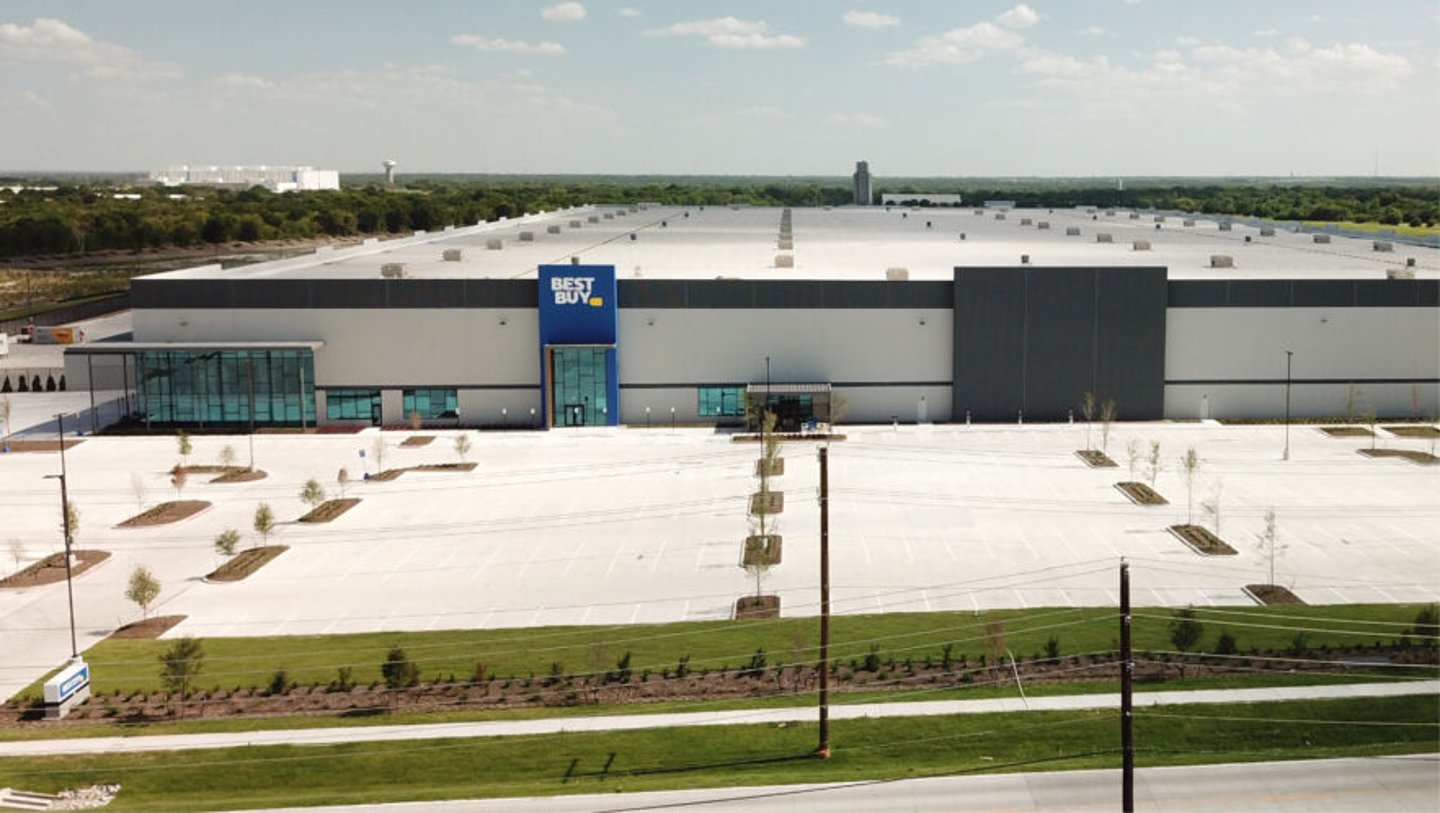
Consumer electronics giant Best Buy has certified all its 29 supply chain facilities as zero waste. Best Buy recently achieved TRUE (Total Resource Use and Efficiency) certification, a designation from Green Business Certification Inc., the non-profit organization behind the LEED green building rating system, by diverting more than 90% of their waste from landfills.
The company began working toward this goal in 2021, when its Chino, Calif. facility became the first Best Buy location to achieve TRUE certification for zero waste. As of 2024, 20 Best Buy supply chain facilities had received TRUE ratings.
Steps Best Buy has taken to reduce waste at its supply chain facilities include:
- Reusable pallets: Best Buy reuses pallets and totes to support the circular economy and reduce environmental impact.
- Labeled bins: Each facility has implemented color-coded waste, recycling and compost bins to make it easier for employees to sort waste correctly and help divert waste from landfills.
- ‘Green Teams’: Employee engagement is a key component of our waste reduction strategy. Employee volunteers run “Green Teams “in each facility to help support waste diversion goals and educate and train colleagues.
- Condensed Styrofoam: Throughout Best Buy’s supply chain, foam materials like Styrofoam are broken down and condensed to cubes through a densifier to increase truck capacity and make shipping more efficient. The material is then shipped to partners who repurpose it into new packaging, building materials and a variety of other products such as picture frames.
In other efforts to improve the sustainability of its supply chain facilities, a new solar field at Best Buy’s distribution center in Dinuba, Calif. generates approximately 5.87 million kilowatt-hours (kWh) of electricity each year.
[READ MORE: Best Buy opens solar sites at store, distribution center]
This solar field will power the equivalent of 559 homes. The energy generated by the system will help run the distribution center, reducing Best Buy’s energy usage.