Why retailers are putting next-gen AI in the palm of the worker’s hand

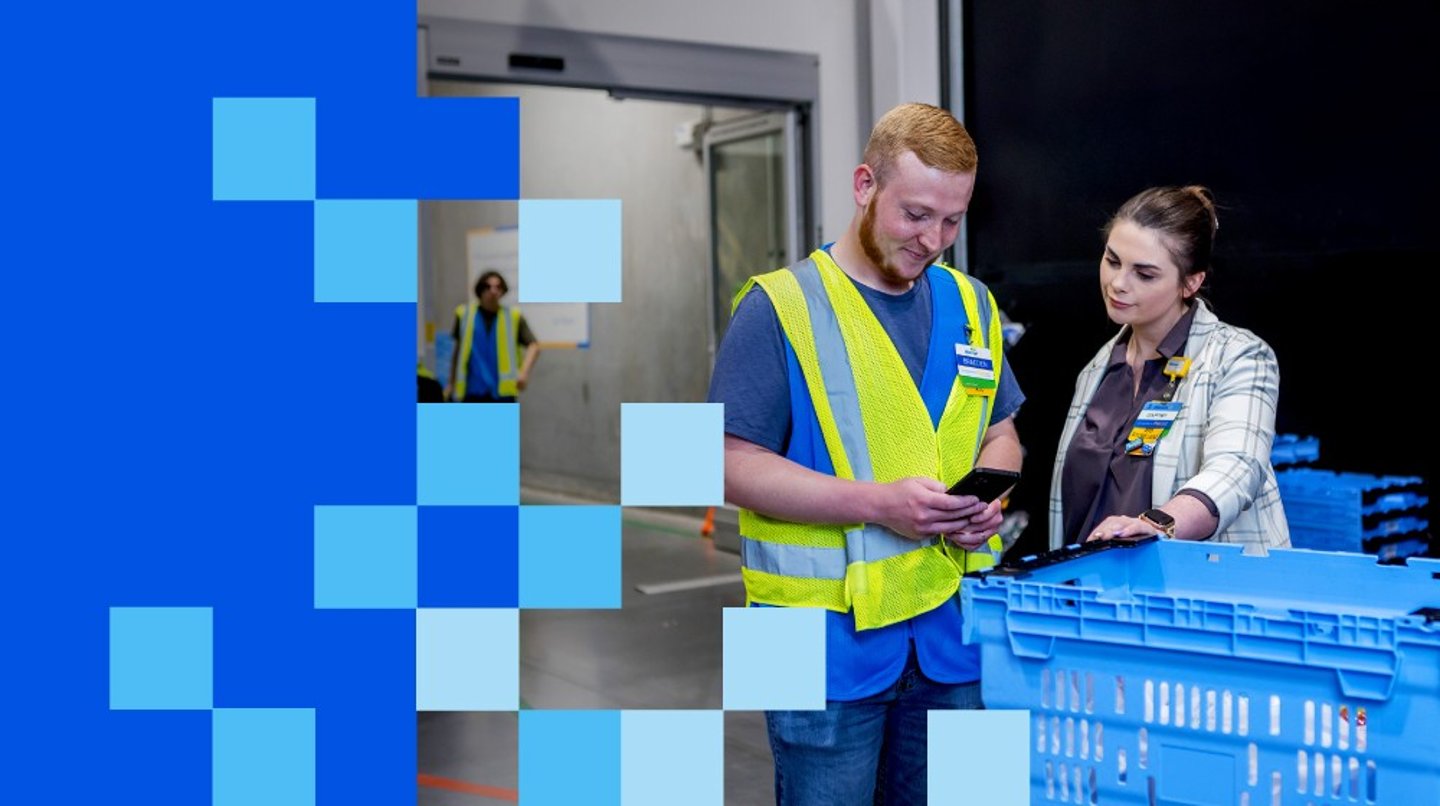
Retailers are increasing the versatility and efficiency of their employees by equipping them with mobile artificial intelligence.
In a recent column, I wrote about how integrating generative AI and/or agentic AI technology into a consumer app can help retailers enhance purchase, discovery and loyalty activities for their customers.
This week, I’m looking at how retailers are also placing next-gen AI capabilities into their employees’ hands (or eyes, in one case) to achieve benefits across the front and back ends of the enterprise:
Store associates
Sometimes it’s easy to forget that your associates come from the exact same pool of consumers as your shoppers. They are just as likely to own a smartphone and use it as their primary means of digital interaction.
Similarly to extending your omnichannel environment into stores for customers with a mobile-focused approach, you can provide the same seamlessly blended store environment for your employees.
Numerous retailers provide associates with apps that enable them to look up “endless aisle” inventory, check out customers from any point in the store, and perform clienteling tasks such as checking shopper behavioral history and loyalty data to provide superior customer service.
Walmart has taken a leading position in providing these types of capabilities and more to store employees via mobile AI. The discount giant is providing a new suite of AI tools to store employees that can be accessed via its associate app.
[READ MORE: Walmart equips store associates with mobile AI tools]
These solutions aim to eliminate friction, simplify actions and make work more efficient, intuitive and rewarding, according to the company. Initially available for overnight stocking, an AI-directed workflow tool ensures that employees have clear guidance on where to focus their efforts.
Other mobile AI features Walmart is rolling out to its employees include a generative AI solution to turn process guides into clear, step-by-step instructions, giving associates support to questions such as, "How can I process a return without a receipt?"; as well as a pairing of RFID technology with its VizPick AR tool released in 2021 that helps associates find merchandise to stock on the sales floor and reduce backroom inventory management time.
And available in 44 languages, Walmart’s AI-based translation tool enables conversations in both text-to-text and speech-to-speech formats and is enabled with Walmart-specific knowledge. For example, if a customer asked for something specific like “Great Value orange juice,” the solution would recognize "Great Value" as a Walmart house brand and keep it properly translated or referenced.
Distribution center
AI capabilities can also be extended to distribution center workers using mobile devices. For example, Albertsons is rolling out its AI-based, patent-pending Intelligent Quality Control tool in its distribution centers via tablet-based app.
Built in-house by’ technology and supply chain teams, the solution uses Google Cloud’s Gemini Enterprise agentic AI platform, including Vision AI and Gemini models, to support the retailer’s produce quality inspection teams.
Seamlessly integrating into the distribution center workflow, the quality inspector feeds an image of the produce into the AI app, which runs on Google Cloud’s Gemini Enterprise Agent Platform and evaluates visual characteristics against Albertsons’ established quality standards.
The system then provides a rating and recommendation designed to be accurate and consistent to the inspector for approval.
Training/onboarding
In addition to empowering store and distribution center associates with AI-equipped apps, retailers should seriously consider migrating their recruitment/onboarding/training efforts to a mobile platform, if they haven’t already.
As 7-Eleven head of talent acquisition Rachel Allen explained in a recent exclusive interview, since unifying the recruitment and hiring process for its 7-Eleven and Speedway banners on a Workday tech stack that enables QR code- and text-enabled application and interview scheduling, the convenience giant has automated 95% of the hiring process while drastically increasing speed-to-hire and reducing applicant ghosting.
“We have saved our store leaders about more than 40,000 hours a week, which is over 2 million hours a year, in time saved by automating 95% of the hiring process for them, which was a huge win,” Allen said in the interview. “7-Eleven is also now able to be more strategic in where we put our recruitment marketing dollars to the level of an individual store, as far as where we may need have some needs.”
And when training is delivered via mobile device, employees can view training modules at their own pace, rewatch videos as needed, and participate in gamification and other features that enhance and reinforce the process.
Field employees
Finally, workers in the field can benefit from being provided with next-gen AI capabilities via mobile app and device, even if that device is not a smartphone. For example, Amazon is developing wearable smart glasses technology designed to serve as a driver’s companion throughout the delivery process.
The smart glasses display essential information directly in the driver's field of vision, enabling them to scan packages, follow turn-by-turn walking directions, and capture proof of delivery without needing to utilize a smartphone.