Consumer Analytics

  • Survey: Consumers buying more specialty foods

    New York -- Consumers are choosing specialty foods over conventional foods at record levels, according to research from the Specialty Food Association.
     
    Nearly 75% of U.S. consumers report making specialty food purchases this year, a major increase since the economic downturn of 2009 when only 46% reported that they bought these high-quality products. Consumers surveyed say they spend about one quarter of their at-home food dollars on specialty options like artisanal chocolates, cheeses and oils.

  • GNC acquires U.K. online retailer Discount Supplements

    Pittsburgh -- GNC Holdings has acquired A1 Sports Limited, which operates under the Discount Supplements moniker. The company is the leading multi-brand sports nutrition e-commerce retailer in the United Kingdom. Terms of the deal, which was funded with cash on hand, were not disclosed.
     
    Following the acquisition, GNC.com, LuckyVitamin.com and Discount-supplements.co.uk will continue to operate as separate businesses, each with its own product offerings and target customers.

  • MyCoupons.com launches responsive design site

    Pittsburgh – Internet coupon provider MyCoupons.com is launching a responsive design website. The new website presents a cleaner, contemporary, responsive design that adapts itself to all digital platforms: web, tablet, and mobile.

    The new infrastructure also improves the user experience with better and faster search capabilities for the thousands of coupons and promotional codes available on the site from more than 9,000 online merchants.

  • Shop.org: Retail-related Internet time on mobile devices increases

    According to Shop.org, more than half (55%) of all retail-related Internet time in June 2013 originated on smartphones and tablet devices combined, compared with just 45% originating from desktop devices. 

    Shop.org teamed up with comScore and the Partnering Group to generate the report, released at Shop.org's Annual Summit, which found that smartphone Internet usage in June 2013 totaled 44% of retail Internet minutes, up from 17% in June 2010. Tablet internet usage accounted for 11% of total minutes on retail sites.

  • Report: Young Halloween shoppers seek low prices

    Los Angeles – Halloween shoppers age 18-34 are seeking online promo and coupon codes. According to the new Trend Report on the shopping behavior of young adults for the upcoming Halloween holiday from BluePromoCode.com, 49% of young adult Halloween shoppers use promo codes when purchasing costumes online and 57% stated their decision to purchase a costume was effected by the availability of a retailer’s coupon code.

  • The Future of Retail: How Mobile Will Help Shape the Stores of Tomorrow

    By Bill Loller, VP, IBM Smarter Commerce

    The mobile revolution has ushered in a new era in retail shopping, transforming the experience into a quick, easy and hyper-personal exchange which is all conducted from the touch of a mobile device. As the trend and spending power behind online shopping continues to grow, brick-and-mortar locations are tasked with finding ways to incorporate mobile technology into the in-store experience in order to stay relevant, competitive and alive.

  • Fitpulse Studio by Sears integrates Netpulse One platform

    Hoffman Estates, Ill. – Sears Holdings will integrate the Netpulse One digital platform into its FitStudio by Sears online fitness offering.

    FitStudio by Sears is an online community providing resources such as exercise programs, video workouts, and expert advice. NetpulseOne will enable FitStudio to deliver an enhanced customer experience by providing the ability to connect to fitness equipment, mobile apps and personal fitness devices as well allowing FitStudio members to set goals and participate in challenges and events.

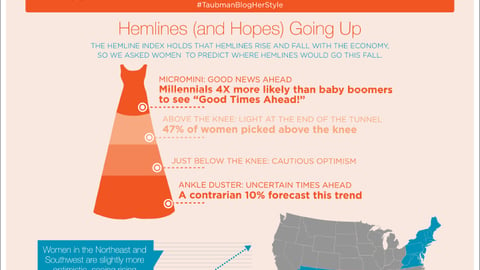
  • Hemline trends suggest that stock prices will rise

    George Taylor, a University of Pennsylvania Wharton School professor, came up with a theory called The Hemline Index in 1926. The theory identifies women’s hemlines as a leading economic indicator. Rising hemlines indicate that stock prices will begin to rise in the not-to-distant future. Falling hemlines indicate the falling stock prices and economic decline.

X
This ad will auto-close in 10 seconds