News Briefs
- 7/22/2026
Hy-Vee introduces 30-minute delivery and pickup
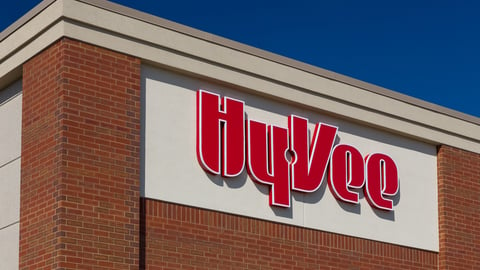
Hy-Vee Inc. is the latest grocer to provide an ultra-fast delivery/pickup option.
The regional Midwest grocery/convenience/drugstore chain is now offering a 30-minute delivery service called “Get it faster” for a fee of $14.95, or $4.95 for members of the Perks+ loyalty program. Get it faster 30-minute pickup of online orders costs $9.95, or free for Perks+ members.
To place an order for 30-minute delivery or pickup, shoppers can select “Get it faster” at online checkout. Hy-Vee standard delivery costs $9.95, with delivery in as little as two hours. Orders must meet a $29.99 minimum, or a $4.95 service fee will be added. Standard two-hour pickup is free.
Hy-Vee has been expanding its ability to offer digital pickup and delivery services in the past two years, including partnerships with Instacart and DoorDash and the integration of food tech SaaS company Deliverect into each of the Grille Express stations in its Fast and Fresh Market convenience banner.
Ultra-fast delivery comes of age
Notably, Walmart and Amazon have both been expanding the availability of their 30-minute delivery offerings for grocery, CPG and other products across the U.S. But they are not pioneers in the ultra-fast delivery space.
[READ MORE: How to keep up with Amazon and Walmart ultra-fast delivery]
Albertsons has offered 30-minute delivery in partnership with DoorDash since 2021 and began providing its own 30-minute delivery service called “Flash” in 2023. In addition, Stop & Shop, Giant Company and Kroger all launched 30-minute delivery partnerships with Instacart in 2021.
Headquartered in West Des Moines, Iowa, Hy-Vee Inc. is an employee-owned corporation operating more than 560 retail stores across eight Midwestern states - Iowa, Illinois, Missouri, Kansas, Nebraska, South Dakota, Minnesota and Wisconsin - with sales of more than $14 billion annually.
- 7/21/2026
Amazon Business reaches $60 billion edit

- 7/21/2026
AI hits high usage rates among shoppers

Artificial intelligence tools are becoming an accepted part of the modern shopping journey.
More than two-thirds (68%) of surveyed users of Zip Co. Ltd. digital financial services reported using an AI shopping tool within the past three months, while 65% of those respondents said they engage with AI at least weekly. Eight-in-10 (79%) respondents who shop with AI use it for research and learning, while 66% use it to compare products, brands or services and 77% say AI has some or a lot of influence on their purchase decisions.
In addition, nearly half of surveyed AI shoppers (48%) said the technology has helped them make purchase decisions faster, while more than one-third (35%) said it has introduced them to new products or brands they may not have otherwise considered.
Other findings from the entire survey cohort include:
- Despite growing adoption, 79% of respondents say they want full control over final purchase decisions.
- Slightly more than half (51%) of respondents say they would be comfortable with AI autonomously completing a purchase on their behalf.
These findings are correlated in a recent survey from marketing agency LDWW. Roughly 70% of respondents said they shop with AI today and plan to use it even more in the future. In addition, data from marketing technology provider Bloomreach reveals that more than 75% of consumers have leveraged next-gen AI solutions to help them shop in the last six months.
[READ MORE: AI-based shopping is coming of age — here's how]
“AI is reshaping how Americans shop, and our shoppers are leading that shift," said Joe Heck, U.S. CEO., Zip Co. Ltd. "Whether it's researching products, comparing alternatives, or validating a purchase, AI is becoming an increasingly important part of the shopping journey."
Research was conducted via an online survey of 1,755 US Zip shoppers.
- 7/21/2026
Meijer slashes prices for back-to-school; 50-plus items under $1

Meijer is the latest retailer to offer deep discounts in what has turned out to be one of the most value-driven back-to-school shopping seasons ever.
The Michigan-based retailer said it is dropping prices by up to 50% on nearly 200 essential items to help families prepare for the upcoming school year. The offer includes more than 50 school supplies for less than $1, including both Meijer and national-brand favorites such as pencils, crayons, markers, folders, notebooks, binders, erasers and more. Some of the items are priced at $0.25.
Meijer is also discounting groceries families often purchase for the back-to-school season, including many breakfast and lunch items for under $2.
Earlier this month, Walmart said is offering its lowest prices since 2019 on the 14 most popular school supplies found on classroom lists across the country.
"Back-to-school season is an exciting time, as families prepare to help their kids start the year strong," said Don Sanderson, chief merchandising and marketing officer at Meijer. "We're committed to making it easy for families to find great value on school supplies, clothing, and everyday groceries in one stop. By expanding the number of discounted items, we're helping families check everything off their lists and head into the school year feeling confident and ready."
The privately-owned, family-operated Meijer operates more than 500 supercenters, grocery stores, neighborhood markets and express locations throughout the M
- 7/20/2026
JCPenney’s back-to-school deals include low-priced haircuts

JCPenney is touting its stores as a value-based, one-stop shopping destination for back to school.
The department store retailer’s seasonal offerings include haircuts for students and teachers at JCPenney Salons with prices starting at $12. The promotion runs through Sept.19. (Also through Sept. 19, teachers also can get an extra 10% off on their purchases.)
In other back-to-school deals and kicking off on Aug. 2 and running through Aug. 27, Penney is featuring kid’s and teens’ essentials under its Price Lock program, which locks in discounted prices on key clothing and footwear items. This year’s lineup includes $6 tees, shorts and leggings, $8 Izod polos and $14 denim and kids’ casual shoes.
The company is also bringing back its “Really Big Deals “ promotion, which drops new “unreal” deals every weekend from Friday through Sunday. It runs Aug. 7 through Sept. 7.
[READ MORE: JCPenney offers shopping discount tied to gas receipts]
This year's back to school season comes as multiple surveys confirm that shoppers are focused on price over brand loyalty.
JCPenney, part of Catalyst Brands, operates more than 650 stores in the United States and Canada.
- 7/20/2026
Cisco: Retailers see AI as necessary despite security risks

While senior retail technology executives recognize the value of artificial intelligence, they also view it as a source of potential threats.
Half of senior IT and networking leaders surveyed by Cisco for the study “Retail in the Age of AI” are actively upgrading their campus and branch network infrastructure to handle the capacity demands of AI. And three-in-four (76%) respondents agree that delays in modernization put their AI initiatives at risk, while 46% cite bandwidth and capacity demands as their top AI-driven campus and branch network challenge.
More than seven-in-10 (72%) respondents say their ability to meet customer expectations is at risk if their networks cannot support AI and 71% agree that failure to modernize could mean missed business opportunities such as revenue, loyalty, and market share.
In addition, 68% of respondents say that operational efficiency is at risk without AI-capable infrastructure and 62% say falling behind competitors leveraging AI more effectively is a real and growing risk
AI security issues
The survey also examined how AI is impacting retail network security efforts. Almost half (48%) of respondents cite keeping the network secure as their top operational challenge.
Close to eight-in-10 (78%) respondents report that AI has significantly expanded their attack surface in the last year. Almost seven-oin-10 (68%) say AI workloads have introduced new blind spots in security monitoring and 67% say the distributed nature of AI makes it harder to maintain consistent security policies.
[READ MORE: KPMG: Cybersecurity spending rises as attacks increase]
Given these findings, it is not surprising that 85% of respondents have implemented additional security controls specifically for AI workloads. However, 68% say threats are evolving faster than their ability to adapt
Cisco surveyed 292 senior IT and networking leaders in the retail sector as part of a larger survey of 3,400 technology executives.



 Show More