Predictive Analytics

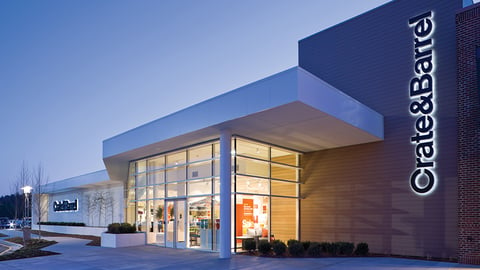
  • Crate and Barrel puts mobile BI in associates’ hands

    The best way to drive a top-notch in-store experience is to give associates insight into as many real-time data sources as possible.   
  • Report: Malware attacks drop, but ransomware, IoT threats increase

    As malware attacks drop, it is becoming clear that cyber-criminals’ weapons of choice are shifting — and retailers need to be ready.   That’s “2017 SonicWall Annual Threat Report,” which is compiled from data collected throughout 2016 by the SonicWall Global Response Intelligence Defense (GRID) Threat Network. This includes daily feeds from more than 1 million security sensors in nearly 200 countries and territories.  
  • More bad news for department store sector — from Moody’s

    A less than stellar holiday season for U.S. department stores has led Moody's Investors Service to revise its forecasts downward for the sector's operating income.   In its new report, the rating agency said it now expects 2016 aggregate operating income to decline 18%, rather than 11%, and for sales to also decline in the year ahead.  
  • Whole Foods uses customer data to improve category management

    Whole Foods Market, which is known for its premier shopping experience and customer service, wants to up the ante — especially among loyal shoppers.    By partnering with global customer science company dunnhumby, the natural foods grocer will use customer data and insights to evolve its category management and merchandising efforts. Specifically, the chain will apply customer data models, science, and industry-leading processes to make store-level merchandising decisions based on specific customer needs.  

  • AI helps lingerie brand bolster revenue by 60%

    Cosabella has found a way to future-proof its business, and simultaneously drive sales.   The luxury lingerie brand had no trouble attracting shoppers. But to ensure longevity, brands must convert contacts into loyal customers if they want to grow their market share. Cosabella took a proactive step in this process by adopting an artificial intelligence (AI) platform from Emarsys, to revolutionize the role of its marketers.  
  • Cybersecurity report reveals who consumers trust most in securing data

    When it comes to securing their online data, Americans have more confidence in online marketplaces than traditional retailers.   Fifty-four percent of Americans who shop online trust online marketplaces such as eBay and Amazon, with their financial information, according to a report by Blumberg Capital. In contrast, only 33% of consumers trust established retail brands such as Walmart, Gap, Target, and Macy’s.    
  • Report: Super Bowl pays off for online grocers

    Not only was the 2017 Super Bowl a game for the record books, it also drove shoppers to their favorite e-grocers to prep for the big game.   As time-pressed Americans football fans shopped with online grocers for game day necessities, they spent more than $150.18 per order — just a few cents more than the average cart size of all goods purchased on Black Friday, which was $149.68.  
  • Footwear retailer embarks on supply chain transformation

    To keep up the pace of its growth — and continue delivering merchandise to the right location at the right time — The Aldo Group is adding a new supply chain platform.   The footwear brand operates a complex omnichannel supply chain that supports wholesale customers, franchise and company-owned retail locations, as well as its direct-to-consumer operations. This requires enterprise-wide visibility, as well as the flexibility to anticipate, plan for and respond to changing consumer preferences.  
  • Report: Fast-fashion giant uses Google app to customize dresses

    H&M is saying yes to what is being described as a “data dress.”   The fast-fashion retailer is teaming up with Google to create and sell frocks based on customer-specific data tracked by an Android app, reported The Verge.   
  • Tech Bytes: Lessons learned from holiday 2016 can drive mobile conversions going forward

    Mobility’s influence on retail sales has never been stronger. Too bad the same can’t be said for its impact on conversions.   I know what you are thinking — the industry had a stellar holiday shopping season, and it was driven by mobile. Indeed, the 2016 holiday season brought in a total $91.7 billion in online sales, an 11% increase year-over-year. Mobile alone brought in a total of $28.43 billion in revenue, a 23% increase over last year, according to Adobe.   
X
This ad will auto-close in 10 seconds