Predictive Analytics

  • Holiday competitiveness: Walmart vs. Amazon

    Did Walmart's $3.3 billion acquisition of e-tail startup Jet — the largest buyout in American e-commerce history — help it this holiday season?     A new report from Ugam finds Walmart's first holiday season following its acquisition of Jet.com last summer saw fewer out-of-stocks, but that the chain still has room for improvement on pricing and assortment.  
  • Study: Online shoppers not always ready to buy

    While the path-to-purchase often starts online, a majority of interactions with a brand's website do not end in conversion.   In fact, 92% of consumers’ initial visit to a brand's website doesn’t lead to a sale, according to “Reimaging Commerce,” a study from Episerver. The study tapped more than 1,100 consumers to learn the importance of relevant and engaging content throughout the purchase journey.  
  • Buckle personalizes in-store experiences

    Personalization is at the core of Buckle’s success.    However, engaging customers differently requires a deep understanding of each shopper, and leveraging specific details to foster long-term relationships. Buckle is improving its personalization efforts through a new cloud-based solution designed to create the high-touch, individualized shopping experiences the chain has built its brand on.  
  • Furniture chain improves supply chain visibility

    The key to omnichannel success is visibility — both internally with business partners, and externally among customers.  
  • Retail fraud attempts up substantially

    Retail sales weren’t the only thing that rose during the 2016 holiday season.    Fraud attempts increased by 31% during the past holiday season, according to data from ACI Worldwide, which, on the positive side, found the number of overall transactions increased by 16%.   
  • Traditional Stores Get Smarter and Better Connected

    In their e-commerce operations, retailers have long had access to limitless data about customers and transactions. They’ve become adept at using this information to deliver personalized communications and targeted campaigns to customers as they shop online.    Unfortunately, the same could not be said for in-store shopping. Retailers have had no way of knowing what customers were doing in their stores from the time they entered the front door until they checked out at the POS system.  
  • Report: Future of retail IoT more than beacons

    Omnichannel is so 2016, with mPOS, staff handhelds/wearables, camera analytics, interactive mirrors with AI, chatbots, and VR already shaping up as this year’s overused retail tech buzzwords.   At least that's according to ABI Research, whose new report outlines important trends — including 3D sensing — that it believes, while still under the radar, should be top priorities on retailers' technology agendas as they move toward a “smart” retail future.    
  • European office supplies retailer drives customer conversions

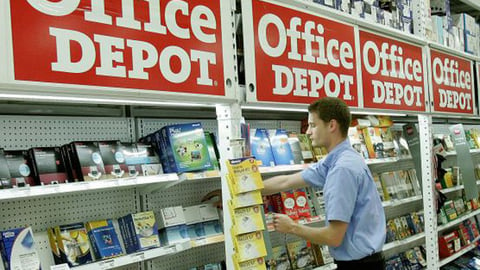
    Customer engagement requires visibility into a shopper’s preferences and path-to-purchase behavior.   By using a cloud-based platform to merge experiences across a customer’s shopping journey, Office Depot Europe will better understand and meet the needs of each individual customer, regardless of where, when, and how they interact with the brand.   
  • Study: The first ‘digitally native’ generation shops in stores

    Generation Z grew up online, but that doesn’t mean that’s where they do all their shopping.    Sixty-seven percent of Gen Z — the first “digitally native” group to grow up not knowing a world before cellular phones, smartphones and other digital devices — said they shop in a bricks-and-mortar store most of the time, with another 31% shopping in-store sometimes, in a new survey by IBM and the National Retail Federation.  
  • Can E-Commerce and Sustainability Co-Exist?

    Technology is transforming the retail landscape as we know it. The Census Bureau estimates that U.S. online retail sales were $97.3 million in second quarter 2016, a 15.8% increase from the previous year. According to Forrester, that growth is expected to continue with U.S. online retail sales anticipated to exceed $520 billion by 2020. Globally, online sales are growing three-times faster than GDP.  
X
This ad will auto-close in 10 seconds