Artificial Intelligence

  • Amazon blows past earnings forecasts

    Amazon on Thursday posted its eight straight quarter of net profitability, fueled by growth in e-commerce sales and its lucrative cloud service platform, Amazon Web Services.   Amazon easily topped earning expectations for its first quarter, ended March 31, reporting $1.48 per share, above the $1.12 Wall Street expected. Net income rose to $724 million from $513 million in the year-ago period.  
  • Target extends solar commitment with two innovations

    Target Corp. is extending its progress to renewable energy and making progress on its goal to have 500 buildings with rooftop solar panels by 2020.   
  • Report: Is ‘Apple Cash’ on the horizon?

    Apple may be the next company to provide a money-transfer service.   Sources said Apple has recently held discussions with payments industry partners about introducing a program that would allow iPhone owners to send money to each other digitally, according to ReCode.   If Apple’s plan pans out, its service will rival offerings from big U.S. banks, as well as PayPal, its millennial-popular subsidiary Venmo, and Square Cash, the report said.  
  • Study: Most retail associates will use mobile solutions within three years

    More retailers are putting mobile devices into their associates’ hands.   Momentum is so strong that within three years, 89% of retailers will give their associates access to mobile solutions, according to “The Mobile World of Retail,” a report from Boston Retail Partners. BRP surveyed the top North American retailers to explore the current state of how mobile technology is shaping retail capabilities, priorities and processes.   
  • Online marketplace’s styling service gets personal

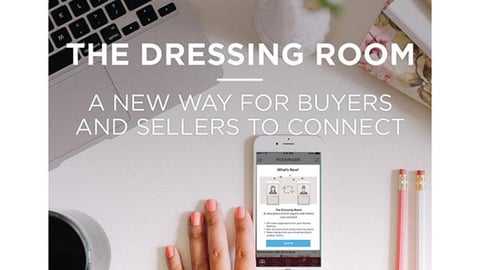
    Poshmark is expanding its one-to-one shopping experience.   With the launch of Posh Dressing Room, the retailer is connecting buyers with a personal “Seller Stylist,” a move that fosters the experience of shopping in a physical boutique. The service makes online shopping easier and more customized for consumers, and enables its sellers to expand their online boutiques, according to Poshmark.  
  • Report: Robot ‘dog’ tests deliveries in Boston

    A new four-legged friend is roaming Boston neighborhoods, and it can bring shoppers more than their newspaper or slippers.   Spot, a four-legged, dog-like robot from Boston Dynamics, is programmed to deliver packages to consumers’ front doors, according to ReCode.  
  • Report: Amazon explores the value of self-driving vehicles

    Always in search of more efficient, cheaper delivery methods, Amazon is exploring a new avenue.   The online giant has created a think tank that is evaluating how driverless vehicles could improve package delivery speeds, according to NewsMax.   The group, which is comprised of 12 members, began brainstorming on the initiative more than a year ago. However, the group is not designing a fleet of driverless vehicles.   
  • Study: Key decision makers look to AI for ongoing success

    Artificial intelligence (AI) is increasingly topping IT wish lists as a means of improving business decisions and providing personalization.   That’s according to a new report from PwC, “Bot.Me: A Revolutionary Partnership.” The study, surveyed consumers and business decision makers on AI’s impact in the business world, the evolution of AI acceptance by consumers and AI’s changing role in addressing socioeconomic issues.   
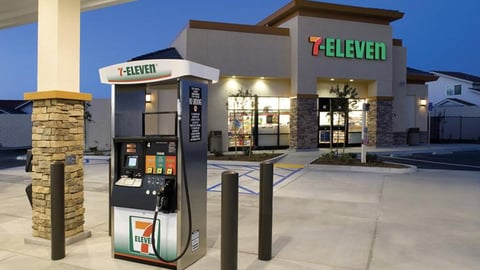
  • Report: 7-Eleven Japan and competitors launch next-gen POS

    A convenience store giant has a solution that it hopes will solve a labor shortage — and simultaneously speed up checkout.   7-Eleven Japan is teaming up with four other major convenience store operators in the country to introduce radio frequency identification (RFID)-based point-of-sale solutions — a move that will automate the checkout experience and fight an employee shortage, according to Bloomberg.  
  • Report: Online beauty consumers not very loyal to retailers

    Digital shoppers enthusiasm for buying beauty products online doesn’t translate into retailer loyalty.    While online sellers of beauty and personal care products continue to capture more market share, online shopper loyalty seems to be elusive, according to report by A.T. Kearney.    
X
This ad will auto-close in 10 seconds