Budgets/Spending/Market Size

  • Study: Mobile drove back-to-school e-commerce sales

    Mobile commerce made the grade this back-to-school season, contributing to a 3% increase in overall e-commerce sales.   This was according to research from retail search marketing company NetElixir. The firm said mobile orders were up by 44%, and revenue was up by 64%. Mobile average order value (AOV) increased by 13%, indicating that consumers are now more comfortable using mobile devices for more expensive purchases.   
  • Study: Hispanic customers going online for holiday shopping

    With access to more disposable income, Hispanic consumers will up their holiday spending this year — especially through e-commerce.  
  • Report: Mobile e-commerce sales to hit $250 billion by 2020

    Mobile e-commerce sales will account for nearly half of all online commerce in just a couple of years.    This was according to “A Mobile Mindset,” the second volume in the five-part series, “The 2017 UPS Pulse of the Online Shopper.” The report, from UPS, is based on input of over 5,189 comScore panelists who made at least two online purchases in a typical three-month period.  
  • Forecast: Holiday sales to be impacted by ‘lackluster’ wage growth

    One of the first holiday quarter sales forecasts is out of the gate.   Global retail consulting firm Kantar Retail predicts that U.S. retail sales will grow 3.7% in the fourth quarter of this year. The forecast represents an improvement relative to weak growth of only 2.9% in the year ago period. But it is underwhelming compared to average growth prior to the recession of 5.0%, according to Kantar.   
  • NRF revises 2017 sales growth forecast

    The National Retail Federation on Wednesday has lowered its annual retail sales forecast, citing government data revisions.   Retail sales for 2017 are now expected to increase between 3.2% and 3.8%, down from the 3.7% - 4.2% growth the NRF predicted earlier this year. The revision comes after the Census Bureau lowered its retail sales figures, and the Bureau of Economic Analysis downgraded its personal income and consumption figures.   
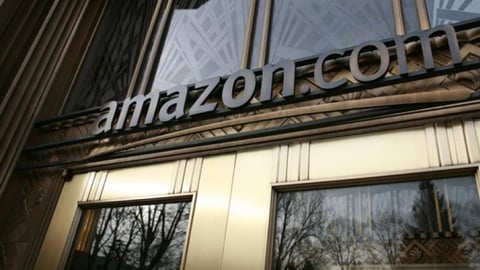
  • Report: The cities that line up with Amazon's headquarters criteria are...

    It didn't take long for cities across North America to throw their hat in the ring when Amazon announced it had initiated a search for a city in which to build a second headquarters.    In seeking proposals, Amazon laid out some very definite criteria, including population requirements (one million or more). CNBC examined the criteria and suggested that five cities are worthy of a close look by Amazon: New York, Atlanta, Chicago, San Francisco and Boston.   
  • Amazon positioned to give food and beverage e-commerce a much needed spark

    Based on its recent bold expansion into the grocery segment, Amazon is primed to give food and beverage e-commerce a shot of adrenaline.   This was according to “U.S. Grocery Market Focus: The Amazon Food Shopper,” a report from Packaged Goods.    According to the firm’s estimates, Amazon's 2016 online food and beverages sales, including AmazonFresh, is at $1.5 billion. This volume is expected to rise to $2.3 billion in 2017, giving the company a 19% share of the online market.

  • Consumers buoyant in August as confidence rises

    Consumer confidence increased in August to the second highest level since late 2000.    The Conference Board's Consumer Confidence Index rose to 122.9 in August, up from 120 in the prior month. Economists had expected the index to rise to 122.5 in August.    The Present Situation Index increased from 145.4 to 151.2. The Expectations Index rose marginally from 103.0 last month to 104.0.  
  • The top destination for U.S. holiday shoppers will be....

    Expect an Amazon-dominated holiday retail season among U.S. consumers this year, with the e-commerce giant being the top destination for shoppers.  
  • Planalytics issues initial estimate on lost retail sales due to Hurricane Harvey

    Hurricane Harvey, the first Category 4 Hurricane to make U.S. landfall since Charley in 2004, is poised to have the same, if not larger, economic impact.  
X
This ad will auto-close in 10 seconds