
Adobe: AI e-commerce traffic soars, generates sales in September

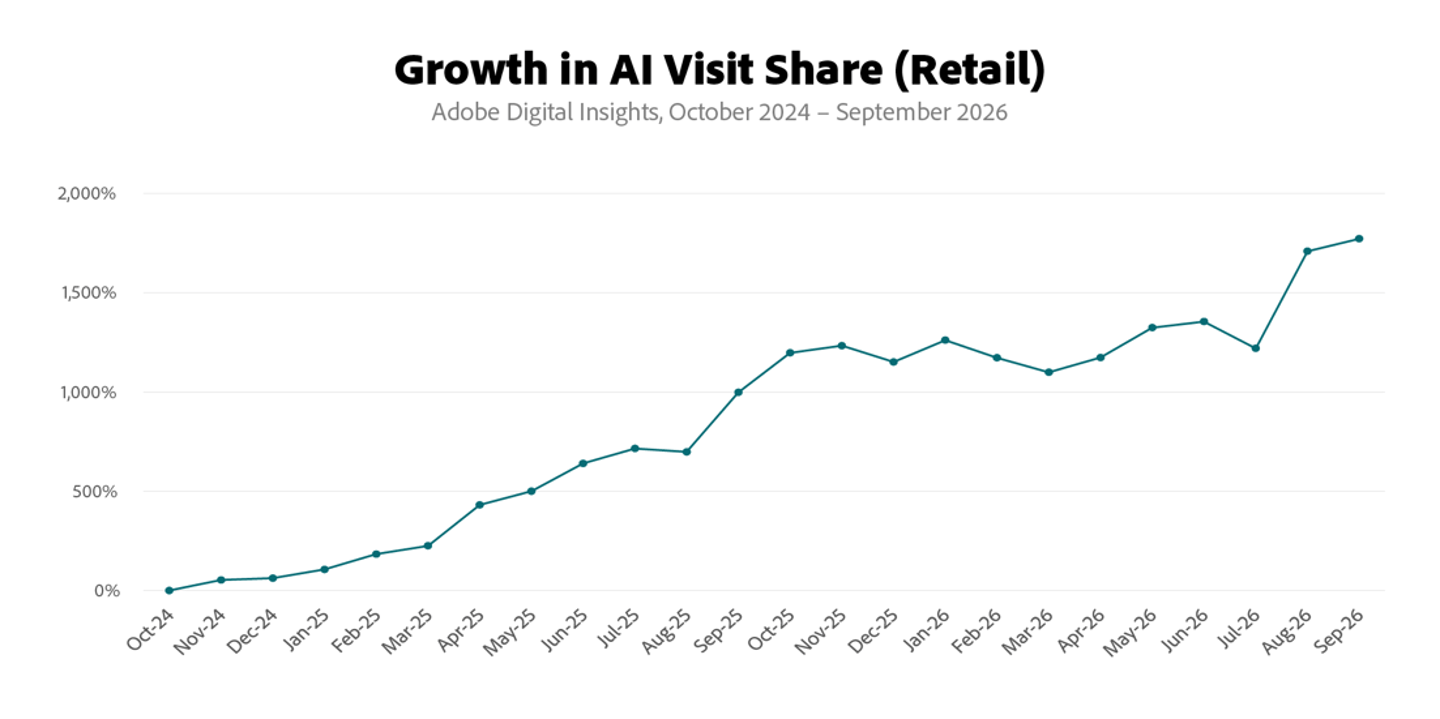
Adobe data indicates artificial intelligence visits significantly outperformed non-AI visits to U.S. retail sites in September.
The latest Adobe AI Traffic Trends report, profiling U.S. e-commerce in September, indicates that AI traffic to U.S. retail sites generated 83% higher revenue per visit than non-AI traffic – the largest gap recorded by Adobe in 2026 so far. In September 2025, the two channels were on par from a revenue contribution standpoint.
In addition, AI-referred traffic converted 90% better than non-AI traffic. As recently as August 2025, Adobe reported AI traffic converted 9% worse than non-AI traffic.
Analyzing AI traffic growth patterns, Adobe found that AI traffic to U.S. retail sites grew 71% year-over-year in September. AI traffic as reported by Adobe has grown substantially every month since October 2024 (when Adobe first began tracking U.S. AI retail traffic), for a total increase of 1,772% between October 2024 and September 2026.
Visitors from AI sources are also more engaged once they land on a retail property, according to Adobe analysis, spending 73% more time on site, viewing 25% more pages per visit and adding products to their carts at a 53% higher rate than non-AI visitors. Looking ahead to the holiday shopping season, Adobe projects AI traffic will rise 159% year-over-year on Thanksgiving, 95% year over year on Black Friday and 88% year-over-year on Cyber Monday.
[READ MORE: Adobe: U.S. online holiday sales will smash records to reach $275B]
Citation readability
The Adobe Citation Readability Score measures how much of a web page's content can be effectively understood and cited by AI. In September, the average U.S. retail homepage scored 63%, meaning more than one-third of homepage content is not visible to the AI systems and agents that are sending shoppers to retailers.
Key Citation Readability page scores included:
- Electronics (79%).
- Customer service pages (78%)
- Grocery (55%).
- General Merchandise (40%).
Adobe advises this data indicates that the content most readable by AI agents is content that provides an explanation, such as that on electronics sites and customer service pages which tend to feature setup guides, troubleshooting articles and detailed specs. In contrast, the navigation- and promotion-heavy page layouts often found on grocery and general merchandise sites lead to lower AI readability.
Adobe’s AI insights are based on direct transactions online, covering over 1 trillion visits to U.S. retail sites, 100 million SKUs and 18 product categories.