Data & Analytics

  • TJX makes moves with new store growth concept

    Sierra Trading Post, an online retailer TJX Cos. acquired in 2012, is accelerating store expansion and could become a new growth driver for the nation’s leading off price retailer with designs on extending its value proposition to the outdoor and active lifestyle world.

  • Tech Bytes: How Robots are Transforming Retail

    The retail industry has reached a point of progress with robotics where it is not enough to look at how robots will drive business transformation, but at how they are already doing so.

    Following are three key retail areas where robots have already begun to make their presence felt:

    Fulfillment and Distribution

  • Energy Smarts: Havertys partners with DOE for energy efficiency

    Haverty Furniture Company has been around since the late 19th century, but the specialty furniture retailer has a decidedly 21st-century approach to energy management.

    “We want Havertys to be the company everyone wants to come work for,” said Rawson Haverty Jr., senior VP real estate and development, Havertys, during a session at Chain Store Age’s SPECS 2016 Conference, March 13-15, in Dallas.

    Environmental stewardship, and thus energy conservation, is on the Atlanta-based furniture retailer’s list of 10 core values, Haverty explained.

  • Session Spotlight: Construction Goes High Tech

    Although the construction industry lags other major verticals in IT spending, technology is still having a dramatic impact on the practice.

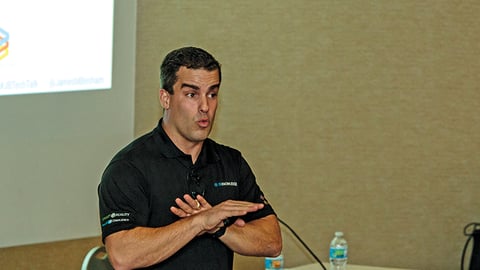
    “We are at the intersection of technology and buildings,” said James M. Benham, CEO of construction technology firm JBKnowledge.

  • Specialty golf retailer fulfills customer expectations

    Golf is a sport that rewards precision, and that extends to meeting customer demand across multiple channels.

    That is why Atlanta-based, 25-store PGA Tour Superstore is leveraging the SPS Commerce Fulfillment platform to obtain actionable insights into back-end data that is crucial to support a seamless customer experience. This includes inventory levels, order status, shipment details, and payment and returns.

  • Session Spotlight: New Areas of Focus in ADA Compliance

    ADA lawsuits against retailers are on the rise — and even though many suits may be without merit, a retailer still has to defend/answer the allegations.

    That was the message Joan Stein, one of the nation’s leading authorities on ADA, brought to the SPECS session, “ADA Non-Compliance: Can You Afford It?” at SPECS.

  • WWW.Brick-and-Mortar.COM

    At a time when more and more online retailers are successfully expanding to brick-and-mortar locations, it’s worth taking a moment to examine how those brands are approaching the site selection process. The specific and strategic considerations that online retailers review when assessing possible brick-and-mortar locations not only tells us a lot about what’s behind that thought process, but provides important hints about the priorities and perspectives shaping retailer behavior in an increasingly omnichannel world.

  • Connecting with Millennials

    The generation born between the early 1980s and the year 2000 — labeled millennials — has captured the collective attention of retail marketers. And not just because there are more than 80 million of them, although that’s a factor. This group craves access, not necessarily ownership, and they have a real affinity for technology, which is shaping the retail space.

  • Shopping Centers in the Digital Age

    One of my favorite times of the year is teaching at the ICSC University of Shopping Centers. I co-teach “Marketing & Social Media: Shopping Centers in the Digital Age” with Tim O’Connell, assistant VP, director of digital marketing and communications, at RPAI. While we present stats, trends and case studies, what energizes me most are the collaborative class discussions on how other shopping centers owners are progressing with their social media efforts.

  • Batteries Crucial to Retail Ops

    Don’t overlook the impact that batteries have on retail operations and the bottom line. That’s the advice of IPT’s Ken Murphy, who told Chain Store Age that most retailers don’t realize how much money they spend — and productivity they lose — by constantly having to replace dying batteries in wireless barcode scanners. The problem, he says, is the continued use of subpar OEM batteries.

    What is the biggest challenge retailers face regarding the batteries in barcode scanners and other devices?

X
This ad will auto-close in 10 seconds