Consumer Analytics

  • Cisco: Retailers miss more than half of return from ‘Internet of Everything’

    San Jose, Calif. – Retailers will gain $81 billion from the “Internet of Everything,” which is the term given to the connectivity of an increasing number of people, processes and things, in 2013. But according to new research from Cisco Systems, Inc., this only reflects 45% of the potential return.

  • Study: Price and product selection key to in-store purchases

    New York -- Despite the availability of retail technology, price and product selection are still the largest factors influencing shopper decisions, according to an annual study by global IT services and consulting firm Cognizant. Fifty-five percent of shoppers will leave a store to look online or shop another store if they think a price seems too high, and 21% will ask for a price match.
     

  • Study: Nine-in-10 holiday shoppers overspend

    Austin, Texas – More than nine-in-10 (91%) holiday shoppers admit to overspending on presents, according to a new survey from RetailMeNot, with 60% of overspenders saying they do so because they thought giving a gift the person would love was worth the extra money.

  • Online retailer PureFormulas personalizes customer experience with Oracle Commerce

    Miami -- By moving its ecommerce operations to Oracle Commerce, online health supplements retailer PureFormulas will take advantage of Oracle’s multi-site architecture to support expansion, while significantly enhancing its customer experience and personalization capabilities.   
     

  • Coffee Bean & Tea Leaf generates social success

    Los Angeles – The Coffee Bean & Tea Leaf has experienced significant lift across key social metrics such as local Facebook fans and impressions using the MomentFeed location-based marketing platform.

  • Cisco finds that retailers miss more than half of return from ‘Internet of Everything’

    Retailers will gain $81 billion from the “Internet of Everything,” which is the term given to the connectivity of an increasing number of people, processes and things, in 2013. But according to new research from Cisco Systems, Inc., this only reflects 45% of the potential return.

  • Study: Consumers prefer prepaid, physical cards

    Lewisville, Texas – Consumers prefer prepaid cards that can be used anywhere to gift cards from specific retailers and physical cards to digital cards.

    According to the new “People Prefer Prepaid Rewards” study from Parago, more than half of shoppers prefer prepaid cards over gift cards from Amazon, iTunes, Target, Walmart, Home Depot and more. In addition, two out of three shoppers prefer physical cards over digital cards.

  • MyCoupons.com launches responsive design site

    Pittsburgh – Internet coupon provider MyCoupons.com is launching a responsive design website. The new website presents a cleaner, contemporary, responsive design that adapts itself to all digital platforms: web, tablet, and mobile.

    The new infrastructure also improves the user experience with better and faster search capabilities for the thousands of coupons and promotional codes available on the site from more than 9,000 online merchants.

  • The Future of Retail: How Mobile Will Help Shape the Stores of Tomorrow

    By Bill Loller, VP, IBM Smarter Commerce

    The mobile revolution has ushered in a new era in retail shopping, transforming the experience into a quick, easy and hyper-personal exchange which is all conducted from the touch of a mobile device. As the trend and spending power behind online shopping continues to grow, brick-and-mortar locations are tasked with finding ways to incorporate mobile technology into the in-store experience in order to stay relevant, competitive and alive.

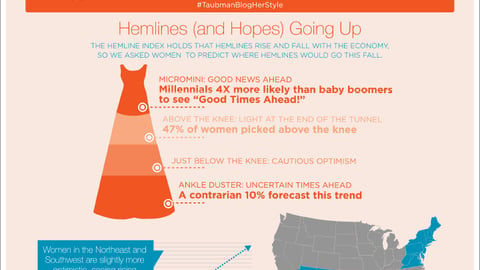
  • Hemline trends suggest that stock prices will rise

    George Taylor, a University of Pennsylvania Wharton School professor, came up with a theory called The Hemline Index in 1926. The theory identifies women’s hemlines as a leading economic indicator. Rising hemlines indicate that stock prices will begin to rise in the not-to-distant future. Falling hemlines indicate the falling stock prices and economic decline.

X
This ad will auto-close in 10 seconds