Consumer Analytics

  • Visa: It’s the chip, not the PIN

    As chip-based EMV cards become the payment norm for retailers, Visa continues to assert that PINs and even signatures are unnecessary security measures in a rapidly evolving payments landscape.

    In a conference call, Visa executives explained why the company is taking the view that not only is PIN verification not a major concern, but neither is obtaining the customer’s signature.

  • Where NOT to Store Financial Data

    One of the best ways retailers can make both their financial data and store systems more secure is to reduce potential vulnerability by removing financial data from the store.

    “Take any credit card data out of your store systems,” advised Perry Kramer, VP and practice lead for Boston Retail Partners. “Most retailers don’t know what’s on their systems or their risk profile. You need a good inventory. Some data you might keep.”

  • Study: Payment card issuers throw in their chips

    As the Oct. 1 fraud liability shift for EMV-compliant chip cards looms, payment card issuers appear ready for the change.

    According to a new study from the electronic payments industry group Payment Security Task Force (PST), the eight financial institutions that belong to the PST reported that 30% of their U.S. consumer credit and debit cards contain EMV chips as of June 30.

  • YouTube shows new sales potential

    Videos just became more valuable to retailers. YouTube is releasing Shopping ads, a new advertising format that lets viewers click and buy products directly from videos.

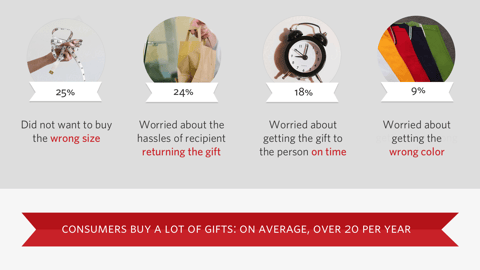
  • Survey reveals why consumers don’t like buying gifts online

    As the holidays approach, retailers are hoping the convenience and immediacy of e-commerce will prompt high volumes of online gift purchases.

    But according to a new survey of more than 1,000 U.S. consumers from e-gift software provider Loop Commerce, there are some common problems that make consumers hesitate to buy gifts online.

  • Study: Holidays may be merry, but not mobile

    Consumers may make merry during the upcoming holiday season, but mobile devices may be less a part of the action than retailers like.

    According to a new survey from marketing automation platform provider Bronto Software, only 19% of holiday shoppers plan to purchase from a tablet, and 22% from a smartphone.

    Consumers will use mobile devices to search for the best deal: 65% will look for promotions and coupons, 63% will check prices on that store's website and 61% will search for lower prices at another store or site.

  • Cross-channel consistency

    The digital and physical selling environments are converging. Whether this phenomenon is called “cross-channel”, “omnichannel”, or given some other label, consumers now routinely use their Internet-enabled (and frequently mobile) devices to find information about potential purchases, even when they are in the store. So as far as consumers are concerned, the selling channels have already converged. As a result, retailers are now forced to catch up.

  • Study: Don’t overestimate social marketing

    Consumers have made it clear what type of marketing influences their purchase decisions, and it’s not always high-tech. According to a new study from branding network Experticity, 82% of marketers believe social media is extremely or somewhat effective in influencing buyer decisions, yet only 49% of consumers reported that they trust brand social media campaigns.

    In addition, 83% of marketers believe traditional advertising is the most effective means of influencing buying decisions, but only 47% of consumers say they trust it.

X
This ad will auto-close in 10 seconds