





Consumer Analytics

  • Amazon.com targets fake reviewers in lawsuit

    Amazon.com Inc. is suing more than 1,000 people for writing fake product reviews on its website. Defendants are misleading Amazon’s customers and tarnishing Amazon’s brand for their own profit and the profit of a handful of dishonest sellers and manufacturers,” according to a complaint filed Friday in a Seattle court. (USA Today)

  • Shoppers not spending, shifting online

    Consumers’ intentions often differ materially from their behavior and retailers better hope that is the case this year or it won’t be a happy holiday, according to the latest consumer research from the National Retail Federation.

  • Survey: Most U.S. shoppers hate Black Friday

    Most U.S. shoppers dislike Black Friday, but a third of them say they're planning to spend more than $500 that weekend anyway, according to a new survey.

  • Retail and CPG marketing made easier

    Aside from some massively complex challenges, retailer and consumer packaged goods marketers have never had it so good, according to Bob Fair, president of marketing applications

  • Featured Content: Top 3 strategies to optimize revenue this holiday season

    As the holiday season creeps up and Black Friday is just around the corner, successful companies are finalizing plans to maximize their seasonal revenues. A holiday retail sales forecast from eMarketer estimates a year-over-year increase of 5.7%, hitting an all-time high of $886 billion. To help retailers capture a larger slice of the expanding holiday pie, digital marketing services company eClerx Digital has identified three top strategies focused on optimization.

  • Study: Biggest barriers for consumers in global online shopping are…

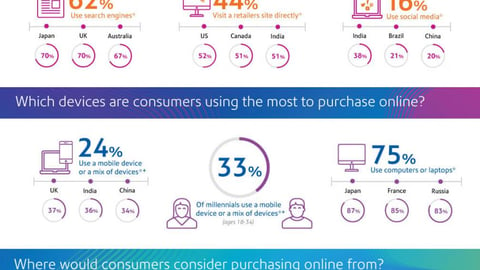
    High shipping costs are the major barrier to adoption of global online shopping.

    That is according to the 2015 Pitney Bowes Online Shopping study. High shipping costs (64%) were ranked as the biggest barrier in the survey, followed by additional fees owed at time of delivery (48%) and product delivery taking too long (39%).

    Product returns are also a major concern, as 33% of global shoppers cited online return policies and processes as deterrents.

  • Survey: Millennials prefer supportive, fun loyalty programs

    A new survey from Colloquy is highlighting some of the differences between millennial consumers and other demographics when it comes to loyalty programs. Some 34% of millennials say the word “fun” is the one that best describes their participation, compared to 26% of the general population.

  • Survey: Holiday texts pay off for brick-and-mortar retailers

    Instead of sending holiday cards, retailers with physical stores may want to send texts, instead.

    According to the new seventh Annual Holiday Research Study from e-commerce technology platform MarketLive, 78% of shoppers are likely to visit a store as a result of a text promotion or alert via mobile device.

    In addition, 56% of shoppers look for gift ideas on social sites like Pinterest, and 55% are now comfortable with sharing their preferences with retailers in exchange for convenience and personalized product recommendations

  • Visa keeps up with cyberdangers

    There seems to be a new cyber threat every day, and Visa Inc. is doing its best to stay up to date.

    Visa and FireEye Inc. have launched a new service for the payments industry called Visa Threat Intelligence, Powered by FireEye. This service will deliver real-time threat information on cyberattacks to merchants and issuers.


  • Hackers victimize charity chain

    The latest retail data breach demonstrates that hackers will victimize whoever is vulnerable.

    America’s Thrift Stores, an Alabama-based, 18-store for-profit chain that sells donated items and then contributes a significant portion of the profit to local charities, has been breached. Hackers used malware to compromise the systems of a third-party service provider, which gave them access to the America’s Thrift Stores network.

X
This ad will auto-close in 10 seconds