Convenience Stores

  • FTC not ready to move on Walgreens-Rite Aid deal

    According to reports, regulators are still seeking information on the proposed merger between Walgreens Boots Alliance and Rite Aid, and the subsequent divestiture of as many as 1,200 stores to Fred's.   Analysts are suggesting the implication does not bode well for the merger, as the continued Civil Information Demands from the Federal Trade Commission may be indicative that the agency is still not appeased over the merger's potential effect on the retail pharmacy market.  
  • Amazon marks 20 years as a public company

    Amazon is celebrating two decades as a public company in a big way — as an enterprise worth nearly $460 billion.   The retail giant, which began as a modest online bookstore, went public on the Nasdaq in an IPO valued at a modest $438 million. Today, Amazon has grown into an empire that not only sells books, but has become a major player across categories, including clothing, food, furniture, jewelry, private-label goods and electronics, among other segments.   
  • Supermarket chain files Chapter 11

    Struggling Marsh Supermarkets is looking for a buyer, but it doesn’t have all that much time.    The 86-year-old grocery store chain on Thursday filed for Chapter 11 bankruptcy protection, and said it is seeking a buyer for all or part of its business.  The company’s 44 locations will continue normal operations throughout the process.  But the stores will be shuttered if the company does not find a buyer within 60 days.  
  • Aldi makes leadership claim on low prices

    Watch out Walmart — discount grocer Aldi is beating you in one crucial area.    Aldi’s prices are 21% lower than its lowest-priced rivals, including Walmart, CEO Jason Hart told Reuters. And he plans to maintain that gap going forward.   The fast-growing Aldi, which recently entered California, operates some 1,600 stores in the United States, with 400 new locations planned by the end of 2018.  
  • What Happened to Manhattan’s Supermarkets?

    Broker Faith Hope Consolo, who’s placed countless retail businesses in some of Manhattan’s best neighborhoods, has lately turned her attention to Harlem. She’s happy to note that restaurants and national retail brands are blossoming uptown, but that – outside of a Whole Foods opening on 125th Street – full-size supermarkets are nonexistent since the Pathmark closed there last year. And it’s not just a Harlem phenomenon.

  • Inland’s Deal Machine Rolls On

    Given the success of this year’s Fastest-Growing Acquirers, it’s understandable to think the process seems simple. Well, it’s not as easy as it looks, warned G. Joseph Cosenza, president of Oak Brook, Ill.-based Inland Real Estate Acquisitions. Quality must meet opportunity and yield, he said.

    The grocery-anchored center remains as strong an investment as ever, Cosenza said. An Inland fund that’s dominated by grocery-anchored projects (approximately 80%) has 95% occupancy. Supermarket renewals are resulting in rent increases of 10% and higher.

  • SHOP TALK

    Trending Stores: The Frye Company’s location in Denver took top honors as Store of the Year in the 2017 Shop! store design competition. With a design that celebrates the artisan heritage of Frye, one of the country’s oldest footwear companies, the 2,460-sq.-ft. store has a warm and comfortable vibe, with a modern ski-lodge aesthetic. Local references include a massive working fireplace dressed with stone from local quarries, and rugs woven with American Indian motifs.

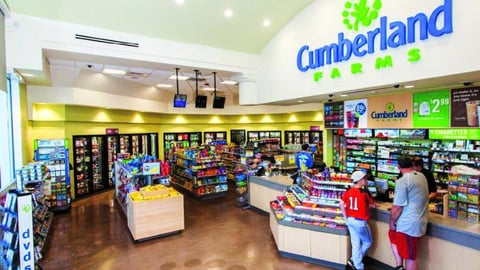
  • Reimagining Cumberland Farms

    Cumberland Farms, a convenience store fixture in New England and central Florida for half a century, once fielded more than 1,000 stores. But, it has slimmed down to 600 locations as it transforms itself from a strip-center and gas station dairy store to a chain of freestanding, modern C-stores providing an array of food service options and gasoline.

  • The Discipline of the Deal

    Whether purchasing individual assets or restructuring entire portfolios, top acquirers have plans and stick to them.

    Stick to your knitting. That appears to be the mantra for this year’s top acquirers, all of which, save one, have appeared on this list in previous years. Most relate that, in the late stages of a recovery, discipline, tenacity and structure are key to closing deals. This year, staffers at two of these tenacious companies can chant, “We’re No. 1!”

X
This ad will auto-close in 10 seconds