Consumer Attitudes & Behavior

  • Study reveals online shoppers’ pet peeves

    A new consumer survey from e-gift software provider Loop Commerce reveals some common reasons why consumers are hesitant to buy gifts online.

    The survey shows that one in four (25%) respondents cited worrying about buying the wrong size, while another roughly one in four (24%) respondents cited worrying about the hassle of returns as the most common reasons they hesitate to buy gifts online. Nearly one in five (18%) respondents cited concern about getting their gift to the recipient on time.

  • Study: Holidays may be merry, but not mobile

    Consumers may make merry during the upcoming holiday season, but mobile devices may be less a part of the action than retailers like.

    According to a new survey from marketing automation platform provider Bronto Software, only 19% of holiday shoppers plan to purchase from a tablet, and 22% from a smartphone.

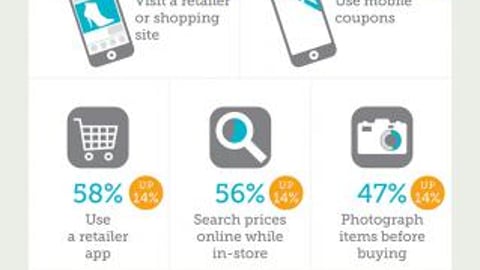
    Consumers will use mobile devices to search for the best deal: 65% will look for promotions and coupons, 63% will check prices on that store's website and 61% will search for lower prices at another store or site.

  • Survey reveals why consumers don’t like buying gifts online

    As the holidays approach, retailers are hoping the convenience and immediacy of e-commerce will prompt high volumes of online gift purchases.

    But according to a new survey of more than 1,000 U.S. consumers from e-gift software provider Loop Commerce, there are some common problems that make consumers hesitate to buy gifts online.

  • What’s wrong with the retail industry?

    New rankings from the Great Places to Work Institute suggests the retail and consumer packaged goods are not good industries for women.

    The only retailers to make the institute’s top 100 list of best places for women to work were Build A Bear Workshop (10), The Container Store (27), Wegman’s (54) and L.L. Bean (84). The CPG industry fared even worse with not a single company included in the top 100.

  • 2015 Holiday Preview

    October will be over in a flash, and with it, all eyes will be on the holiday season, which is measured from Nov. 1 through Dec. 31.

    The 2015 retail calendar has several distinctions, as we saw Memorial Day fall on the earliest possible date and Labor Day on the latest possible date. This holiday season, there are 28 days between Thanksgiving (not counting the actual day) and Christmas, which is an average amount for the period separating the two holidays.

  • Report: Online returns are a big problem

    Retailers wondering how much of an issue e-commerce returns are may not like the answer.

    According to a new infographic from returns management software provider TrueShip, E-commerce returns are both prevalent and frequently the fault of the retailer.

    TrueShip data shows that about one-third of all products purchased online are returned by consumers. Of these returns, almost one-quarter (23%) are due to the wrong item being shipped. Another 22% of e-commerce returns results from a product looking and appearing different when it arrives than it did online.

  • Cross-channel consistency

    The digital and physical selling environments are converging. Whether this phenomenon is called “cross-channel”, “omnichannel”, or given some other label, consumers now routinely use their Internet-enabled (and frequently mobile) devices to find information about potential purchases, even when they are in the store. So as far as consumers are concerned, the selling channels have already converged. As a result, retailers are now forced to catch up.

  • Study: Don’t overestimate social marketing

    Consumers have made it clear what type of marketing influences their purchase decisions, and it’s not always high-tech. According to a new study from branding network Experticity, 82% of marketers believe social media is extremely or somewhat effective in influencing buyer decisions, yet only 49% of consumers reported that they trust brand social media campaigns.

    In addition, 83% of marketers believe traditional advertising is the most effective means of influencing buying decisions, but only 47% of consumers say they trust it.

X
This ad will auto-close in 10 seconds