
Three supply chain automation leaders building on their success

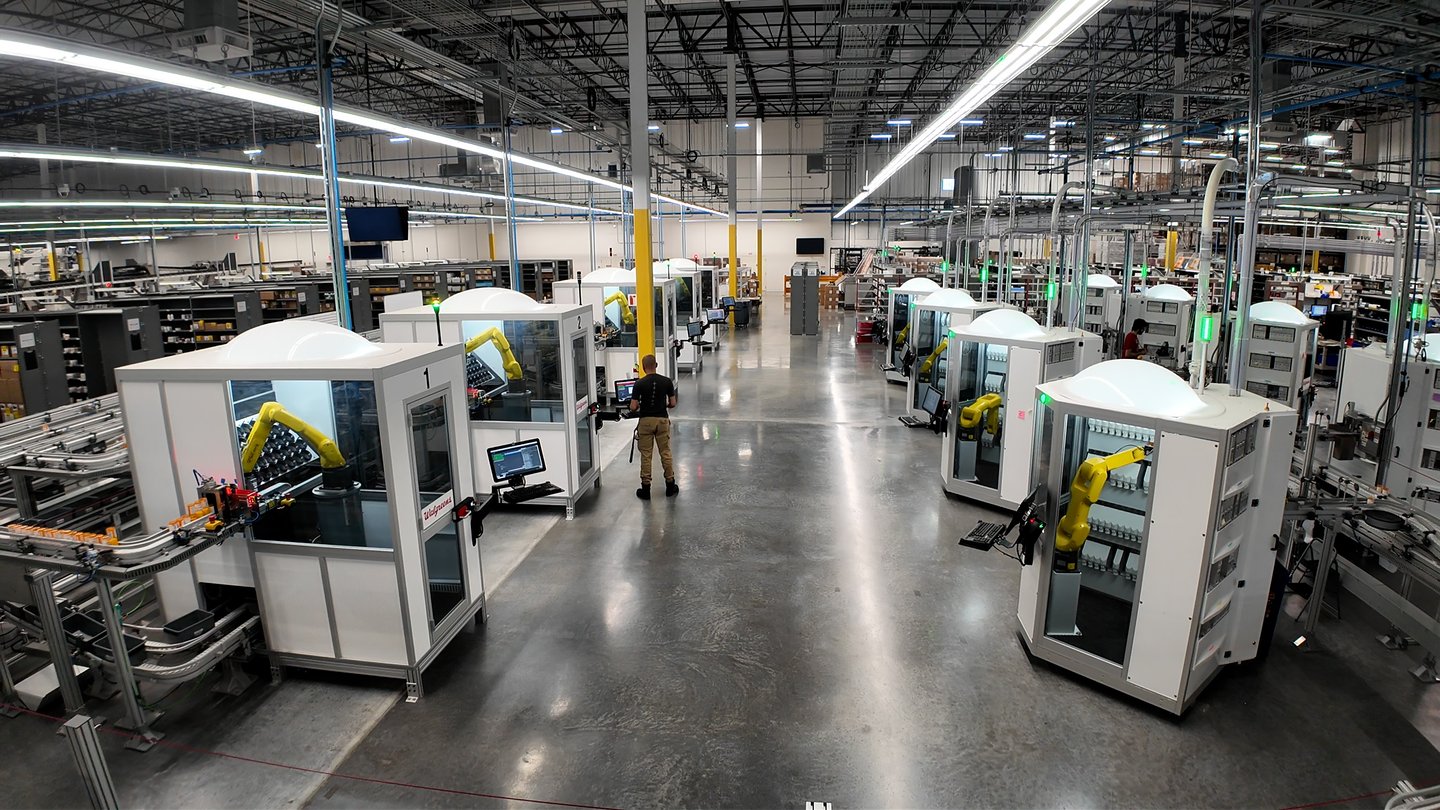
Walgreens, Kroger and Walmart are all expanding supply chain automation efforts in 2026.
The three Tier I giants have long been involved in initiatives to automate their supply chains, and this year will see an escalation of these efforts. Here are specific supply chain automation technology implementations each leading retailer is pursuing as part of wider enterprise initiatives.
Walgreens – Micro-fulfillment
Walgreens is opening a new facility as part of a continuing initiative to streamline the fulfillment of prescription medications. In a recent email to Chain Store Age, the pharmacy giant said it is adding to its existing network of 12 robotic micro-fulfillment centers spread across the U.S. with the opening of a new facility in West Jordan, Utah.
The micro-fulfillment center (MFC) will support nearly 96 Walgreens stores across the region, including 48 in Utah, by automating prescription dispensing. MFCs are a network of facilities using robotic technology in a central pharmacy environment in an effort to more efficiently dispense and ship prescriptions to Walgreens locations nationwide.
The West Jordan facility brings Walgreens’ total MFC count to 13 across the U.S. that support more than 5,000 stores and fulfill approximately 18 million prescriptions nationwide per month.
The retailer initially launched its prescription micro-fulfillment program in 2021 at an automated facility in the Dallas area specifically focused on rapid fulfillment of customer prescription orders.
[READ MORE: Robots help Walgreens fill prescriptions in micro-fulfillment hubs]
The Kroger Co. – Warehouse automation
Kroger continues to plan new automated fulfillment facilities. The grocery giant will spend $391 million to establish a new distribution center in Simpson County, Ky. and anticipates creating about 430 new jobs there. The hub will serve as a full-line distribution center, featuring scalable and automated operations.
While the center will include automation, it is unclear whether it follows Kroger’s leading-edge automated warehouse concept known as a customer fulfillment center (CFC). Introduced in 2018 inpartnership with U.K.-based online grocer Ocado Group, the CFC model combines vertical integration, machine learning and robotics with affordable and fast-delivery service for fresh food.
In January 2026, Kroger optimized its fulfillment network by closing CFC facilities in Pleasant Prairie, Wis.; Frederick, Md.; and Groveland, Fla., while monitoring remaining facilities' performance and not proceeding with the opening of a CFC in Charlotte, N.C. previously planned for 2026.
The retailer previously closed three CFC cross-docking facilities in March 2024. However, Kroger still plans to open a new CFC in Phoenix that will include Ocado’s new “AutoFreezer” solution which automatically loads empty totes into a freezer and places them in a waiting area for picking by robots and re-loading into a chilled area once full to be kept cool until delivery.
Walmart - IoT
Walmart is integrating Internet of Things devices into its supply chain to obtain a real-time view of pallets at scale. The discounter is deploying Wiliot IoT Pixel ambient technology throughout its supply chain.
Connecting millions of Pixel devices, which rely on “ambient” power sources such as radio waves rather than batteries for power, to its AI supply chain technology, Walmart seeks to obtain real-time insight into exactly what merchandise is owned and where it is at any moment.
Walmart is using IoT capabilities to track pallets at scale, with a goal of reaching 90 million by the end of 2026 while providing a new source of supply chain data for its expanding use of AI in its supply chain.
According to Walmart, its IoT supply chain integration is already making a significant impact by eliminating manual tasks and delivering automated alerts. The retailer said enhanced pallet-level visibility has also helped resolve inventory discrepancies, ensuring smoother operations and improved customer experiences.
The collaborative solution is currently deployed across 500 Walmart locations, with plans for national expansion in 2026. The rollout will cover 4,600 Walmart Supercenters, Neighborhood Markets, and more than 40 distribution centers. As a result, Walmart seeks to dramatically enhance supply chain efficiency, inventory accuracy, and cold chain compliance.
Walmart is not a stranger to IoT technology. The discounter has managed temperature, operating functions and energy use in stores using a network of connected IoT devices since 2021 and also leverages IoT to help monitor temperature levels in the smart coolers used for its InHome grocery delivery service.