
Nvidia: AI provides tangible benefits to retailers

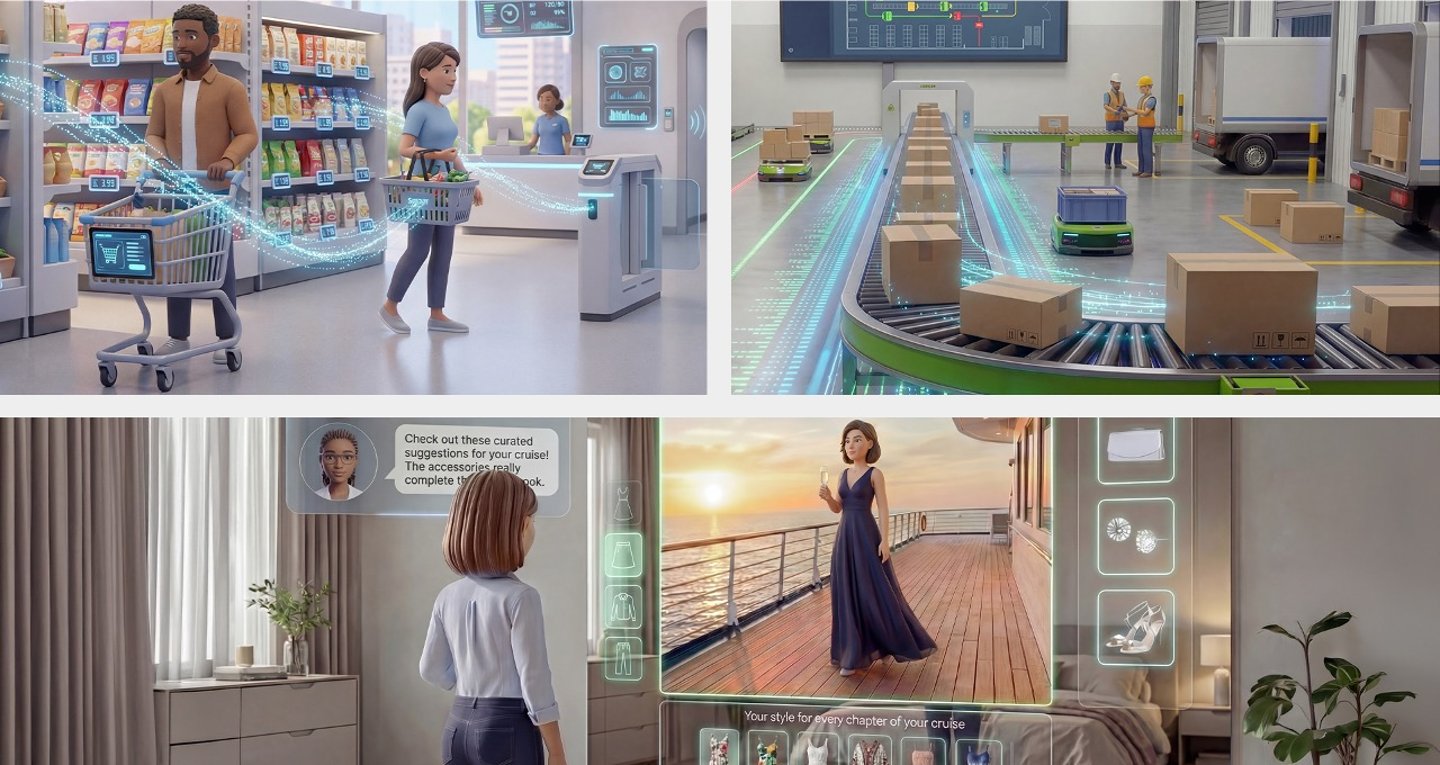
Almost all retailers use artificial intelligence, and most are seeing successful results.
Nine-in-10 (91%) retailers and CPG companies surveyed by AI technology provider Nvidia are either actively using or assessing AI. Respondents to the third annual Nvidia "State of AI and Retail and Consumer Packaged Goods" study also overwhelmingly said that AI is helping decrease annual costs (95%) and increase annual revenue (89%).
Other business benefits many respondents have received from AI include improved employee productivity (54%), operational efficiencies (52%), and improved customer service (41%).
In addition, 90% of respondents said they would build on the success of current projects by increasing their AI budgets in 2026. Eight-in-10 (79%) respondents said open-source models and software were moderately to extremely important to their AI strategy.
Agentic AI gains traction
Agentic AI builds upon the prescriptive capabilities of generative AI to streamline enterprise workflows even further by analyzing massive amounts of data in near-real-time and then automatically taking action based on the results.
Close to half (47%) of survey respondents said they’re using or assessing agentic AI — with 20% saying AI agents are already active in their organizations and another 21% reporting agents are coming within the next year.
Top business objectives being addressed with AI agents are:
- Increasing process and efficiency (57%).
- Enhancing customer experience and personalization (40%).
- Improving decision-making with real-time data (40%).
- Adapting to market volatility or demand shifts (30%).
- Reducing operational costs (27%).
Broadly speaking, Nvidia advises that agentic AI usage will be primarily spread across three operational lines: internal operations, employee and customer support, and customer engagement. For instance, in customer engagement, agents can act on insights in real time, adjust messages, recommend products and guide purchase decisions based on individual customer contexts.
[READ MORE: 2025: The year Agentic AI broke in retail]
AI streamlines supply chain workflows
Sixty-four percent of respondents reported increased challenges in the supply chain year over year, such as geopolitical instability, labor constraints, evolving consumer expectations for speed and transparency, and regulatory complexity across global operations.
The top supply chain-related reason respondents are using AI for supply chain operational efficiency and throughput (51%). Meeting customer expectations was next at 45%, and solving for traceability and transparency was third at 38%.
Fielded from August to September 2025, the "State of AI and Retail and Consumer Packaged Goods" survey garnered responses from hundreds of respondents, including executives, managers, and practitioners, across a range of industry segments in retail and CPG.