Data & Analytics

  • Analysis: Amazon can sustain buying sales at the expense of the bottom line

    While many other retailers are bumping along the bottom in terms of growth, Amazon increased its sales line (in its second quarter) by almost a quarter.  In real terms, this means the online behemoth took some $7.5 billion more in revenue this quarter than during the same period last year. By any standards, this is an impressive performance -- but it is doubly so for a company of the size and scale of Amazon.  
  • Promotion at Nest

    Nest, a leading consultative advisor and technology provider specializing in multi-facility maintenance and construction services, announced the promotion of James Porreca to director of estimating and construction.    Due to recent growth and client demands, Nest made the commitment to add a new division to the company that will help serve their clients’ needs in a more enhanced way.  
  • Lifeway’s merchandising gets a new plan

    Lifeway Christian Stores’ shoppers’ needs differ from store-to-store — a factor that pushed the chain to revamp its merchandising processes.   For the specialty retailer, this has meant pursuing macro- and micro-localization strategies. From the macro level, the company still wanted to manage assortments that deliver a consistent brand experience – not only in terms of the products offered, but also in how they are stocked and presented.   
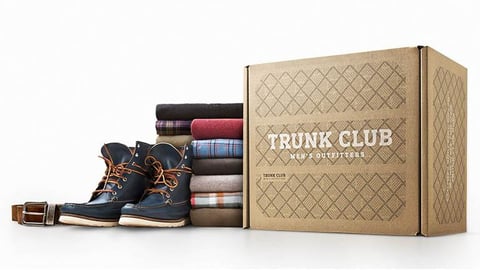
  • Stitch Fix, Trunk Club and Le Tote upping the ante on online apparel retailing

    When it comes to brands that stand out in online apparel shopping segment, subscription services are leading the pack.   Apparel subscription services, like Stitch Fix and Trunk Club, and introduction of Amazon’s Prime Wardrobe are disrupting the apparel segment. While the subscription method of shopping for apparel is still in its infancy, consumer reach — and interest — is growing, according to research from The NDP Group.   
  • Facebook soars in Q2

    A jump in mobile ads and daily users contributed to another strong quarter for Facebook — one that also beat analyst expectations. For the second quarter ended June 30, total revenue rose 45% to $9.32 billion. This is a significant jump from $6.436 billion for the same period in 2016. Revenues for the quarter also beat analyst forecasts of $9.20 billion, according to Thomson Reuters. This is the ninth straight quarter that Facebook has exceeded analyst expectations.
  • Whole Foods Market has sluggish Q3, but beats analyst expectations

    Despite a drop in profits and same-store sales, Whole Foods Market still managed to surpass analyst predictions for the third quarter.   Net income for the quarter, ended July 2, net income fell to $106 million, or 33 cents per shares, from $120 million, or 37 cents a share, a year ago. This beat analyst expectations of 33 cents expected, according to Thomson Reuters.  
  • Nordstrom sweetens terms to attract potential equity partners

    Nordstrom is offering a deal to potential equity partners willing to fund a buyout.   The group of Nordstrom Inc. family members seeking to take the luxury department store chain private is offering preferential terms to potential equity partners willing to fund the buyout, according to Reuters. The group involved in the negotiations are company co-presidents Blake W. Nordstrom, Peter E. Nordstrom, and Erik B. Nordstrom; president of stores James F. Nordstrom; chairman emeritus Bruce A. Nordstrom; and Anne E. Gittinger. 
  • Department store chain improves inventory accuracy with RFID

    The Bon-Ton Stores is speeding up how it restocks merchandise.   The department store chain is replacing its manual, paper-based restocking process with a radio frequency identification (RFID)-based system. The solution, from Zebra, enables store associates to fully restock merchandise displays in a fraction of the time — a move that increases productivity and enables associates to spend more time servicing shoppers.  
  • Amazon still exploring ‘cashier-less’ checkout projects

    Don’t expect Amazon to stop experimenting with cashier-less grocery stores anytime soon.   Despite announcing in June it would acquire Whole Foods Market for $13.7 billion, the online giant will continue evolving its Amazon Fresh and Amazon Go concepts, among other efforts. Its goal: to reinvent the way consumers shop for food, according to Business Insider.  
  • Online giant’s new delivery system targets apartment dwellers

    Amazon’s new delivery system makes a play for a customer segment initially targeted by Walmart’s e-commerce arm.   The online giant introduced a new delivery locker designed for apartment blocks and other housing complexes that may not have services to accept or store packages. Called The Hub by Amazon, the modular system features compartments where packages can be stored for pickup.   
X
This ad will auto-close in 10 seconds