Predictive Analytics

  • Making the Case for Strategic Liquidation Planning

    Every company has liquidation inventory: returned, excess, obsolete or damaged merchandise that can’t go back on store shelves. Though most organizations would rather not admit they have a need for it, liquidation is the rule – not the exception – in retail.  
  • Discounter uses machine learning to stay 'on Target' with shopper demand

    Target’s omnichannel journey may have started five years ago, but newly-emerging digital touchpoints continue to change the game.   By leveraging machine learning to tap into customer demand, the mass merchandiser is defining which touchpoints are not only valuable, but influencing its shoppers’ paths-to-purchase. The initiative was discussed at the “Determining New Omni-KPIs To Hit Goals And Key Drivers” session at eTail West 2017, in Palm Springs, California, Feb. 27-March 2.  
  • Study: Majority of retailers are ready to invest in IoT

    As the retail industry continues its digital transformation, chains need a new formula to best service its shoppers.   To achieve this goal, 70% of retail decision makers are ready to make changes to adopt the Internet of Things (IoT), according to the 2017 Retail Vision Study, from Zebra Technologies. The study analyzes the technology trends shaping the future of the global retail industry and enhancing the shopping experience.  
  • Kroger ends its streak

    The Kroger Co. has broken its impressive record of 52 consecutive quarters of same-store sales growth.    The supermarket giant on Thursday posted an unexpected decline in fourth-quarter same-store sales on Thursday amid ongoing food price deflation and increased competition.   Kroger’s net income fell to $506 million, or 53 cents per share, for the quarter ended Jan. 28, in line with estimates, and down from $559 million, or 57 cents per share, a year earlier.   
  • Amazon: Human error caused the outage

    Don’t blame it on the technology.   In a blog post on its site, Amazon explained the reason why Amazon Web Services suffered a four-hour outage on Tuesday, one that caused significant problems at numerous Internet sites, including those operated by retailers.   
  • Amazon in big solar initiative

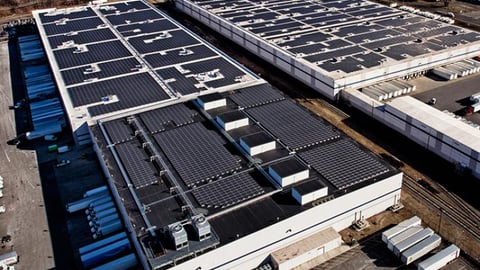
    Amazon is making a big commitment to renewable energy.   The online giant announced plans to install solar panels on its fulfillment facilities around the world, including the deployment of large-scale solar systems on rooftops of more than 15 U.S. fulfillment and sortation centers this year.   Amazon plans to deploy solar systems on 50 fulfillment and sortation centers globally by 2020.    
  • New joint venture promises better data analysis for retail real estate managers

    The asset disposition company A&G Realty has entered into a joint venture with a supermarket real estate veteran with the business proposition that better data analysis will help retailers be more proactive in managing real estate portfolios.  
  • Specialty retailer’s mobile campaign strategy delivers

    While many retailers struggle to find the best mobile marketing formula, Urban Outfitters is bucking the trend — big time.   Through a partnership with Appboy and PlaceIQ, the specialty retailer is using consumer behavior, location data and insights to more smartly deliver consumer messages within its brand-owned app. Armed with this data, Urban Outfitters has boosted customer conversions by 75% and increased related revenue by 146%, the chain said.  
  • Consumer confidence reaches 15-year high in February

    The Conference Board announced a new high for consumer confidence in February, which reached its highest level since July 2001.   The index now stands at 114.8, up from 111.6 in January.  
  • Decoding the Code

    Newest ASHRAE standard reduces LPD allowances

    The ANSI/ASHRAE/IES 90.1 energy standard provides a model energy code to jurisdictions interested in regulating the energy-efficient design of commercial buildings. ASHRAE recently published the 2016 version, which supersedes the 2013 version.

    The U.S. Department of Energy recognizes the 2013 version as the national energy reference standard. Starting in October 2016, all states were required to have an energy code in place at least as stringent as 90.1-2013 or justify why they could not comply.

X
This ad will auto-close in 10 seconds