Distribution

  • Wholeshare cuts out the middleman

    Specialty grocery delivery service Wholeshare takes what might be called a “democratic” approach to offering customers online access healthy food products.

    “We let consumers buy natural and organic food as a group at wholesale prices,” said Matt Hatoun, co-founder of San Francisco-based Wholeshare. “We cut out the supermarket or natural foods store. We go to the same wholesalers they use.”

  • Produce is star of the show at Kroger’s new retail concept

    Kroger puts produce front and center at its new grocery store concept, Main & Vine, which also boasts a large bulk-bin area and an event center where cooking demonstrations take place. The store, in Gig Harbor, Washington, capitalizes on Kroger’s centralized buying and distribution power to keep prices affordable on produce and staples, according to the Columbus Dispatch. [Columbus Dispatch]

  • Tech Bytes: Three Reasons to Consider Direct Store Delivery

    Direct store delivery (DSD), which involves shipping products directly to stores from suppliers and bypassing the retailer’s warehouse or fulfillment center, is not a new idea.

    However, several industry developments have made DSD a more attractive and feasible option in many instances. Here are three reasons for a retailer to consider launching a DSD program.

    Share and Share Alike

  • Staples offers FTC justification for Office Depot acquisition

    Another set of weak quarterly results from Staples and another round of store closures could give the Federal Trade Commission more evidence to support Staples long-running effort to acquire Office Depot.

  • Amazon wants to be big retailer on campus

    Amazon.com is continuing to expand its network of physical pickup points at colleges and universities across the U.S.

    Amazon has recently announced agreements to open staffed pickup locations at the The University of Texas at Austin and the University of Akron.

    Opening this summer, this 2,509-sq.-ft. space at the University of Texas will be located in Gregory Gymnasium. Additionally, Amazon Student and Prime members will receive free one-day pickup for orders placed by 10 p.m. on more than two million items.

  • Target investing billions in technology

    The discounter plans to invest some $1.8 billion in 2016 on capital projects, with the majority going to e-commerce and supply chain improvements, as well as in-store improvements. And starting in 2017, Target will ramp up its tech spending even more, Fortune reported. [Fortune]

  • Report: Walgreens Boots Alliance exploring retail pharmacy options in Australia

    Walgreens Boots Alliance is exploring the possibility behind opening a retail pharmacy stake in Australia, The Sydney Morning Herald reported Friday. Though current government restrictions prevent corporate-owned pharmacies from setting up shop, that could change as "the government has commissioned an independent review of pharmacy regulations, which is due to report in March 2017," the paper reported.

  • Ross Dress for Less continues to expand

    Ross Dress for Less announced three new stores, part of the retailer’s 2016 expansion program, which calls for 70 new locations.

    Ross will open a new store and relocate a store in Mobile, Alabama on March 5. The new 25,000-sq.-ft. West Mobile store is located in Westwood Plaza, one mile east of the Mobile Regional Airport. The Mobile location is a 25,000-sq-ft. store that relocated into the McGowin Park East Shopping Center at the southeast corner of Interstate 65 and Highway 90.

  • Sports Authority to close stores as online sales hurt business

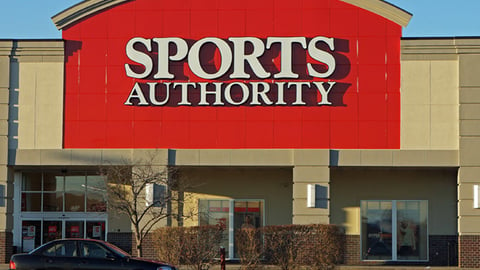
    The Sports Authority on Wednesday filed for Chapter 11 bankruptcy protection and said it plans to close or sell as many as 140 of its 463 stores nationwide. The beleaguered company has struggled in recent years under increased competition not only from online players, but also from the likes of Dick’s Sporting Goods and specialty retailers such as Lululemon that have capitalized on the “athleisure” boom in fitness apparel.

  • Meijer on the move with new stores and remodels in 2016

    Meijer's ambitious growth plans for 2016 involve nine new supercenters, 32 remodels and a $400 million budget.

    The company announced the investment includes the construction of nine new Meijer supercenters and 32 different remodel projects. While Michigan, Indiana, Illinois, Kentucky and Wisconsin will each welcome new Meijer supercenters later this year, dozens of other Meijer stores have begun or will soon begin remodel projects to further enhance the customer shopping experience.

X
This ad will auto-close in 10 seconds