Social Media

  • UPS: Online shoppers shift purchase habits

    Bob Dylan sang “The Times They Are A Changin’” more than 50 years ago, but the sentiment is very current in the world of digital commerce.

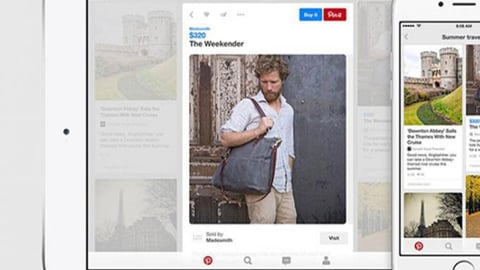
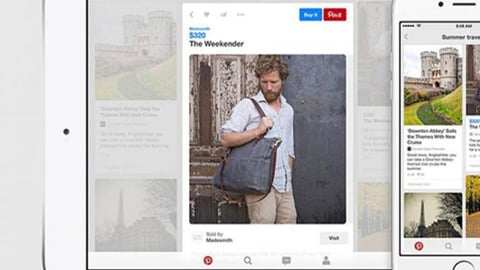
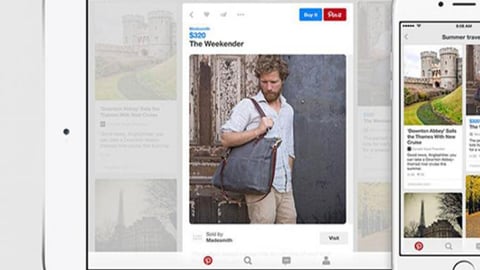
  • Why Aren't Customers Buying Social Buy Buttons?

    Consumers love to shop and love using social media, but somehow the two passions are not connecting.
     
    Twitter, which has been piloting an embedded buy button in tweets since September 2014, is abandoning the effort. Recent studies from Forrester and GlobalWebIndex indicate generally low consumer usage rates for social buy buttons, which are also offered by platforms such as Pinterest and Instagram.
     

  • Tech Bytes: Why Aren't Customers Buying Social Buy Buttons?

    Consumers love to shop and love using social media, but somehow the two passions are not connecting.
     
    Twitter, which has been piloting an embedded buy button in tweets since September 2014, is abandoning the effort. Recent studies from Forrester and GlobalWebIndex indicate generally low consumer usage rates for social buy buttons, which are also offered by platforms such as Pinterest and Instagram.
     

  • Survey: Retailers support seamless customer experience

    Increasingly, retailers are recognizing the need to remove boundaries between channels to maximize customer satisfaction.
     
    According to the 2016 Customer Experience/Unified Commerce Survey from Boston Retail Partners, 51% of retailers indicate that creating a seamless experience across channels is their top priority. To support a seamless customer experience, 23% of the retailers surveyed have already implemented a single, unified commerce platform and another 52% plan to implement one within the next three years.
     

  • Simplification Can Help Retailers Adapt to the Mobile Movement

    The story of the “mobile first” generation isn’t a new one. Retailers have been told for years that mobile should be at the forefront of business strategy in order to meet consumers’ evolving expectations.
     
    Yet, there appears be a disconnect between existing mobile experiences and consumer sentiment.
     

  • Forrester: Four steps to mobile loyalty

    Consumers who use mobile devices for shopping are prime targets for retailer loyalty programs.   According to a new study from Forrester Research, “Master Your Mobile Loyalty Moments,” customers who participate in loyalty programs are more likely to be mobile. Forrester data shows 31% of loyalty program members, but only 15% of all U.S. online adults, will use a brand’s mobile app.  
  • Mobile In Retail: The New Normal

    Two events converged by 2010 that fundamentally changed how consumers shop and how retailers sell.
     
    The first was that the world was enmeshed in a deep recession triggered by the collapse of financial markets in 2008. The second was that the world was going through a refresh cycle for consumer mobile phones. What happened next rocked the retail industry.
     

  • Consumers aren’t buying social buy buttons

    The launch of “buy buttons” in the past year on major social networks like Pinterest, Instagram, and Twitter received a lot of attention, but so far they are not catching on with customers.
     
    According to Digiday, research firms including Forrester and GlobalWebIndex are finding low consumer usage rates for social buy buttons. Reasons include limited functionality and visibility of the buttons.

  • Online specialty retailer adds C-level IT exec

    ModCloth, a San Francisco-based e-commerce retailer focused on vintage and independent apparel styles, has named Nicholas Genest as CTO.
     
    Genest joins ModCloth with more than 15 years' experience across consumer, tech and online retail industries. He most recently served as the CTO for the online luxury consignment retailer The RealReal, where he strategically led the development of their mobile, web and data technologies since 2013.

  • Survey: The more channels the better for marketers

    When it comes to marketing, retailers should adopt a truly “omnichannel” approach.

    According to a new consumer survey from digital marketing firm Fluent, “The Omnichannel Advantage,” consumers who are reached through a greater number of channels make in-store and online purchases from their favorite retailers more frequently.

X
This ad will auto-close in 10 seconds