Instacart provides retailers & brands real-time shelf view

A leading grocery technology company is releasing new in-store software that will map the entire store down to individual products on shelves.
Instacart is rolling out new solutions designed to enable supermarket retailers and CPG brands with access to a real-time digital view of grocery shelves. The new solutions are intended to allow grocers and CPG brands to virtually explore aisles, better understand what is happening on shelves, and take action in real time.
Following are highlights of the new store intelligence solutions, which are part of the Instacart Enterprise platform, for retailers and CPG brands:
[READ MORE: Instacart releases 10-year plan]
Retailers
For store managers, an inventory intelligence solution will allow them to virtually walk aisles, view shelf performance, and explore stocking, merchandising and planogram changes before making them in-store. Store managers will be able to see what is on the shelf, continuously updated as Instacart shoppers scan shelf data throughout the day.
This will help grocers identify high-velocity products that may need more shelf space and where a change like adding another facing could help recover lost sales. In addition, demand forecasting functionality will help retailers anticipate which products are likely to run out in stores before they do, helping prioritize restocking ahead of holidays and other peak demand periods.
In addition to Instacart shopper scans, the solutions also rely on insights from more than 1.6 billion lifetime orders and shelf imagery capturable by both Instacart shoppers and Caper Cart smart carts.
CPG brands
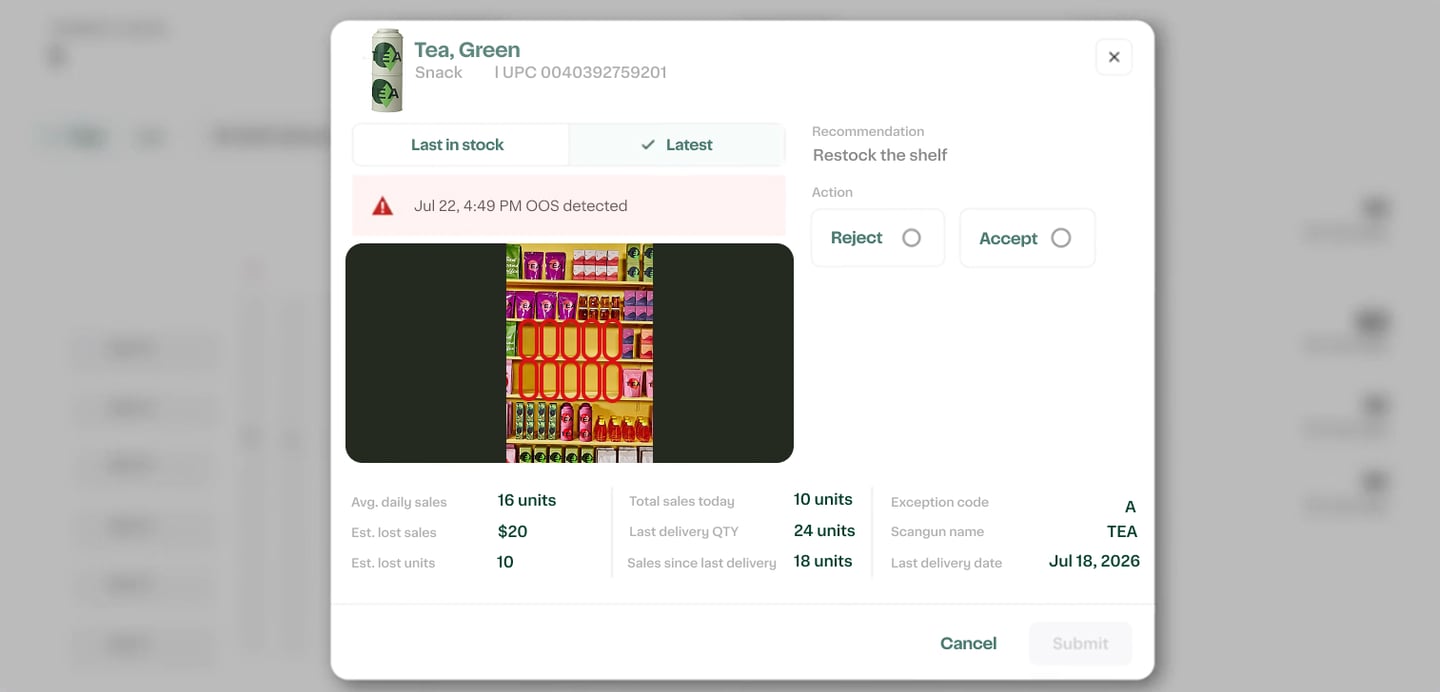
For CPG brands, Instacart is bringing new visibility into what happens with their products in stores with a solution called the Store Excellence Portal. Brands will receive a daily, store-level view of what is on the shelf, helping them identify issues like where gaps are costing sales, where customers are switching to competitors, and which stores and SKUs need attention.
As a result, Instacart says brands will be able to see how much revenue is being lost down to the store and UPC, refreshed daily, providing an estimated dollar figure to act on.
Brands will also be able to track whether consumers who could not find their product switched to a different pack size or competitor and see how their availability stacks up against the category.
In addition, the portal will enable tracking of depletion patterns in the weeks before demand spikes and comparing against years of historical availability data. Built-in forecasting will flag which stores and SKUs are likely to go out of stock before it happens.
These new in-store software solutions are rolling out with select grocers and CPG brands, with more launching in the coming months.
"Grocery stores are the most complex physical environments in retail. A single store carries tens of thousands of items and the floor changes by the minute as customers shop, brands restock, and associates move displays," said Ryan Hamburger, chief commercial officer at Instacart. "Traditional inventory systems weren't built for today's reality – they rely on estimates and periodic counts, leaving grocers and brands with an incomplete picture of what's actually happening on shelves. By turning the insights Instacart generates every day into real-time intelligence for the physical store, we’ll give retailers and CPG brands a level of visibility that drives better business outcomes and experiences for every customer."
San Francisco-based Instacart partners with more than 2,200 retail banners representing nearly 100,000 stores across North America.