
IHL Group: Retailers pursue inventory visibility with this solution

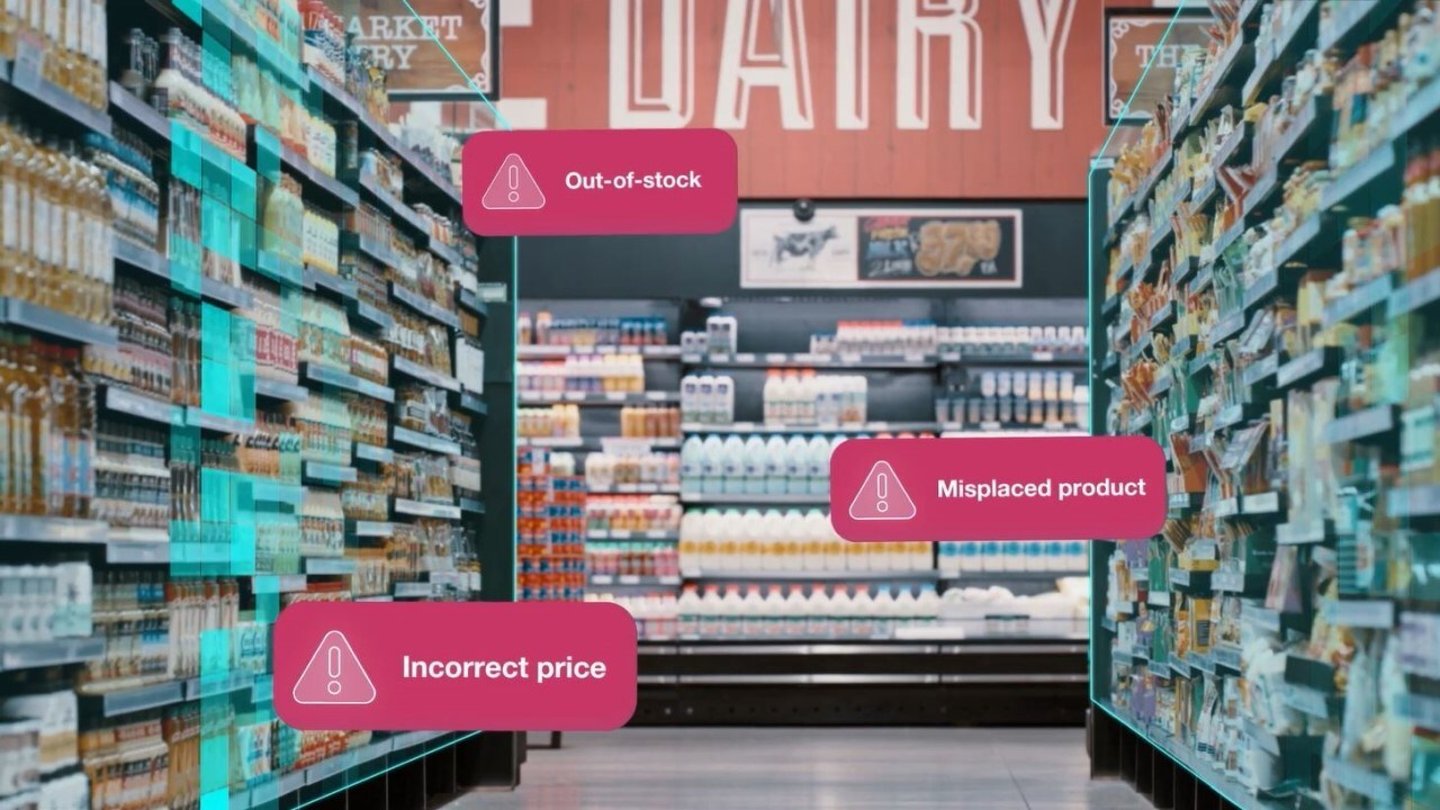
As inventory issues threaten sales, retailers are increasingly turning to a specific technology tool to improve visibility in stores.
Retailers with profit growth of more than 10% are 94% more likely to invest in shelf intelligence technology (solutions that help provide accurate, real-time data on what product is stocked on store shelves) than their lower-performing peers.
Data from a new survey of U.S. and Europe, Middle East and Asia (EMEA) retailers from IHL Group and Scandit also indicates that respondents expect multiple benefits from shelf intelligence deployments, including increased customer satisfaction (57%), reduced labor costs (55%), on-shelf availability lifts (49%) and higher store associate productivity (38%).
This increasing interest in shelf intelligence is occurring as previous IHL Group research shows that inventory issues including out-of-stocks, overstocks and misplaced items remain a critical challenge for retailers, equating to $1.73 trillion in lost sales annually.
[READ MORE: IHL Group: Inventory issues cause $1.7T in annual losses]
Consequently, inventory visibility ranks second as a technology investment priority behind personalization of the customer experience. Retailers with profit growth of 10% or more are investing 208% more in inventory visibility solutions than less profitable retailers.
"While digital transformation has dominated the retail industry for the last decade, inventory accuracy and shelf availability continue to erode profitability,” said Greg Buzek, president and chief AI officer at IHL Group. “Our new research demonstrates that shelf intelligence technology has matured to a competitive necessity, and retailers who have embraced this shift are breaking away from the pack."
When deploying shelf intelligence, respondents who have adopted a hybrid data capture strategy - using multiple methods, such as autonomous robots, fixed cameras and mobile devices - are 64% more likely to be early adopters.
These respondents are also 136% more likely to maintain profitability leadership. Over the course of the next 12 months, 36% of all respondents plan to adopt a hybrid data capture strategy, the single highest amongst planned shelf technologies. A further 21% are planning to implement a hybrid data capture strategy within the next 24 months.
"Grocers and other retailers are no longer asking whether shelf intelligence works, they're asking how fast they can scale it,” said Christian Floerkemeier, CTO and co-founder at Scandit. “The data confirms what we are seeing in real-world engagements across North America and Europe where deployments are increasing, on-shelf availability rises of 5% are being realized and bottom lines are being positively impacted, underlining the overall strategic imperative."
Research for the survey spanned more than 400 retailers across grocery, mass merchants, warehouses, drug stores, and convenience store segments in the U.S. and EMEA.

