Exclusive Q&A: DHL E-commerce Americas CEO Scott Ashbaugh


DHL E-commerce has been planning for peak delivery season since the summer and is tracking the features customers want most.
Chain Store Age recently had a conversation with Scott Ashbaugh, Americas CEO of DHLE-commerce, about the online delivery provider’s outlook for the holiday season into 2026. DHL E-commerce is a division of DHL Group operating in the U.S. that exclusively fulfills digital business-to-consumer purchases, utilizing the U.S. Postal Service to carry out last-mile delivery.
What preparations is DHL E-commerce making for peak delivery season?
Peak season preparations start with understanding the customers that are in the portfolio and what their profiles look like. This centers on forecasting, and that process starts back in July every year.
We look at the mix of accounts, which accounts have a peak, and which ones don't have a peak, as well as where they're going; and then figure out what capacity is needed in different parts of our delivery network as a forecast.
DHL E-commerce then sharpens that forecast as months go by, with some new accounts arriving and other existing accounts leaving. We typically create our major peak plan in terms of our transportation capability and interface with USPS by August, and then it gets fine-tuned as peak period approaches.
So forecasting is first, followed by communications with our customers to find out things like if they are having any issues with their inventory. Then we balance where our automated sorting capacity is, based on the footprint of where the customers are. And then comes hiring.
This year, DHL E-commerce is hiring about 2,000 temporary workers for peak season. That may represent slightly more people than we actually need, but this year has been so volatile that we are spending a little bit more to make sure that if there is a spike beyond what we expect, we are ready to handle it.
DHL E-commerce uses USPS for the last mile of our network, so a tight integration with them is very important. We have been working with them on additional runs to USPS facilities and adjusting some of the credible entry times on the second runs to be able to ensure that when we do show up with more packages than normal, USPS is ready to accept them and have a time slot on their automation to sort packages and move them down to the local delivery units.
How do you expect online holiday sales in 2025 to compare to 2024?
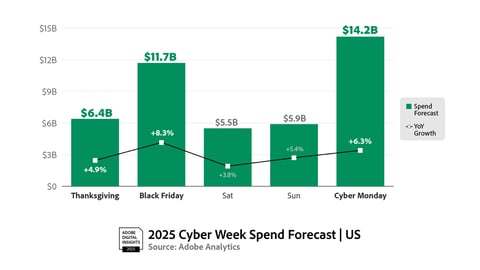
Holiday forecasts coming in from our accounts look similar to those of most years. However, every account has a different profile. Some products lend themselves more to holiday sales than others. But the proportional year-over-year increases look to be about the same as other years in what they forecast.
[READ MORE: Survey: Black Friday, Cyber Monday remain critical to online holiday sales]
Are consumer expectations for delivery changing, and if so, how and why?
There's a pendulum that sometimes swings more toward consumers wanting speed. Sometimes the pendulum swings back toward consumer wanting low cost, which we are seeing right now. DHL E-commerce has three different service levels. Our slowest one is ground, which is a three-to-eight-day service.
We have a medium-speed service we call expedited, which is two-to-five days and then our fastest service called Max, which is two- or three-day. We have seen a significant shift from the expedited and Max delivery toward ground delivery. products.
It does seem that right now, cost is king. It’s helpful for us to have a portfolio of the three products, because delivery speed can find its natural home depending on what the consumer interest is.
What do you see as the biggest delivery trend for 2026
DHL E-commerce is prioritizing our work and initiatives to be prepared for continued cost pressure and doing everything we can to keep the network as efficient as possible to be at the top of the option set when it comes to the providing the lowest-price shipping option.
This is not so much a change in trend as it is a solidification of what's happening in delivery right now, which is a shift toward more cost-focused services.