DoorDash acquires Instacart for $17 billion

DoorDash and Instacart are going from rivals to sister companies.
DoorDash has entered a definitive agreement to purchase Instacart for roughly $17 billion at a total value of $65 for each Instacart share. The aggregate transaction will be at least 75% cash, with Instacart stockholders able to elect cash, DoorDash stock or a combination of both, as long as DoorDash stock does not exceed 25% of the total purchase amount.
Instacart's board of directors has unanimously approved the agreement. Media reports had speculated about a possible acquisition of Instacart by DoorDash for the past week.
[READ MORE: DoorDash reportedly in talks for $17B Instacart acquisition]
“Grocery is one of the hardest things to get right online,” said Tony Xu, co-founder and CEO of DoorDash. “Someone has to pick a ripe avocado, find a substitute you’d choose yourself, and get the ice cream to you before it melts. Instacart has spent years learning to do that well for grocers, while DoorDash has built a delivery network and technology that local stores rely on every day. Together, we could give stores of every size more of those tools and unlock the potential of grocery delivery.”
Following closing, DoorDash is expected to keep Instacart’s brand, enterprise technology products and app. Until the transaction closes, DoorDash and Instacart will continue to operate as separate and independent companies.
Members of the DoorDash DashPass and Instacart+ paid subscription programs would pay one membership fee instead of two, which DoorDash estimates would save them an estimated $100 million per year in total on membership fees alone.
In addition, DoorDash said that retailers using the two services can continue using any delivery platform they choose with no exclusivity requirements. Instacart shoppers will maintain all the features and perks of working for Instacart, such as flexibility to choose their hours, and will not be required to work for DoorDash.
According to The Information, Instacart had also reportedly held discussions about a possible acquisition by Uber, which operates the Uber Eats on-demand delivery platform.
DoorDash and Instacart discussed a possible acquisition of Instacart in 2021 for between $40 and $50 billion, according to The Information. At the time, Instacart was a private company valued at $39 billion. Concerns about possible antitrust difficulties under the Biden administration were reportedly a major factor in the talks dissolving without a deal.
Instacart now trades on the Nasdaq stock exchange under the corporate name Maplebear Inc. and had a market capitalization of $15.1 billion as of Thursday, Oct. 22, the last day before reports of a possible acquisition first surfaced. The DoorDash offer represents a 26% premium on that value.
“Over the last 14 years, Instacart has transformed online grocery by helping retailers of all sizes compete and grow, and joining forces with DoorDash allows us to do even more,” said Chris Rogers, CEO of Instacart. “When our purpose-built grocery technology and trusted retailer and brand relationships are combined with DoorDash’s global consumer reach and logistics capabilities, we can create new opportunities for our retail and brand partners, offer an even better experience for customers and shoppers, and deliver compelling value for our shareholders.”
DoorDash builds on delivery gains
DoorDash provides on-demand delivery services in 25 countries across the globe, while Instacart operates strictly in the U.S. and Canada. Both companies are headquartered in San Francisco. According to data from consumer transaction and market intelligence data provider Consumer Edge, DoorDash’s share of spending across major restaurant and grocery delivery platforms rose from roughly 44% in the second quarter of 2021 to nearly 59% in the third quarter of 2026.
During the same time period, Instacart’s share fell from roughly 26% to approximately 18%, while Uber Eats gained from roughly 16% to about 18% although its share has held steady over the past year.
Michael Gunther, senior VP of research and market intelligence at Consumer Edge, said in commentary emailed to Chain Store Age that the competitive landscape for delivery has changed considerably over the past several years.
“These trends partly reflect the expansion of DoorDash and Uber Eats into grocery, convenience and other retail categories, increasingly competing in areas historically associated with Instacart, and highlight how the boundaries between restaurant, grocery and broader retail delivery have become increasingly blurred,” said Gunther.
In September, DoorDash entered a strategic partnership with Wonder, the delivery-focused restaurant company founded by former Walmart executive Marc Lore. Under the agreement, DoorDash will acquire Wonder's Grubhub Campus Dining subsidiary for $300 million and make a long-term $125 million investment in Wonder as part of its Series D round.
Instacart, DoorDash both develop tech solutions
Instacart and DoorDash have both moved beyond their origins as delivery platforms to become solution providers for food service and grocery retailers. In 2022, Instacart released a 10-year-plan that included its intention to go public (which occurred in 2023), as well as the goal of entering its “next, tech-enabled chapter.”
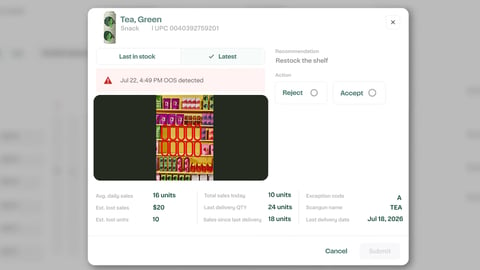
The company has since rebranded itself as a “grocery technology company” and released numerous in-store solutions including Storefront Pro, its end-to-end customizable e-commerce solution built specifically for supermarket retailers, the FoodStorm order management system for catering and prepared foods, and Instacart Carrot Ads electronic shelf label (ESL) software.
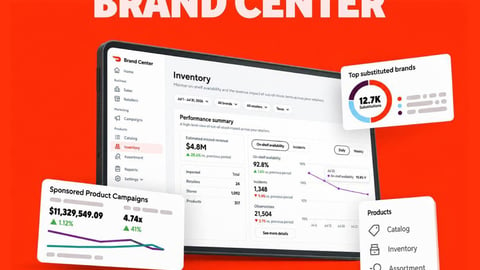
However, Instacart has announced it will wind down its Caper Carts smart cart business after determining retailer adoption is not scaling quickly enough to justify continued investment. DoorDash also offers a range of tools for retailers, including the DoorDash Commerce Platform, a set of solutions it released in fall 2024 that is designed to help retailers manage their businesses on their own channels, and has also been developing proprietary delivery robots and drones.
This is a developing story. Chain Store Age will continue to provide updates.