Warby Parker partners with Google, Samsung on new smart glasses


Warby Parker is unveiling its first intelligent eyewear frame a year after the announcement of the concept.
The eyewear brand is publicly revealing its first intelligent eyewear assortment. The new frame is constructed from ultra-lightweight, flexible nylon in a custom dark green hue with a rounded silhouette. The interior temple was crafted with a semi-translucent finish.
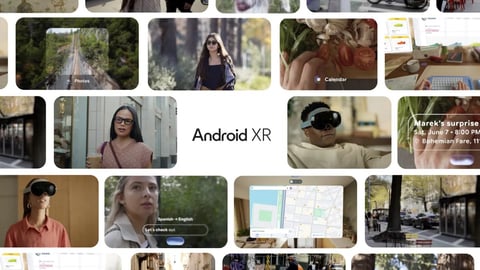
Warby Parker initially announced its smart glasses in May 2025. Built in partnership with Google and Samsung, the frames feature the Google Gemini agentic AI model and work with the Android XR operating system for AI-enabled headsets and glasses to provide contextual, real-time assistance.
[READ MORE: Warby Parker teams with Google to develop AI-enabled glasses]
Google has been developing the Android XR eyewear platform in collaboration with Samsung and Qualcomm for more than a decade. Equipped with a camera, microphones and speakers, Android XR glasses work in tandem with a user’s phone, giving them access to their apps.
Wearers will be able to gain access to information, manage daily tasks, navigate their surroundings, communicate and interact with apps. The glasses are designed for all-day, everyday use.
“Glasses are the most personal technology we use and are the very first thing people notice about you,” said Dave Gilboa, co-founder and co-CEO of Warby Parker. “As we integrate advanced technology into our products, we’re staying true to the principles that define great eyewear: beautiful design, precision optics, and exceptional comfort in frames built for all-day, everyday wear.”
Warby Parker plans to launch its first line of intelligent eyewear during fall 2026. The initial assortment will feature multiple optical and sun styles and will support a range of prescriptions and lens options.
"These glasses give you powerful new tools, but they’re designed to feel intuitive and unobtrusive so you can stay focused on the people and moments in front of you," said Neil Blumenthal, co-founder and co-CEO of Warby Parker. "Every detail and curve was considered for extended, everyday use, from the fit and balance of the frame to enhanced grip and stability."
As part of this collaboration, Google has committed up to $75 million for Warby Parker’s product development and commercialization costs. In addition, Google has committed to investing up to $75 million in Warby Parker, at Warby Parker’s option and subject to reaching certain collaboration milestones.
Google is also partnering with Samsung and Gentle Monster to develop Android XR-based smart glasses and plans to work with additional brands like Kering Eyewear in the future.
Android XR-based smart glasses will compete with visual virtual reality interfaces like Apple Vision Pro and Meta Quest (formerly Oculus). They should have an advantage of functioning more like regular glasses than those two systems, which require a large set of goggles or a headset.
Android XR is emerging following the failure of the Google Glass connected eyewear device. Google ended all support for Google Glass in the consumer market in 2016 and discontinued it entirely in 2022.