
The risks and rewards of palletized displays
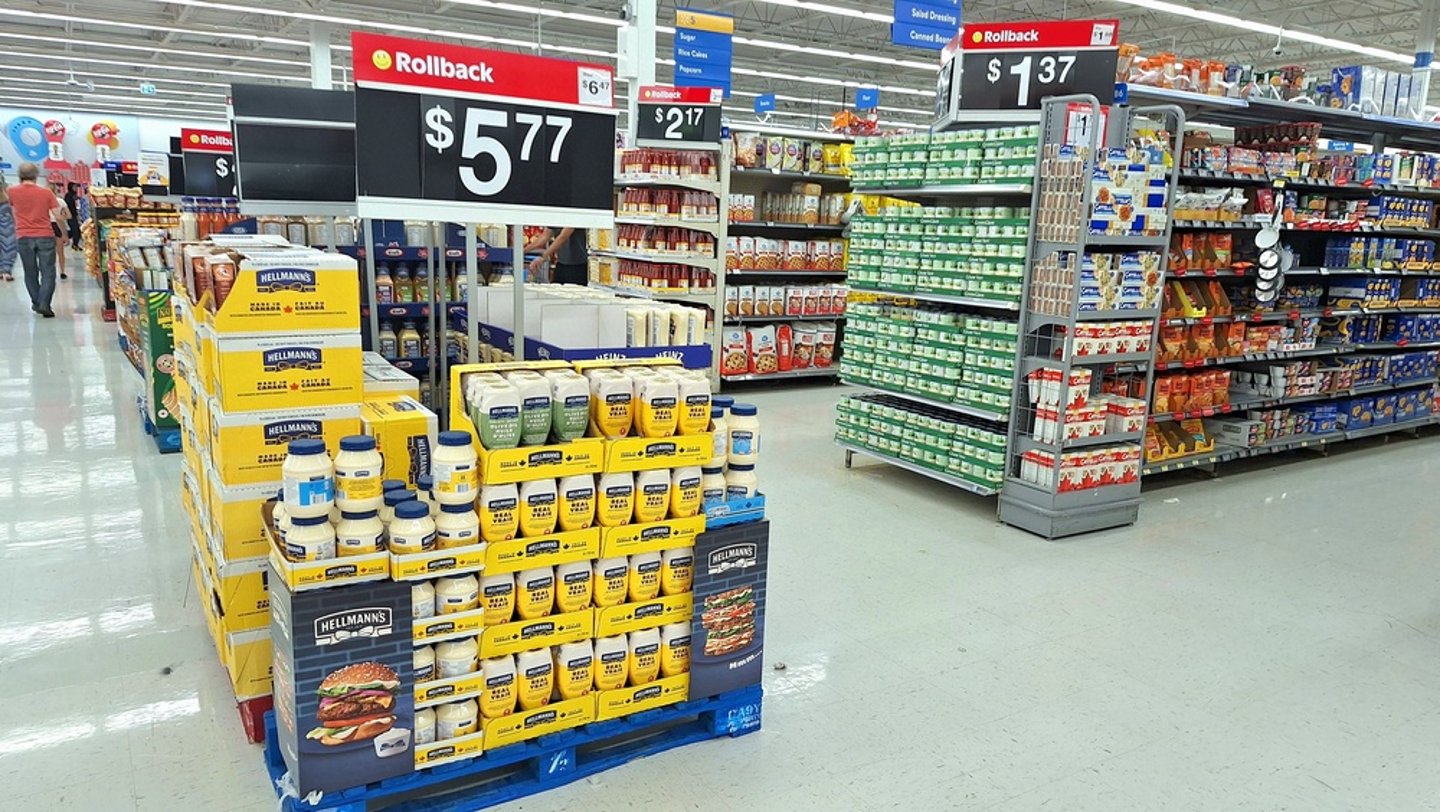
Palletized displays are becoming a more common fixture on retail sales floors as chains look for ways to reduce labor, speed promotional execution and simplify replenishment.
Instead of receiving cases that employees must unpack and restack, stores can receive complete displays that are assembled, stocked and ready to merchandise. Full-, half- and quarter-pallet formats are increasingly used for seasonal promotions, high-volume items and other fast-moving merchandise.
For retailers, the labor benefit is straightforward. But as more pallets remain on the sales floor, store teams also need to consider how a shipping platform functions once it becomes part of the customer environment.
Reducing Handling at the Store Level
Traditional floor displays can require considerable labor. Employees may move a pallet onto the sales floor, remove merchandise and then bend, lift and reposition individual products into a floor stack or promotional display.
The issue becomes especially apparent with bulky or high-volume merchandise. A large watermelon bin, for example, may need to be emptied before its container can be moved to another base, then reloaded as inventory sells down.
Reducing that handling can save time while also limiting repetitive bending and lifting. Such activities are legitimate ergonomic concerns in retail and distribution environments. OSHA specifically identifies the issue in its Grocery Warehousing guidance: “Employees repeatedly bend forward at the waist to place boxes on the lowest level of pallets.”
For this reason, OSHA recommends raising work heights and using equipment that reduces bending and other ergonomic stresses. Retail-ready displays are designed to eliminate much of that work. The manufacturer builds and
stocks the display before shipment, and store employees move it into position and remove the protective covering.
“These displays arrive in the store with a cardboard or plastic cover,” explained retail safety expert, Simon Hardie. “The staff removes the cover, and it’s ready to go. There’s nothing to stack.”
When the Pallet Stays With the Display
More elaborate displays can be difficult to transfer from their original shipping pallets without damaging them.
“If you look at any of those displays on that carousel, it’s virtually impossible for store staff to lift that cardboard display up and move it onto a plastic stack base, which is the requirement in stores like Walmart,” Hardie said. “The moment you bend over and try to pick it up, the cardboard shelving in that complex shipper just begins to fall apart.”
In those situations, leaving the display on the original pallet may be the most practical operational choice.
Retailers are already designing around this new reality. For example, Kroger's Display Guide includes detailed requirements for quarter-pallet displays, covering dimensions, tray footprints, shelf lips, shipping and structural integrity.
One requirement is particularly telling: “The design should keep the product securely in place and maintain its structural stability throughout the entire supply chain and promotional period,” Hardie said.
That means the pallet is no longer simply a transportation device. In many cases, it becomes part of the fixture.
Managing the Customer-Facing Risk
Wooden pallets are built for transportation and material handling, not necessarily for use as permanent customer-facing fixtures. Once they remain in shopping areas, exposed edges, openings, splinters and damaged boards can become safety concerns.
Shoppers approaching a promotional display are typically focused on products, pricing and signage rather than the floor around the display.
The potential exposure can be significant:
•Nearly 9,000 pallet-related injuries occur in stores each year.
•Senior customers are frequently involved in serious incidents.
•One major retailer paid a $7.5 million settlement after a customer caught his foot in a pallet, turned and broke his hip.
•Many pallet-related injury cases are settled outside court and never become public.
•Pallet hazards can affect employees as well, creating workers’ compensation and lost-time costs.
The operational challenge is to preserve the labor savings of palletized merchandising without introducing avoidable hazards into customer traffic areas.
One option is an adjustable pallet guard or display protection device that surrounds the pallet perimeter while allowing the original display to remain in place. The goal is to cover exposed pallet edges and openings without requiring employees to unload or rebuild the display. Adjustable designs can also accommodate different pallet sizes and configurations.
Add Pallets to the Merchandising Walk
As palletized displays become more common, floor-level conditions should become part of routine merchandising and safety inspections.
When walking a pallet display, store teams should ask:
•Is the display in the correct location?
•Is it fully stocked and stable?
•Is the promotional signing correct?
•Does the merchandise or display completely cover the pallet footprint?
•Are any pallet edges or corners exposed?
•Are there openings where a shopper’s foot could become caught?
•Are there exposed splinters or damaged boards?
•Does any part of the pallet protrude into customer traffic?
•Could a shopping cart strike and damage merchandise at the edge of the display?
•Would a shopper approaching the display while looking at the merchandise easily notice the pallet at floor level?
•Can the condition be corrected without requiring employees to dismantle and rebuild the display?
These are simple observations, particularly when they become part of normal merchandising and safety walks.
Make Pallet Safety Part of the Display
Palletized displays can help retailers execute promotions faster, reduce product handling and make better use of limited labor. But once a shipping pallet remains on the sales floor, it becomes part of the customer environment as well.
For store managers, the takeaway is straightforward: If the pallet is part of the display, pallet safety should be part of the setup.
That means looking for exposed edges, openings, damaged wood and trip points, and using solutions that preserve the labor savings without creating additional work for store teams.

Daisy McCarty is chief marketing officer of The Marketing Blende, a fractional CMO agency in Fort Worth, Texas, specializing in building revenue, reputation, and resilience for mid-market companies in industries such as technology, healthcare, manufacturing and retail.
More Blog Posts In This Series
Customer Aggression: How to protect your employees during the peak-season rush