Data & Analytics

  • Consumers want social connection with retailers

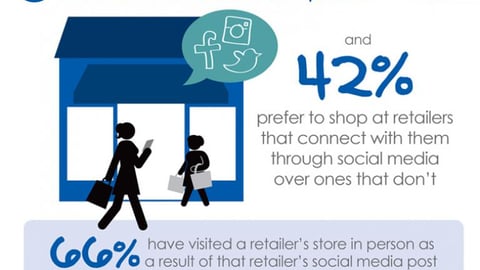
    San Diego – Consumers are using social media to connect not just with high school classmates and former flames, but with retailers. According to Interactions’ latest Retail Perceptions report, “Social Media: Invest to Impress?”, more than 75% of social media users expect retailers to have a social media presence, and 42% prefer to shop at retailers that connect with them through social media.

  • Study: Restaurants perform positively in March

    Washington, D.C. - As a result of higher same-store sales and a continued optimistic outlook for future business conditions, the National Restaurant Association's Restaurant Performance Index (RPI) remained in positive territory in March. The RPI, a monthly composite index that tracks the health of and outlook for the U.S. restaurant industry, stood at 102.2 in March, down 0.4% from February's level of 102.6.

  • Study: Social posts from malls lack info

    Chicago – Customers at malls are actively posting via social media, but leaving out information that could help mall-based retailers. According to a new study from location-based social media monitoring firm Geofeedia, 91% of mall-based social posts lack relevant hashtags and/or keywords, and 8% of posts only contain photos or videos.

  • Feature: Adagio Teas takes the paper out of promotions

    Elmwood Park, N.J. – Traditionally, when something is printed on paper, it is considered more valuable and “real.” But for Adagio Teas, an omnichannel specialty retailer of gourmet tea, digital promotions are the most reliable.

    “As an online vendor, we are sensitive to the effectiveness of promotions,” Michael Cramer, founder and CEO of Adagio Teas, said during an exclusive interview with Chain Store Age. Adagio Teas operates three stores in the Chicago area as well as a global e-commerce site.

  • PROMISE FULFILLED

    Front-end omnichannel success relies on back-end fulfillment

    The front-end promise of omnichannel retail cannot be delivered without investment in back-end technology and processes that allow fulfillment of orders across multiple channels. Retailers must eliminate internal silos and obtain real-time awareness of their full inventory.

    Omnichannel fulfillment is a difficult, but not impossible, task.

  • A BULLISH M&A FORECAST

    Gaining market share and geographic coverage are top priorities driving deals

    Retail continues to rally for deals in 2015, and the sector could be on the cusp of another major year for mergers and acquisitions. Already this year, we’ve seen speculation about a number of potentially massive deals — from a possible buyout of Rite Aid by Walgreens Boots Alliance to the proposed merger between Staples and Office Depot. Looking across the industry, as part of BDO’s annual Retail Compass Survey of CFOs, we asked chief financial officers at leading U.S.

  • CHANNELING CUSTOMER LOYALTY

    Sean Claessen, executive VP strategy and executive creative director, Bond Brand Loyalty, spoke with Chain Store Age about how retailers can build customer relationships and loyalty in the era of omnichannel engagement.

  • AN INTIMATE OCCASION

    David’s Bridal gets personal with advanced digital analytics

    There are few events more personal in a woman’s life than her wedding.

  • BEACONS AT YOUR COMMAND

    GameStop uses beacons to put customers in charge of store promotions

    Retailers often use in-store beacons to push promotions to customer mobile phones as they pass by. But video game retailer GameStop Corp., which operates more than 4,200 U.S. stores, takes a different approach.

    “In the store, we have multiple pieces of signage marking the location of beacons,” said Charlie Larkin, senior director of GameStop Technology Institute, the retailer’s in-house IT development center.

  • FIVE STEPS TO COMPLIANCE

    Tom Lichford, VP retail technologies, NRF, recommends retailers seeking to achieve compliance with upcoming October 2015 EMV mandate take the following five steps:

    1. CUSTOMER EXPERIENCE: “No matter what, start with customer experience,” advised Litchford. Retailers need to determine such factors as whether they will use self-service or traditional POS, customer prompts and screen displays, and how checkout speed will be impacted.

X
This ad will auto-close in 10 seconds