JLL survey reveals shift in back-to-school shopping; top 10 retail destinations are…


Value and convenience will drive market share in this year's back-to-school shopping.
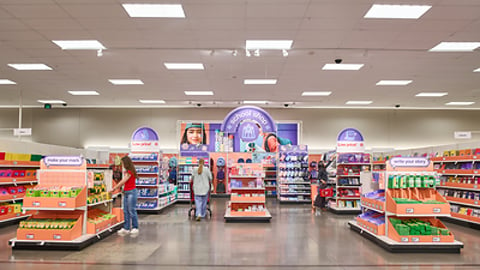
More than 80% of parents plan to do back-to-school shopping at mass merchants, according to JLL’s 2026 Back-to-School Survey report, and dollar stores have cracked the top 10 retail destinations for the first time as a frequently-visited retail destination for back-to-school shoppers. In other findings, over 90% of parents will shop in physical stores, moving away from the delivery boom of recent years.
The data shows decisive movement toward value-focused retailers. Walmart’s popularity surged 22.5 percentage points to reach 77.3% of parents — the highest any retailer has reached in JLL's survey history — while Target and Amazon remain in the top three. Together, these three retailers now capture 58% of all top-retailer mentions. (See list of top 10 retail destinations at end of article.)
“Families are seeking retailers that respect their time and budgets, which explains why 68.7% cite saving money and 35.1% prioritize finding the full school list in one place," said James Cook, Americas director of research, retail, JLL. "Mass merchandisers are the favorites this season because they solve both priorities at once."
Spending
Confidence in the back-to-school shopping season is strong, according to the report, as parents plan to increase their spending by a robust 11.7% to an average of $489 per child. The increase is led by younger, engaged shoppers and signals significant opportunities for retailers who can deliver on value, selection and convenience.
Value shoppers average $444 per child and visit only two to three stores. Meanwhile, parents' shopping at retailers for electronics and home goods plan to spend $800-$900 per child — nearly double the national average — visiting close to six stores for older and college-bound students.
Younger parents are driving overall growth, with Gen Z planning to spend $671 per child (up 18.5% year over year) and millennials $549 (up 18.0% year over year). Enclosed mall shoppers spend $613 per child, 25% above average, and are drawn to specialty options.
Timing
The JLL report, which surveyed over 1,000 U.S. parents, finds that consumers are shopping more strategically this year, with supply chain fears of past years easing. As a result, 27% of parents are planning to start shopping in July, creating a concentrated, high-traffic period for retailers.
Categories
Clothing and uniforms command the largest share of back-to-school budgets at $189 per child (28% of total spend), followed by electronics at $151 (22%) and home furnishings at $125 (18%). Higher-ticket categories like electronics and home furnishings represent concentrated opportunities among households with older students, advised JLL.
Real Estate Implications
The report noted that mass merchandisers, dollar stores, and off-price formats are capturing the volume, representing fundamental change in consumer behavior. Leasing strategies should prioritize formats that answer the two factors parents care about most: saving money and completing their list in one place, the report said.
“We're seeing a fundamental restructuring into a barbell market—value-seeking families consolidating at mass merchandisers while affluent households layer on specialty stops,” said Naveen Jaggi, president of Retail Advisory Services, JLL. “Centers that anchor on value formats while offering specialty depth can capture both high-volume traffic and high-spending customers. The winners will be landlords who intentionally curate for both ends of this barbell.”
Other findings from the report are below.
•Inflation concern holds steady at 64% of parents —nearly unchanged from last year — and lower-income families feel it most, spending roughly $188 less per child when worried versus unconcerned peers in the same bracket.
•Discretionary spending fell to 56% of budgets, down from 60%, marking the second consecutive annual decline.
•July is the peak shopping window —centers without active back-to-school promotions are already behind.
Here are the top 10 destinations for back-to-school shopping:
•Walmart (77.3% of respondents plan to shop)
•Target (40.1%)
•Amazon (38.7%)
•Old Navy (8.8%)
•Dollar General (7.6%)
•Dollar Tree (6.8%)
•Staples (5.8%)
•Ross (4.7%)
•Macy's (4.6%)
•Kohl's (3.9%)