Democrats introduce tariff refund bills; Trump says he can issue levies


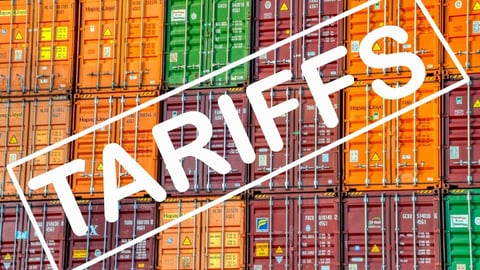
House and Senate Democrats have introduced two pieces of legislation designed to force the federal government to issue refunds for tariffs.
In a six-to-three ruling issued Friday, Feb. 20, 2026, the U.S. Supreme Court said that the Trump Administration does not have the authority to unilaterally impose tariffs on imported products under the International Emergency Economic Powers Act, or IEEPA.
On Monday, Feb. 23, 2026, a group of Democratic senators led by Sen. Ron Wyden of Oregon, Jeanne Shaheen of New Hampshire and Ed Markey of Massachusetts brought a bill forward to require repayment of tariffs collected since Trump began issuing tariffs in February 2026.
President Donald Trump had issued both reciprocal tariffs on countries which impose levies on imports from the U.S., as well as tariffs on China, Canada and Mexico for what he said was those governments’ failure to crack down the smuggling of fentanyl and other dangerous drugs to the U.S.
[READ MORE: Consumers, businesses paid most of 2025 tariff costs, according to NY Fed report]
"Trump’s illegal tax scheme has already done lasting damage to American families, small businesses and manufacturers who have been hammered by wave after wave of new Trump tariffs," Wyden said in a statement to CNBC. Wyden is the highest-ranking Democratic member of the Senate Finance Committee.
The proposed Senate bill would require Customs and Border Protection to issues refunds for all tariffs unilaterally collected under IEEPA by Trump’s orders within 180 days of its passage, with interest. Companies receiving refunds would be required to relay the savings to customers.
In addition, on Friday, Feb. 20, Democratic Rep. Steven Horsford of Nevada introduced a similar bill in Congress. The Supreme Court ruling striking down most tariffs imposed by Trump did not specify whether refunds would have to be paid on levies already collected.
Meanwhile, in posts on his Truth Social platform, Trump sad he can use licenses to do "absolutely ‘terrible’ things to foreign countries" and that he does not need to go back to Congress for tariff approval, which was reaffirmed by the Supreme Court decision rescinding much of his tariff authority.
Trump also said he can require licenses including fees for importing products to the U.S., even though the Supreme Court ruling specifically prohibits collecting import license fees. He did not provide any details to back up any of these claims in the posts.
In addition, in a public statement shortly after the Supreme Court announced its ruling, Trump said he will sign an executive order setting a new 15% "global tariff" under Section 122 of the Trade Act of 1974, which allows him to establish tariffs for 150 days, with Congressional approval needed for any extension.