Consumer Attitudes & Behavior

  • BEACONS AT YOUR COMMAND

    GameStop uses beacons to put customers in charge of store promotions

    Retailers often use in-store beacons to push promotions to customer mobile phones as they pass by. But video game retailer GameStop Corp., which operates more than 4,200 U.S. stores, takes a different approach.

    “In the store, we have multiple pieces of signage marking the location of beacons,” said Charlie Larkin, senior director of GameStop Technology Institute, the retailer’s in-house IT development center.

  • GNC has weak Q1

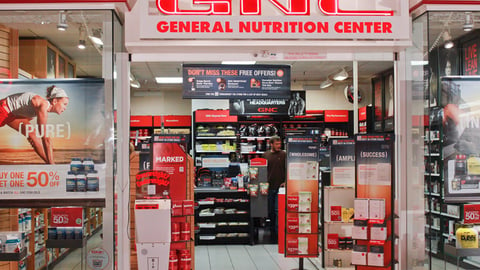
    Pittsburgh – GNC Holdings Inc. demonstrated some weakness during the first quarter of fiscal 2015 with shrinking profit and revenue. Net income dropped 9% to $63.27 million from $69.9 million a year earlier, driven by rising selling, general and administrative (SG&A) expenses.

    Net revenue fell slightly to $670.25 million from $674.46 million. Same-store sales decreased 4.1% in domestic company-owned stores (including GNC.com sales). In domestic franchise locations, same-store sales decreased 1.5%.

  • Study: Retail merger activity surges in Q1

    New York - The U.S. retail and consumer sector experienced a strong first quarter in 2015 for merger & acquisition (M&A) activity, which was driven by seven megadeals (deals with a value of more than $1 billion). According to PwC's U.S. retail and consumer deals insights report, 39 deals were announced for the quarter (with values more than $50 million), up 11% from fourth quarter 2014, but down 9% from first quarter 2014.

  • Amazon hashtag tops in social shopping

    Amazon has climbed to the top of the social shopping ranks, thanks in part to the introduction of #AmazonCart and #AmazonBasket.

  • Forrester: U.S. won’t adopt chip and PIN until 2020

    New York – While most observers agree there will not be widespread adoption of technology to accept payments from EMV-compliant payment cards in the U.S. by the October 2015 fraud liability shift deadline, Forrester Research is less optimistic than most. In a research note, Forrester said retailer concerns about the ROI of spending on chip and PIN technology, as well the development of new secure payment methods, will delay widespread adoption of hardware and software needed to accept chip and PIN payment in the U.S., until 2020.

  • Study: Global consumers eye online groceries

    New York – Retailers who offer or are considering offering online grocery shopping may be on the right track. One-quarter of 30,000 online global respondents surveyed in the new Nielsen Global E-commerce and the New Retail Surv say they are already ordering grocery products online for home delivery and more than half (55%) are willing to use it in the future.

  • Survey: Customer satisfaction down, technology key to improvement

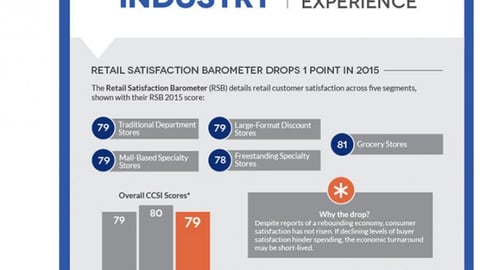
    Ann Arbor, Mich. - Despite economic indicators that show the recession is over, customers are slightly less satisfied in 2015 than they were the prior year. According to CFI Group's Retail Satisfaction Barometer 2015, the RSB score for 2015 is 79 on a 0-100 scale (with 100 being the highest possible score), a one-point drop from 2014.

  • Survey: 20% of Millennials prefer not to interact with cashiers during checkout

    Chicago -- Self-service kiosks got a nod from the Millennial generation, as a new survey released by location-based mobile platform Retale showed that 20% of Millennial shoppers don’t like interacting with cashiers at checkout.

    The survey examined consumer self-service checkout (SSK) adoption and preferences among brick-and-mortar retailers, focusing on SSK experiences, and evaluating convenience, challenges and desired improvements.

    Research highlights include:

  • Tech Guest Viewpoint: Did Lilly for Target Generate Brand Love?

    By Sherrie Mersdorf, director of marketing, NewBrand

  • Mother’s Day spend to grow 2%

    New York – Consumers might be a little nicer to Mom this year than last year. IBISWorld expects total Mother’s Day spending to reach $20.8 billion, representing an increase of 2% from 2014 spending, and an annualized increase of 6.5% since 2010.

    Average household spending on Mother’s Day is also set to grow, with the standard family shelling out an estimated $169.21, representing a 4% increase from the 2014 average.

X
This ad will auto-close in 10 seconds