Walmart co-develops first-ever RFID solutions for fresh categories

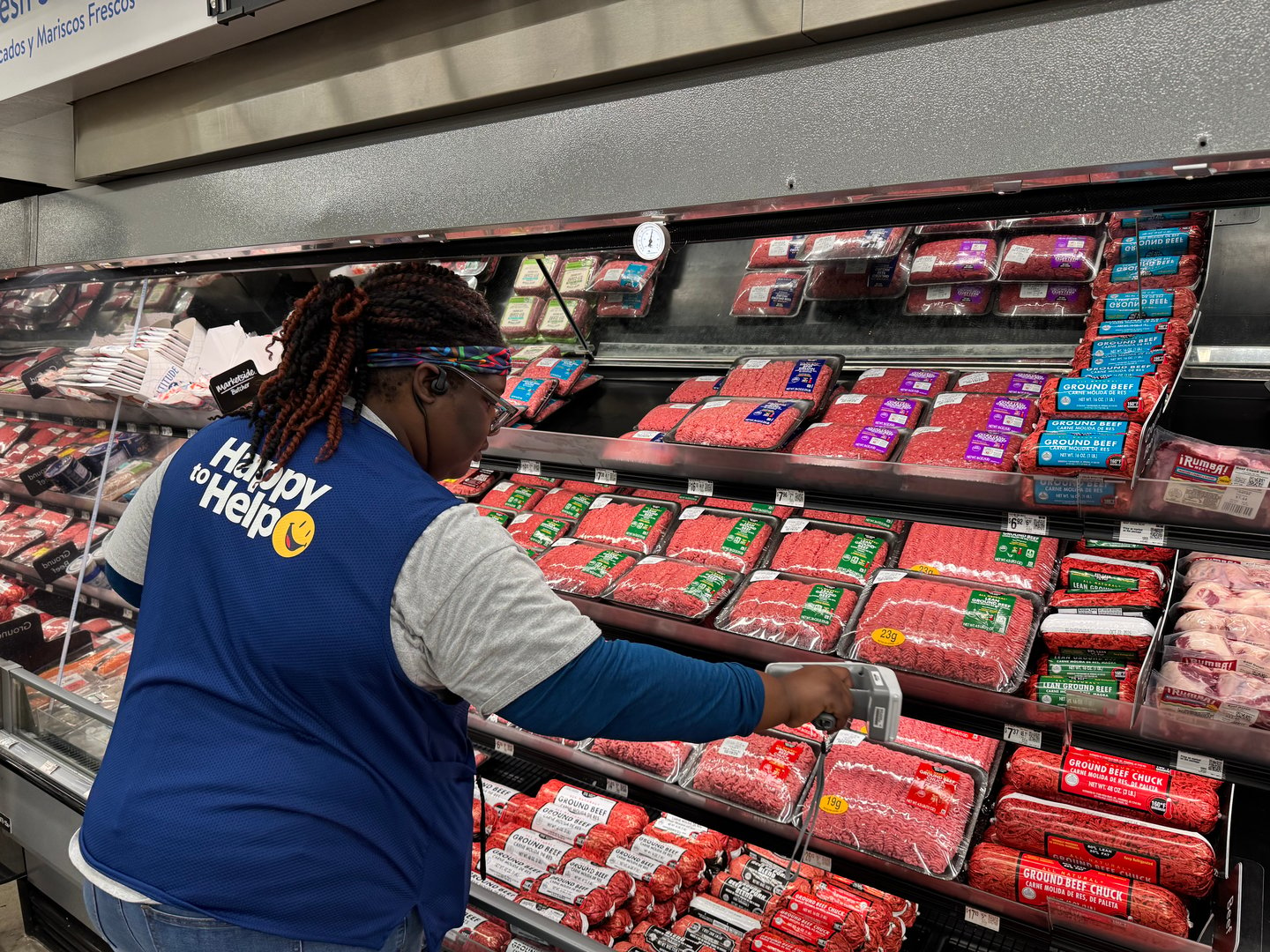
Walmart has partnered to create a "first-of-its-kind" sensor technology that brings RFID-enabled labels to fresh grocery categories.
The discount giant teamed with digital identification solutions company Avery Dennison to develop a solution to the challenge of using RFID technology in high-moisture, cold environments, such as meat cases.
By using Avery Dennison RFID solutions in meat, along with bakery and the deli department, Walmart says its associates can track inventory faster and more accurately to help ensure products stay stocked and ready when customers want them.
In addition, the new RFID-enabled labels provide digital use-by dates to help associates rotate products more efficiently and make better markdown decisions, helping cut down on unsold food.
"We believe technology should make things easier for both our associates and our customers," said Christyn Keef, VP of front end transformation for Walmart U.S. "By cutting down on manual work, we’re giving our associates more time to focus on what really matters — helping our customers."
In 2022, Walmart partnered with the Auburn University RFID Lab to help develop and approve RFID merchandise tagging solutions.
[READ MORE: Walmart requiring RFID tagging, partners with Auburn University]
At that time the retailer also began requiring vendors of apparel, home goods, and some hardlines, entertainment and toy products to provide products that include on their merchandise-attached sales tags a small sticker that features an electronic product code (EPC), instead of only a traditional barcode.
This allows Walmart employees to use an RFID scanner by walking along an aisle and waving a scan gun up and down the shelves. Retailers including Amazon and Target have also partnered with the Auburn University RFID Lab.
The collaboration also ties in with Walmart’s broader sustainability goals, including its aim to cut global operational food loss and waste intensity in half by 2030.
"Supporting Walmart with first-to-market RFID innovation across multiple fresh food categories underscores our mutual commitment to people and the planet," said Julie Vargas, VP and GM of Avery Dennison Identification Solutions. "By giving each item its own digital identity, associates instantly know the freshness of the foods they are handling, enabling better inventory management and resulting in less waste."
Based in Bentonville, Ark., Walmart Inc. operates more than 10,750 stores and numerous e-commerce websites in 19 countries.