Walgreens expands robotic pharmacy fulfillment network – here’s where

Walgreens continues efforts to automate prescription dispensation.
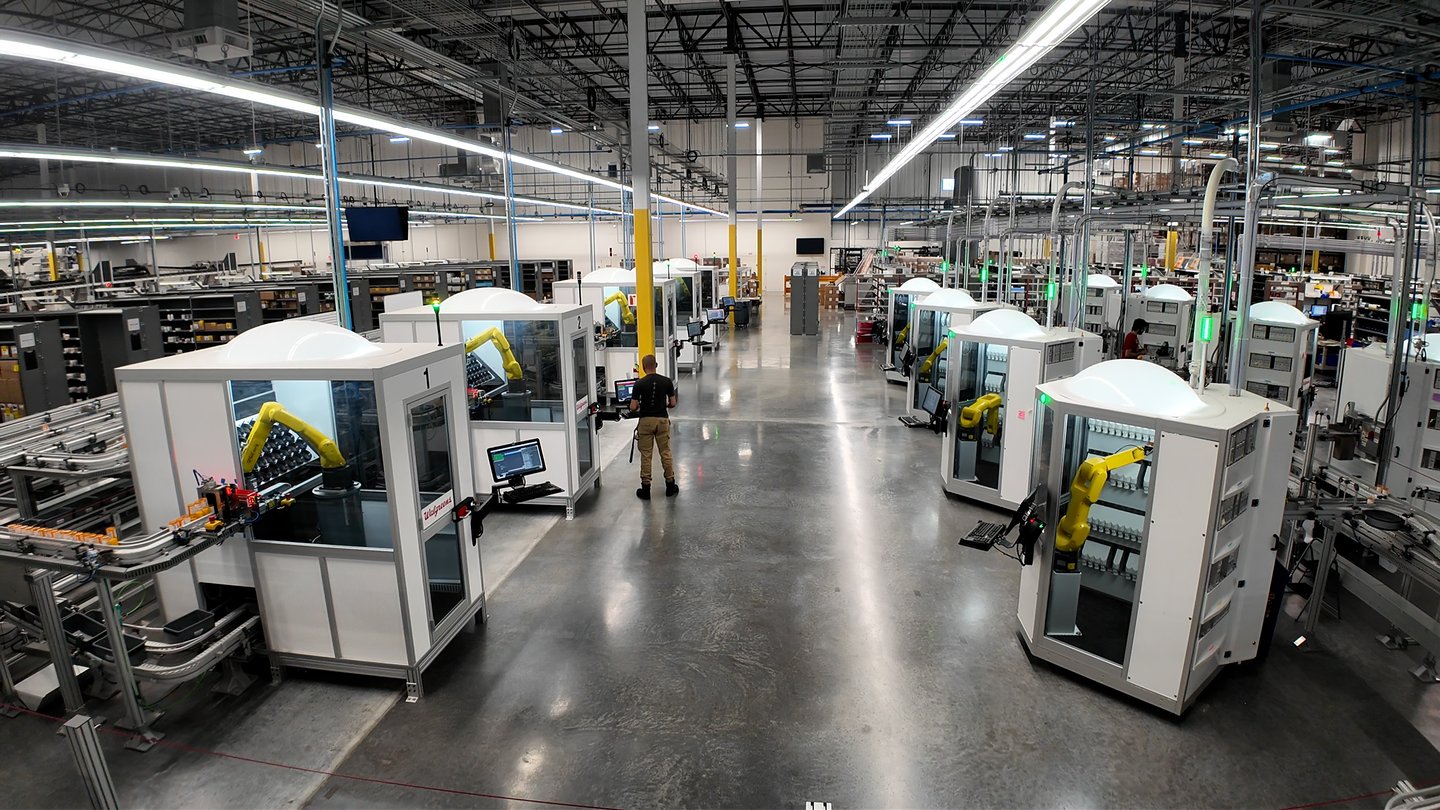
In an email to Chain Store Age, a spokesperson for Walgreens said the retailer has opened a new 68,000-sq.-ft. micro-fulfillment center in Allentown, Penn. dedicated to prescription fulfillment. Micro-fulfillment centers (MFCs) are a network of facilities using robotic technology in a central pharmacy environment in an effort to more efficiently dispense and ship prescriptions to store locations nationwide.
Micro-fulfillment centers automate tasks such as picking and packing, reducing the need for manual labor while also enabling more inventory to fit into a smaller space. Walgreens initially launched its prescription micro-fulfillment program in 2021 at an automated facility in the Dallas area specifically focused on rapid fulfillment of customer prescription orders.
[READ MORE: Robots help Walgreens fill prescriptions in micro-fulfillment hubs]
Walgreens’ newest MFC follows the July opening of a facility in Kent, Wash., that supports nearly 200 Walgreens stores across the region.
Human pharmacists manually fill prescription orders that involve controlled substances and/or are time-sensitive. The Allentown facility brings Walgreens' total MFC count to 15 across the U.S. that support more than 5,500 stores and fulfill 18 million-plus prescriptions nationwide each month and more than 200 million in the retailer's fiscal year 2026.
The MFC will support nearly 650 Walgreens stores across the region, including 55 in Pennsylvania, by processing 28 to 29 million prescriptions annually, which Walgreens hopes will allow pharmacists to spend more quality time with patients. The facility is expected to create about 185 new jobs.
“The opening of our Allentown micro-fulfillment center represents another significant step in transforming how we deliver pharmacy care," Rick Gates, chief pharmacy and enterprise external affairs officer at Walgreens, said in commenrary emailed to Chain Store Age. "Our network of 15 MFCs now supports roughly 5,500 stores across the country, with MFC-serviced stores managing more than 40% of our total prescription volume. By shifting routine prescription fulfillment to these centers, we’re creating more capacity for our pharmacists to focus on what matters most: supporting patients, providing personalized care and expanding access to clinical services in the communities we serve.”
Walgreens introduces 'hybrid pharmacist' role
As part of its efforts to streamline prescription fulfillment, earlier this year Walgreens began rolling out a new "hybrid pharmacist" role in an effort to combat burnout and workforce gaps among its employees.
The program, which allows pharmacists to work both in-store and in centralized settings such as regional support sites, micro-fulfillment centers, and approved work‑at‑home environments, is a “first of its kind” role, according to the pharmacy retailer.
So far, the hybrid pharmacist position has been rolled out in six states: Arkansas, Missouri, Minnesota, North Carolina, Oklahoma and Tennessee. Walgreens says that early feedback and interest in the role have been strong, with participating pharmacists noting the “increased flexibility” and “differentiated work experience” as key benefits.
Founded in 1901 and headquartered in Deerfield, Ill., Walgreens operates approximately 8,500 stores throughout the U.S. and Puerto Rico.