The 'third place' race: How new tenants, green spaces and more are elevating retail centers

In the past, retail centers mostly served as a place for consumers to shop for a few hours and head home with a new outfit from an apparel chain or department store. But times have changed.
Increased competition between retail brands, partially fueled by the explosion of e-commerce in the 2010s, has led shopping center owners and operators to find new ways to offer value to consumers.
Through improvements like having a well-rounded and on-trend tenant mix, green spaces and a slate of family-friendly events, America’s most successful and innovative retail centers have evolved into spaces for consumers to dine, gather and socialize in one location.
The evolving tenant mix
At shopping centers of all sizes and markets, leasing teams are diversifying tenant mixes to attract guests throughout the day. Entertainment venues, unique food and beverage chains, and on-trend soft goods retailers are among the top new tenants popping up in retail properties.
Levin Management Corporation (LMC), which manages properties across five East Coast states, has added several entertainment and activity-based tenants across its portfolio in recent years. In 2025 alone. LMC signed over 150,000 square feet of leases in the entertainment, fitness and wellness categories.
“Over time, the makeup of shopping centers changes as online purchases have satisfied some consumer needs,” said Matthew Harding, CEO of LMC. “Coming out of COVID, there was a lot of spending on experiences and travel. We’ve seen that dial back a little bit as the cost has gone up. An increasing number of folks are looking to do things close to home, so we’re trying to provide reasons for customers to visit and stay.”
LMC’s recent entertainment signings are highlighted by indoor playground Kid’s Empire at Mayfair Shopping Center in Commack, N.Y., trampoline park Bounce Air Adventure Park at Rutgers Plaza in Somerset, N.J., and the immersive entertainment venue Activate Games at St. Georges Crossing in Woodbridge, N.J. Other additions include golf simulators an indoor pickleball venues.
When combined with the addition of trending fast-casual chains and unique eateries on top of the tried-and-true off-price retailers, LMC’s centers are becoming places that guests visit more than just once per week for a grocery trip, according to Harding.
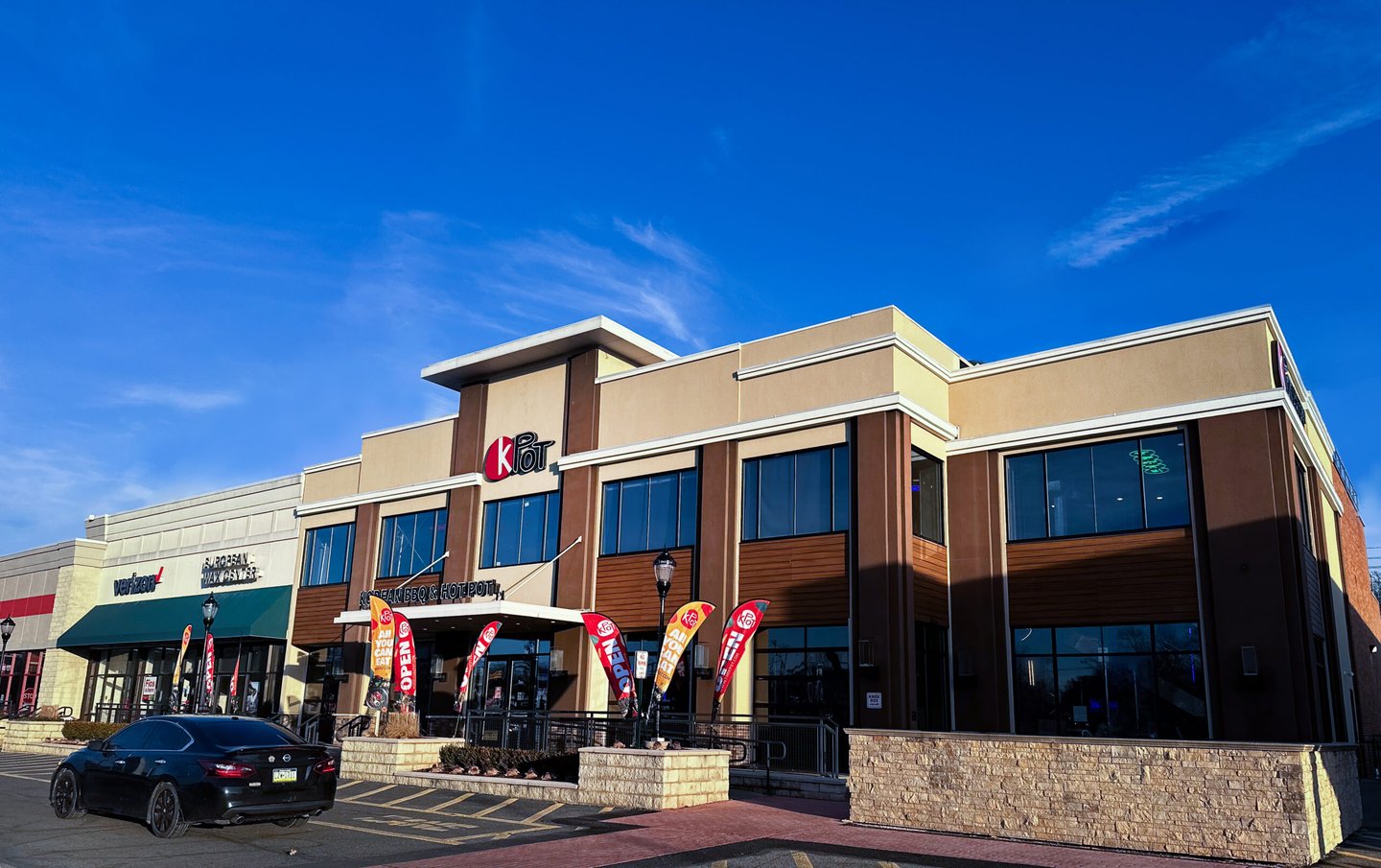
“Activate Games at St. Georges Crossing has been a terrific addition to the shopping center. They took a space that was formerly occupied by West Marine,” he said. “At the center, we have a new Korean barbecue restaurant, Popeye’s, Jersey Mike’s, and then TJ Maxx and Burlington which opened recently.”
From surviving to thriving
The crown jewel of Trademark Property Company’s portfolio, Galleria Dallas, has seen a substantial boost in traffic since it added a key entertainment tenant. While the mall has undergone several upgrades since Trademark purchased it in 2018, the addition of the Netflix House entertainment venue late last year has been instrumental in bringing new life to the center.
Spanning more than 100,000 square feet, Netflix House Dallas is designed as an entertainment destination where fans can “explore, taste, play and shop” their favorite shows and movies in real life, according to Trademark. Visitors can dine at Netflix Bites, a casual, full-service restaurant, and shop exclusive Netflix-branded local merchandise.
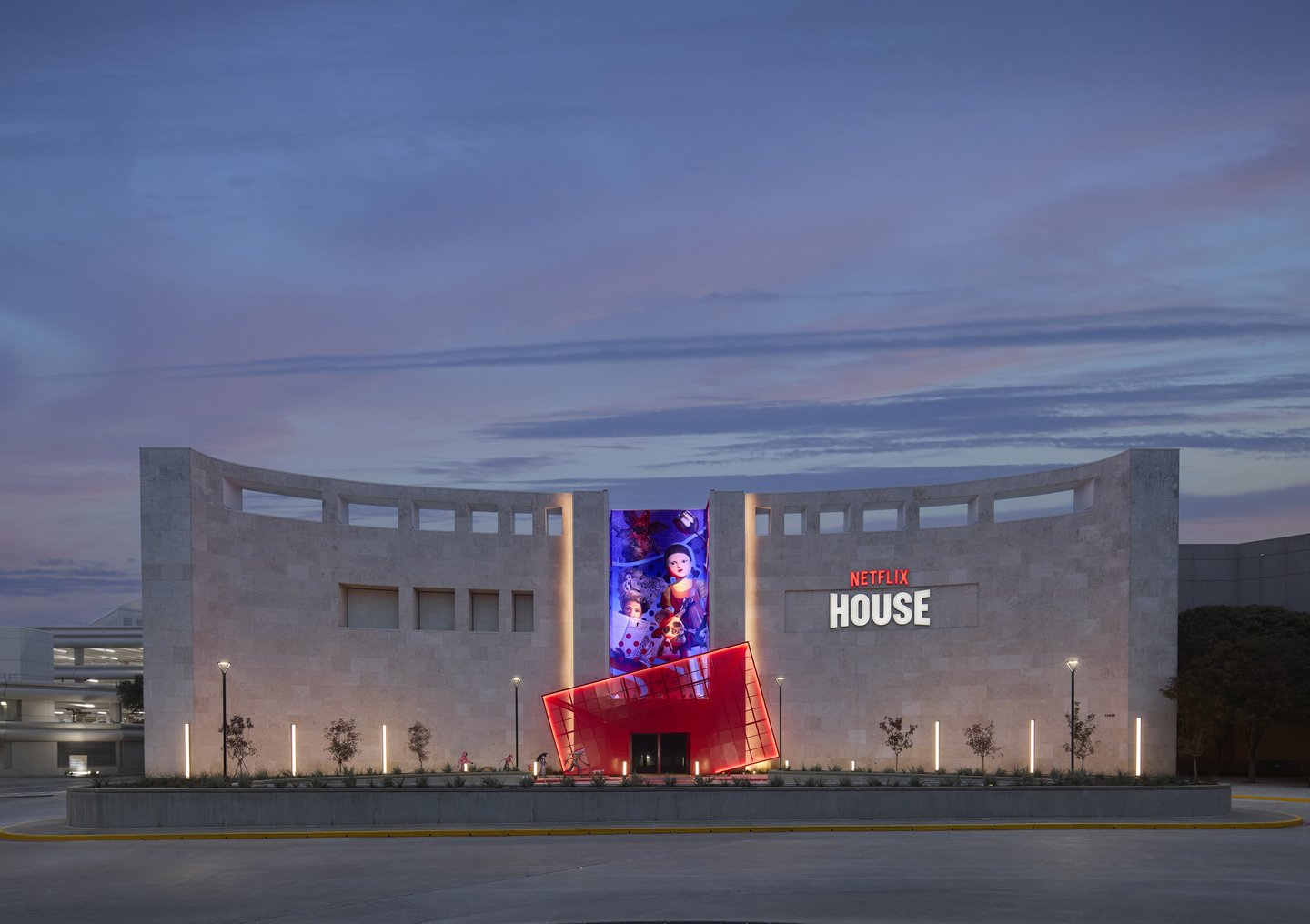
“In the first four months Netflix House was open, traffic in the entire Galleria Dallas went up 14% per month on average,” said Trademark CEO Terry Montesi. “That’s been a real change agent. Galleria Dallas is a conventional mall and a really good piece of real estate, but with the right moves, we’ve been able to go from surviving to thriving in a big way.”
Should all centers sit flat?
Mixed uses are another way that retail centers are keeping things fresh and drawing in new traffic. Casto’s Hamilton Quarter property in New Albany, Ohio, northeast of Columbus, is home to The Ohio State University’s 31-acre Wexner Medical Center campus, which sits alongside retail tenants such as Target, Five Below, Hobby Lobby and more, as well as multi-family residential units and office space.
When multiple anchor tenants paused their expansion at the property following the onset of the COVID-19 pandemic, Casto looked to bring in a new use with high on-site employment that would add a new dimension to Hamilton Quarter.
“It’s a lovely example of how, maybe unexpectedly, we found somebody that’s really ingrained in the community and brings an important element to the area,” said Sydney Federer, VP of retail leasing at Casto. “It was something that we paused on, especially with its ambulatory care component, but now we look back and think ‘wow, what a great decision that was.’”
Throughout the rest of Casto’s Midwest and Southeast portfolio, medical and fitness-oriented tenants, as well as local eateries and bars, are playing a key role in keeping a diverse mix beyond just the standard discount and soft goods retailers.
Federer noted a sense of “complacency” for some retail center operators which can prevent them from adding something new, with the Wexner Medical Center being a prime example of revolutionizing a property.
“One of the things we’ve done over the course of the last 10 years is explored mixed use,” Federer said. “Maybe a site is not supposed to sit flat. Maybe it’s supposed to go vertical and maybe we’re supposed to have a density element to it. We’ve been pleasantly surprised by how residents enjoy that experience.”
Going green
A diverse mix of tenants may be crucial in attracting guests to the shopping center, but green spaces and gathering areas are highly necessary to help increase dwell times. Trademark’s Montesi added that part of
the transformation of Galleria Dallas also included a greater investment in enhanced outdoor seating and public spaces.
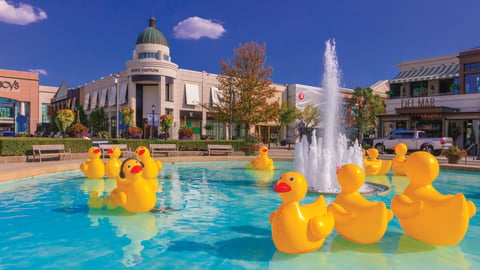
“If we’re designing a retail center, it would be a rare case that we wouldn’t put some sort of public space,” he said. “I can name several projects where we had the public spaces attract as many or more people than some of the retail anchors do. Public spaces are extremely important and have evolved to become the ‘heart and soul’ of a retail mixed-use project.”
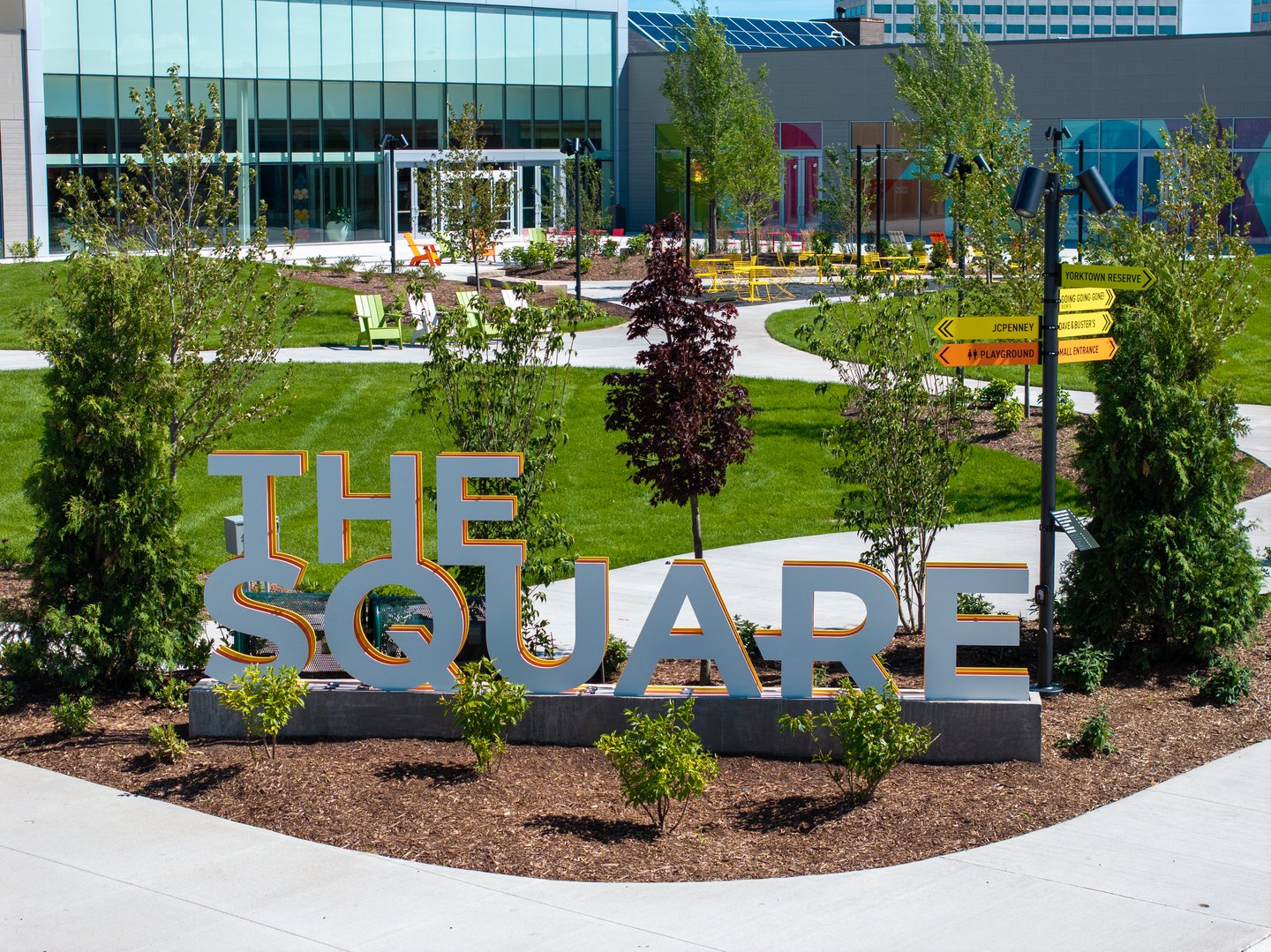
At Yorktown Center in suburban Chicago, Pacific Retail Capital Partners (PRCP) recently announced the opening of The Square, a new outdoor gathering space that marked the completion of the first phase of the center’s ongoing redevelopment.
The green space is just one aspect of the property’s evolution since PRCP purchased it in 2012, which has included a more curated selection of retail and dining tenants and the addition of more residential units.
The property is now tied together by The Square, which will host pop-up markets, live music, art activations, seasonal celebrations, community events and more.
“If you go back to when we bought Yorktown, it was a traditional mall,” said Steve Casella, executive VP of leasing at PRCP. “Prior to COVID, there were 475 multi-family units, but there was no connectivity necessarily to the center. When we partnered with Synergy Construction Group, we had the ability to create a green space that was a gathering space for all and add another 275 multi-family units right at the main entrance.”
Paul Chase, president of lifestyle property management at JLL, said that increased investments in public areas have taken off post-pandemic as consumers crave new experiences.
“I would say in the last five years, you’ve seen activated green spaces become critical to leasing and merchandising,” he said, citing Manhattan Village in Manhattan Beach, Calif., as a prime example of how green space can bring new life to a center.
“Maybe it’s driven by the continued competition for online shopping and different ways to drive traffic,” he said. “Centers are using green spaces as a way to pull people out of their houses and create loyalty.”
Events and activations
Green spaces at shopping centers aren’t just for sitting and enjoying a meal or a cup of coffee. Increasingly, properties that have invested in green spaces are generating consistent traffic by hosting
outdoor events and activations – often partnering with fan favorite retail brands to do so.
“People want to connect with others – they want to have experiences,” said Chase. “But you have to build something that creates that dynamic to pull them out. The more successful centers are creating green space that’s activated, and has curated placemaking partnerships with the retailers.”
Since Manhattan Village’s The Plaza opened in early 2021, it has become an activated space that allows for guests to linger between shopping and dining, with events taking center stage. In addition to yoga and outdoor activities, Manhattan Village hosted a series of 2026 FIFA World Cup watch parties at The Plaza.
JLL said the initial event on June 12 attracted approximately 4,000 people, with retailers getting involved with product giveaways, and food and beverage tenants seeing full patios as the global soccer event kicked off.
“It goes back to that craving to be around people, to be outside and to socialize,” Chase said. “Our business is getting better at that, and we’re finding that the retailers are getting better at that. The most successful retailers are the ones that offer phenomenal experiences.”
Of course, a larger shopper means more room for more grandiose events, so it’s no surprise that Mall of America (as well as its sister property American Dream) sets the standard when it comes to live, and often free, entertainment.
“Consumers don’t look to separate shopping from entertainment – they expect those experiences to happen together,” said Jill Renslow, chief marketing officer at Mall of America. “Events are part of what differentiates us.”
While events have played a key role at Mall of America since the property opened in 1992, the programming has evolved throughout the years to keep up with changing consumer interests while still offering something for everybody.
The rise of Asian retailers and dining brands have gone hand-in-hand with events Mall of America has hosted, including a free concert from the group K-pop Katseye last year, which marked the kickoff of the band’s Beautiful Chaos Tour and was hosted in partnership with retailer Kpop Nara.
Later this summer, Asian food festival Panda Fest will take place outside Mall of America, all while the wrestling world is gathered inside the center for WWE SummerSlam. World Cup watch parties have taken place at the complex since the global tournament began, allowing soccer fans to take a break from shopping and dining to catch the action.
“Ryan Day”
Mall of America’s event schedule even incorporates lighthearted viral trends. The mall recently hosted a “Ryan Day” event – which aimed to set a record for the most people sharing the same first name to consecutively ride a roller coaster. The mall’s rotunda was converted to the “Rytunda” for the day, and those named Ryan will get to ride the Nickelodeon Universe roller coaster for free.
“It’s so perfect for us because we love to do things that are unique, quirky and different,” said Renslow, adding that social media is key for keeping up with both retail and entertainment trends.
She noted that while most events at the center are free, tiered packages can allow for guests to gain more alue from the events.
“People are willing to pay a premium for a special experience,” Renslow noted. “When you look at wrestling, for example, you can have seating for a general audience that everybody can enjoy and partake in, but then you can have a VIP experience. People are starving for in-person experience, and we are able to deliver that through these retail and entertainment channels and create a ‘third place’ that people are looking to come to.”