News

  • TechBytes: Three Retailers Who Threaten Amazon

    Amazon.com is starting to appear like the ‘Teflon e-tailer.”   According to eMarketer data, Amazon captured $79.3 billion in U.S. e-commerce sales between April 2015 and April 2016, growing 13% year-over-year. Its next-closest rival, Walmart, took in just $13.5 billion online in that period. However, Amazon may not be invincible.    Here are three retailers who could pose a real challenge to Amazon’s e-commerce dominance:   
  • Chargebacks 101: What E-Commerce merchants should know

    Credit card chargebacks are a costly reality for online merchants. Chargebacks occur when customers contact their credit card issuers to dispute charges. If an issuer deems a dispute valid, the e-commerce merchant is required to pay the amount owed for the transaction plus a chargeback fee from the processer – which can range from $15 to $100.  
  • Mobile In Retail: The New Normal

    Two events converged by 2010 that fundamentally changed how consumers shop and how retailers sell.
     
    The first was that the world was enmeshed in a deep recession triggered by the collapse of financial markets in 2008. The second was that the world was going through a refresh cycle for consumer mobile phones. What happened next rocked the retail industry.
     

  • Consumers aren’t buying social buy buttons

    The launch of “buy buttons” in the past year on major social networks like Pinterest, Instagram, and Twitter received a lot of attention, but so far they are not catching on with customers.
     
    According to Digiday, research firms including Forrester and GlobalWebIndex are finding low consumer usage rates for social buy buttons. Reasons include limited functionality and visibility of the buttons.

  • M&M Food Market, Burlington, Ontario (Canada)

    Canadian specialty frozen food retailer M&M Meat Shops has changed its name to M&M Food Market as part of a total brand reinvention that includes a new store experience.

    Complete with new shopping carts, color-coded in-store signage, merchandising displays and a kitchen, the new store concept works to create a more effective, convenient and hands-on shopping experience.

    Designed by Shikatani Lacroix, the format is now being rolled out across Canada.

  • First Impressions: 365 by Whole Foods Market

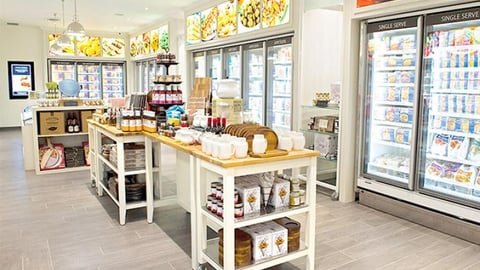
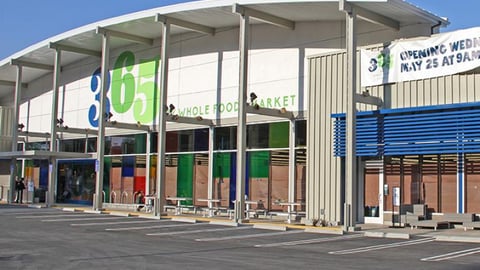
    It’s going to take some getting used to. That’s one of retail consultant Neil Stern’s first impressions of the new 365 by Whole Foods Market format, which made its national debut on Wednesday,  in Los Angeles. The store combines elements of a Trader Joe's, Whole Foods and Sports,  Stern said in a report by Forbes.
     

  • Startups Spotlight: Technologies on the Rise

    From hyperlocal social media intelligence to mobile survey creation, this month’s crop of startups is filling niche spaces that can have a big impact on a retailer’s business. Learn about an augmented reality platform that’s elevating the online experience, a social referral startup that makes it easy to spread rewarding word-of-mouth recommendations and an analytics company that helps retailers and CPG companies get the most out of their online and transaction-level customer data.

    SurveyMe

  • Chico’s to cut more costs after Q1 misses

    Feeling the heat from an activist inventory, Chico's FAS Inc. will increase its cost-cutting efforts on the heels of a disappointing first quarter.
        
    The women’s apparel retailer reported a profit of $31.1 million, or 23 cents a share, for the quarter ended April 30, down from $32.5 million, or 22 cents a share, a year earlier. Excluding restructuring-related charges and other items, adjusted per-share earnings fell to 25 cents from 30 cents.

  • Dollar stores escape the retail blues

    The nation’s top two extreme-value discounters aren’t feeling the retail malaise that affected department stores and many specialty retailers in the first quarter.  

  • Five redevelopment strategies for an evolving industry

    At a time when the world of commercial real estate continues to evolve in new and different directions, many traditional malls find themselves at crossroads. To survive, mall owners and operators must make significant and sometimes dramatic changes in order to remain commercially relevant and financially viable.
     

X
This ad will auto-close in 10 seconds