News

  • Lifestyle and home décor brand expanding

    Serena & Lily continue to grow their fledgling store portfolio.   The upscale California-based brand, which started out as catalog company, will open its fifth retail location, at Lido Marina Village, Newport, California, on Saturday, Oct. 22.      
  • Target outranks all other U.S. retailers in solar capacity

    Target Corp. has knocked Walmart off its perennial top spot in an annual ranking of the U.S. companies with the most solar energy capacity.      Target now has 147.5 megawatts (MW) of installed solar capacity, according to the Solar Energy Industries Association’s 2016 Solar Means Business report, which ranks companies based on capacity current through the third quarter of this year.     
  • Retail centers add Amazon lockers

    Amazon shoppers will have new venues where they can pick up and re-turn orders — local malls.   Washington Prime Group Inc. has entered into a partnership with Ama-zon to add self-service Amazon Lockers at 50 of its retail centers. The lockers, which are destinations where customers can pick up and return Amazon.com packages, will begin popping up as soon as next month.    
  • Harris Teeter expands home delivery options

    Harris Teeter is no stranger to home delivery, but now more North Carolina-based shoppers can get their orders within an hour.   The grocer, a subsidiary of Kroger Co., is expanding its partnership with app-based grocery delivery service Shipt to get groceries into the hands of shoppers throughout the Charlotte metro area. The program, which was launched last year, was initially limited to the state’s Research Triangle region. This expansion extends the service to more than 50 Harris Teeter stores in the Charlotte area. 

  • Wakefern invites shoppers to use mobile payments

    In line with driving the company’s digital services, Wakefern is turning its attention to mobile payments.   Specifically, it will enable customers to use Chase Pay when paying for groceries at its ShopRite and The Fresh Grocer stores. The mobile wallet allows customers to input Chase Visa consumer credit and debit cards into the app, then use the solution to digitally make purchases, and earn rewards. Token technology keeps payments more secures.  
  • Westfield plans $1.5 billion project to replace L.A. mall

    Once the mecca of “Valley Girls” lured by white marble interiors and retailers like Saks and I. Magnin, the Promenade Mall in Warner Center north of Los Angeles will be razed and replaced by a $1.5 billion mixed-use development.   Westfield, owner of the 43-year-old, 550,000-sq.-ft. mall, has announced a re-imagination of the site in line with the Los Angeles City Council’s Warner Center 2035 plan to urbanize the area.  
  • CVS rolling out its mobile payment system

    After a test, CVS Health is launching its mobile payment solution, CVS Pay, on a national basis.    CVS Pay is now part of the CVS Pharmacy mobile app, and integrates payment, prescription pickup and the ExtraCare loyalty program all into one quick scan at checkout.  
  • Supervalu misses on sales, but on target with profit

    Supervalu Inc. posted disappointing sales results for its second quarter as the company continues to shift its business toward wholesale distribution.       The company released its second quarter results just days after it entered into an agreement to sell its Save-A-Lot discount grocery chain to Canadian private equity firm Onex for $1.37 billion in cash.   
  • Starbucks getting even more aggressive in China — doubling store count

    Starbucks Corp. announced its most ambitious expansion plans to date for China, and also named its first CEO for the country.   Starbucks said it plans to double its store count in China, growing to 5,000 stores by 2021. Overseeing the expansion will be Belinda Wong, who has promoted from president to CEO of Starbucks China, effective immediately.   
  • Retailers Navigate Shifting Environmental Regulatory Landscape

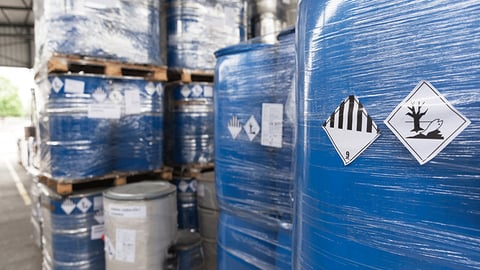
    The past decade has witnessed a monumental shift in regulatory oversight of retailers’ environmental compliance programs. As a result, retailers have faced a crash course in the myriad hazardous waste control laws, once widely believed to not be relevant in the retail context.   Historically, most enforcement has been at the state and local level. But in just the past month, we’ve seen a flurry of retail-related activity from the U.S. Environmental Protection Agency, including the following:  
X
This ad will auto-close in 10 seconds