Data & Analytics

  • Sears Holdings borrows $1 billion

    Hoffman Estates, Ill. - Sears Holdings Corp. has borrowed $1 billion under a new a senior secured term loan facility under an existing credit agreement from April 2011. The existing credit agreement continues to provide for a $3.275 billion asset-based revolving credit facility.

    Last month, Sears said it would obtain the loan to help reduce how much money it borrowed under the existing credit facility. The new loan is due June 2018.


  • Fairway Markets plans New York store

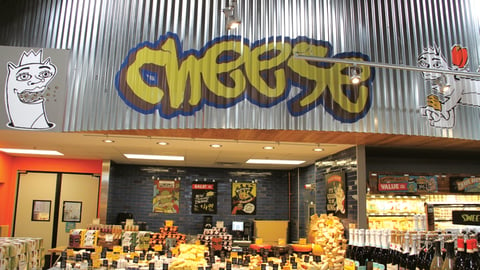
    New York - Fairway Group Holdings Corp., the parent company of Fairway Market, is opening a 65,000-sq.-ft. store in Nanuet, N.Y., on Oct. 10.

    "We're excited to make our newest home at this premier shopping destination in Nanuet and are also very pleased to be creating more than 300 new jobs in the area," said Charles Santoro, Fairway Market's executive chairman.

  • Re-Inventing Power Centers

    Across America, big-box centers are powering back up

    Power centers have proven themselves to be a resilient asset class in recent years. First the recession cut into business. Then e-commerce leveled some of their big-box tenants, hurt others and ignited a downsizing trend.

    Yet research from Washington, D.C.-based CoStar Group shows that only 2% of power centers have vacancy rates of 40% or higher and probably won’t recover. Another 6% have vacancy rates of 20% to 40% and are in serious condition but may recover.

  • Mixed-Use at Work

    Mixed-use development works for trade areas where demand matches each use

    Different developers look at mixed-use in different ways. One developer will look for trade areas that provide solid demand for retail, residential, office and perhaps other uses. The goal is to create developments where no single use dominates the others.

    Still other developers gauge the demand for various uses and adjust the use offerings to match demand. In such cases, one use may dominate the center.

    The Trademark approach to demand

  • Making the Switch

    A survey of 87 retailers conducted by Pacific Gas & Electric found many are unhappy with their lighting and are considering LED lighting to save energy. But, at the same time, they lack sufficient information to evaluate products.

  • Scaling Solar Nationwide

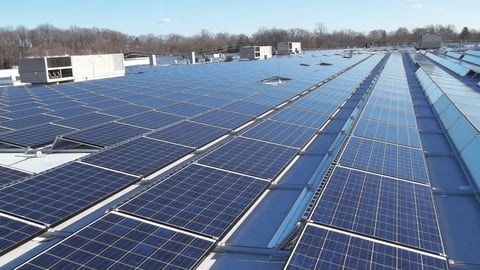
    Ikea shares lessons learned from 39 diverse installations

    Sustainability is a cornerstone of home furnishings retailer Ikea, its brand and its business plan, reflecting the company’s Swedish heritage.

  • AT&T Store Design Gets a Customer-Focused Reboot

    It’s not what you see as much as what you don’t see that defines AT&T’s new store concept.

    Noticeably missing from the prototype, which debuted in La Grange, Ill., are traditional counters, checkout registers and printed signage. Instead, the 3,200-sq.-ft. store offers an inviting, modern and interactive environment that is focused on the customer experience.

  • Signage Trends

    Local cues and digital influences on the rise

    Signage continues to gain importance in overall branding efforts, as retailers seek to differentiate themselves with signs tailored to local markets and to create department ambiance. And increasingly, there is a lot more participation by marketing and advertising departments in developing signage programs.

    “It is not just the construction or store planning departments anymore,” said Tony Camilletti, executive VP, D/Fab, Madison Heights, Mich.

  • NRF predicts 4% holiday sales increase

    Washington, D.C. – The National Retail Federation (NRF) expects holiday sales to increase 3.9% to $602.1 billion, up slightly from last year’s 3.5% increase. The forecast is higher than the 10-year average holiday sales growth of 3.3%.

    The group noted, however, that its forecast hinges “on Congress and the Administration's actions" over the next 45 days as the government shutdown entered a third day

  • E-Commerce Impacts DCs

    Distribution centers are evolving to keep pace with demands of omnichannel retailing

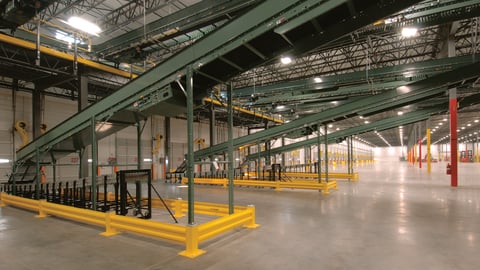
    Distribution centers have evolved alongside trends such as just-in-time manufacturing and the rise of overnight shipping. Now they are changing again, this time to accommodate omnichannel consumers.

X
This ad will auto-close in 10 seconds