Predictive Analytics

  • The Future is Unified — and You Should Be Too

    Customer experience is everything. In fact, Accenture found that 45% of customers are willing to pay more for a better customer experience. It’s also what gets customers into the physical store. With more consumers turning to the ease of online ordering and straight-to-door shipping, retailers are in a bigger crunch than ever before to not only increase footfall, but to keep customers coming back.    So what can retailers do to turn first time visitors into loyal customers? Get unified.   
  • UPS reportedly asks retailers to share delivery fees

    Who is responsible for fees related to unexpected, yet low shipping volume? According to UPS, it should be its retailer partners.   The delivery service is putting retailers on the hook to share costs related to labor and surplus space on trucks if the merchant fails to ship its forecasted packages during peak periods, according to MarketWatch. Fees could also apply if there is a discrepancy among the sizes of boxes expected to ship,   
  • Study: Data must ‘deliver’ in the age of personalization

    Companies are adopting more solutions to gain a 360-degree view of each customer.   While 88% of companies believe their investments help their organization understand customer needs, only 61% of consumers agree — a gap that is costing retailers $62 billion a year, according to research from Talend. The provider of cloud and big data integration software surveyed 361 IT leaders and 1,094 consumers in the United States, the U.K., France, and Germany.   

  • Online marketplace’s styling service gets personal

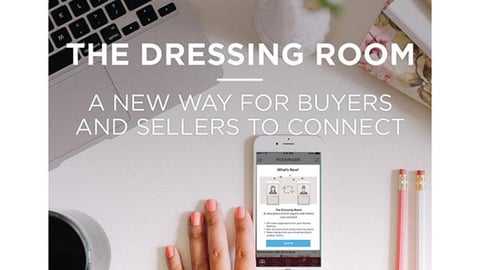
    Poshmark is expanding its one-to-one shopping experience.   With the launch of Posh Dressing Room, the retailer is connecting buyers with a personal “Seller Stylist,” a move that fosters the experience of shopping in a physical boutique. The service makes online shopping easier and more customized for consumers, and enables its sellers to expand their online boutiques, according to Poshmark.  
  • Fashion retailer moves data out of the ‘lake’ and into the cloud

    Harnessing customer-specific data is paramount for RueLaLa to engage shoppers and foster long-term customer relationships.  
  • Consumer confidence slips in April

    April's consumer confidence metric didn't live up to the new benchmark established in March, when consumer confidence reached a 16-year high.   This month, the Index declined to 120.3 from 124.9 in March.  
  • Study: Amazon Prime doubles in size in two years

    The number of Amazon Prime members are on the rise.   An estimated 60% of Amazon customers are Prime members, a group that is comprised of roughly 80 million members in the United States, according to research from Consumer Intelligence Research Partners (CIRP). The study is based on responses from 500 U.S. shoppers who made a purchase at Amazon.com between January and March.  
  • Despite merger uncertainly, Rite Aid beats Street in Q4

    Rite Aid managed to best analyst forecasts for the fourth quarter even as its chairman and CEO noted that "the extended duration of the merger process" with Walgreens Boots Alliance is "having a negative impact" on the company's results.    Rite Aid’s revenue rose a better-than-expected 2.7% to $8.5 billion in the quarter. Same-store sales fell 3.0%, consisting of a 4.3% decrease in pharmacy sales and a 0.3% decrease in front-end sales.  
  • Study: Key decision makers look to AI for ongoing success

    Artificial intelligence (AI) is increasingly topping IT wish lists as a means of improving business decisions and providing personalization.   That’s according to a new report from PwC, “Bot.Me: A Revolutionary Partnership.” The study, surveyed consumers and business decision makers on AI’s impact in the business world, the evolution of AI acceptance by consumers and AI’s changing role in addressing socioeconomic issues.   
  • Study: Mobile coupon usage on the rise

    Not only is coupon app usage increasing, but discounts received via mobile devices are influencing where consumers decide to shop.    Mobile coupon usage has increased 42% from 2016, while in-store shopping rewards app usage has increased 34% during the same time period. More importantly, the discounts received via smartphone or other mobile devices are influencing where 67% of consumers decide to shop.   
X
This ad will auto-close in 10 seconds