Consumer Attitudes & Behavior

  • Survey: Mobile wallet adoption has flatlined

    Mobile wallet usage in the United States remains small, and shows no signs of increasing anytime soon.   This was according to “PYMNTS/InfoScout Mobile Payment Adoption,” a new report from PYMNTS.com. The survey, which was conducted in March 2017 among more than 7,655 consumers, said less than one in 20 consumers who have one of the main mobile wallets (Apple Pay, Sam-sung Pay, and Android Pay) use it regularly.   
  • Commentary: Downtick in February largely a temporary blip

    After solid start to the year, retail is now back in softer growth territory. While the 2.1% rate of overall expansion is not disastrous, it is much lower than the past few quarters and is largely the result of higher gas prices which buoyed sales at gas stations by 15.8%. The pure retail number is more concerning, with the 0.8% increase being the slowest growth recorded since February 2013.  
  • Consumers cautious in February

    The delay of tax refunds helped keep consumer spending in check on February.   Retail sales in February inched up 0.2% seasonally adjusted over January, according to the National Retail Federation. (The NRF numbers exclude automobiles, gasoline stations and restaurants.)   The industry’s performance in February was mixed. Electronics and appliance stores took the biggest hit, with sales falling 2.8% over the previous month.   
  • Survey: Store retailers leaving money on table

    Disappointing shopping experiences are costing brick-and-mortar retailers serious money.   That’s according to the recent TimeTrade State of Retail 2017 survey, whose results suggest that U.S. retail stores left about $150 billion in potential revenue on the table in 2016 by failing to offer shoppers the personalized shopping experiences they want.     
  • London tops in luxury retail openings

    More luxury stores opened in London in 2016 than any other city in the world.   The British capital topped the global ranking for new luxury retail store openings in 2016, according to Savills Global Luxury Retail report.    The city saw a total of 41 luxury store openings during the year, (of which 15 were the respective brand’s first ever store in London), followed by Paris, with 36 openings, and New York, with 31. Rounding out the top five were Dubai (31), Hong Kong (25) and Milan (24).  
  • Study: Digitally native Gen Z still prefers to shop in-store

    Generation Z is called the mobile-first generation. However, their preference for shopping in physical stores presents new opportunities for retailers.   That’s according to a new report from Euclid Analytics, “Evolution of Retail, 2017 Generation Z Shopper Survey,” which found that 66% of Gen Z prefer to shop in store because they like to see, hold and try on products before buying. Also, 28% want to engage with store associates while shopping, the most of any generation.  
  • The retailer with the best customer experience is…

    Supermarkets and fast-casual restaurant brands took the top positions in an annual ranking of customer experience. Publix, Chick-fil-A, and H-E-B earned top three positions in Temkin Group’s 2017 Temkin Experience Ratings, a cross-industry benchmark of customer experience. Publix had a score of 84%, closely followed by Chick-fil-A and H-E-B, which both scored 83% in the seventh annual rating.
  • Report: New robot controlled by user’s brain

    The newest robots like the way their controllers think.   Rather than relying on touch screens and artificial intelligence, a new “droid” is controlled by a user’s brain responses, according to ReCode.  
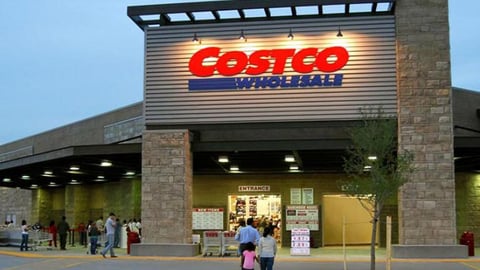
  • Costco to hike membership fees

    Costco Wholesale Corp.’s second quarter profit took a hit amid higher costs. And for the first time since 2011, the retailer is raising the cost of entry into its stores.   As of June 1, Costco’s annual fee for individual and business members will increase by $5.00, to $60. The executive membership fee will go up $10, to $120.    Costco’s net income for the quarter, ended Feb. 12, fell 5.7% to $515 million, or $1.17 per share, below Wall Street expectations.  
X
This ad will auto-close in 10 seconds