Budgets/Spending/Market Size

  • Survey: Retailers value mobile commerce

    When it comes to selling products online, retailers want to go wherever their customers go. According to the 2015 E-Commerce Benchmark Survey from Boston Retail Partners, close to half (45%) of surveyed retailers indicated that mobile websites are their most important e-commerce capability.

  • Deloitte: Holidays won’t be quite as happy as last year

    Holiday sales will increase between 3.5% and 4%, slower than last year’s 5.2% growth, as favorable economic tailwinds are offset by lingering negatives, according to an annual forecast by Deloitte’s Retail and Distribution Practice.

  • Case Study: How to save millions in energy costs

    Learn how Saks Fifth Avenue reduced its energy use by 23% and saved millions of dollars—with no adverse impact on the customer experience — at a Webinar on Thursday, September 24, 2015, at 2 p.m. (EST). Hear first-hand how Saks is adding to its bottom line by reduced energy consumption.

    Gary Levitan, senior manager of energy and utilities for Saks’ parent Hudson’s Bay Company will explain how the retailer used data to win budget approval for energy efficiency projects — and build longer-term energy plans.


  • Study: Consumers not ready to pay with EMV

    In the 1970s, Saturday Night Live had a cast of comedians that were called the “Not Ready for Prime Time Players.” In 2015, U.S. retailers have a cast of customers that could be called the “Not Ready for EMV Payers.”

  • Webinar on how Saks’ million-dollar energy savings started with data

    New York -- Learn how Saks Fifth Avenue used data as the foundation for its energy efficiency initiatives at a Webinar on Thursday, September 24, 2015, at 2 p.m. (EST).  

    Gary Levitan, senior manager of energy and utilities for Hudson’s Bay Company, parent of Saks Fifth Avenue, will explain how Saks used data — and how it efficiently identified and leveraged the right data — to make the business case for an efficiency initiative that drove the following benefits:   

  • Study: Most Americans online, mobile

    As statistical revelations go, the fact most Americans use the Internet and mobile phones is not especially surprising, but still significant for omnichannel retailers.

    According to the latest Global Media Intelligence Report from eMarketer, 80.8% of the U.S. population, or nearly 260 million people, will go online at least once a month in 2015.

  • Study: Contactless mobile payment set to grow

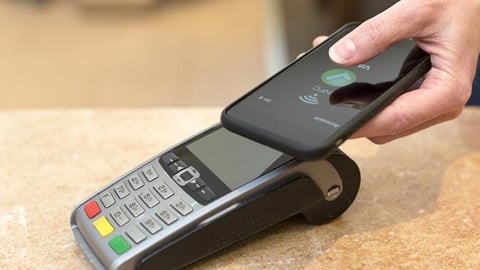
    NFC-enabled contactless mobile payments, such as those enabled by smartphone-based digital wallet services like Apple Pay and Android Pay, currently make up a tiny fraction of card transactions. However, a new study from Indian mobile solutions provider Mahindra Comviva suggests contactless mobile payments are set to grow quickly.

  • Helping retailers compare, identify energy saving initiatives

    The Retail Industry Leaders Association introduced its second Retail Energy Management Report, a resource for companies to compare energy management programs across the industry and identify opportunities for progress.

    The report was released prior to the opening of RILA’s 2015 Retail Sustainability Conference, now in its eighth year.

  • RILA releases report to help retailers compare, identify energy saving initiatives

    The Retail Industry Leaders Association introduced its second Retail Energy Management Report, a resource for companies to compare energy management programs across the industry and identify opportunities for progress.

    The report was released prior to the opening of RILA’s 2015 Retail Sustainability Conference, now in its eighth year.

  • Retail’s $30 billion problem

    Organized crime is on the rise — and it’s taking a heavy financial toll on the nation’s retailers.

    Retailers on average report they lost $453,940 per $1 billion in annual sales over the past year due to organized crime, according to the National Retail Federation’s 11th annual Organized Retail Crime Survey, which put a $30 billion price tag on the problem.  

X
This ad will auto-close in 10 seconds