Corporate Governance

  • Women’s apparel retailer accepts mobile payments from Chinese shoppers

    Rebecca Minkoff is making it easier for Chinese customers to purchase from the brand.   Through a partnership with Chinese online payment provider Alipay, upscale apparel retailer now enables Chinese shoppers to use their Alipay Mobile Wallet to make purchases at any United States-based Rebecca Minkoff store, or while shopping online. The mobile wallet is accepted in all Rebecca Minkoff stores located in New York, Chicago, San Francisco and Los Angeles.  
  • Muji continues U.S. store expansion

    A Japanese lifestyle brand with a devoted following has opened an outpost in one of New York City's most hip neighborhoods that will serve as a model for future expansion.    Muji has opened a 7,300-sq.-ft. store in the Williamsburg section of Brooklyn. It is the retailer’s seventh store in the greater New York City area. In addition to New York, Muji has six locations in California, one in New Jersey and one in Boston. It plans to add more U.S. stores next year.  
  • Target lowers ‘thousands’ of prices

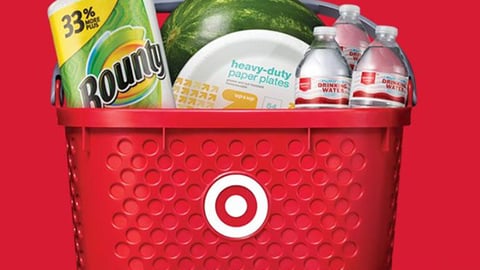
    The price wars among the nation's leading retailers has taken a new turn just ahead of the critical holiday selling season. On Friday, Target revealed in a blog post on its website that it had lowered prices on "thousands" of items, from cereal and paper towels to baby formula, razors, bath tissue and more. The discounter said the move would help end shoppers' uncertainty over the timing of discounts on certain products, and make for "more consistent savings."
  • Howard Hughes CEO re-ups for 10 years

    David Weinreb, who took The Howard Hughes Corporation public, will now take the company well into the next decade.   The Dallas-based company announced it has entered into a new employment agreement with Weinreb that runs through 2027. As part of the deal, Weinreb completed the acquisition of nearly two million stock warrants in the company at a cost of $50 million.  
  • Beleaguered electronics retailer inches closer to reorganization

    RadioShack is entering the latest chapter in its ongoing financial saga — but on a positive note.     On Thursday, RadioShack’s Chapter 11 bankruptcy plan cleared a preliminary court review. This decision enables the retailer to move forward with its strategy to reorganize, and save a small portion of the company, according to Dealerscope.  
  • Online giant to open machine learning hub in Barcelona

    Amazon is stepping up its commitment to machine learning.   The online giant plans to open a new research and development (R&D) hub in Barcelona, dedicated to machine learning. Amazon expects to open the lab in early 2018, according to The Verge.   Amazon plans to hire more than 100 engineers and scientists for the lab.   
  • NRF revises 2017 sales growth forecast

    The National Retail Federation on Wednesday has lowered its annual retail sales forecast, citing government data revisions.   Retail sales for 2017 are now expected to increase between 3.2% and 3.8%, down from the 3.7% - 4.2% growth the NRF predicted earlier this year. The revision comes after the Census Bureau lowered its retail sales figures, and the Bureau of Economic Analysis downgraded its personal income and consumption figures.   
  • Amazon on hunt for location to build a second North American headquarters

    The search is on for Amazon.    The e-commerce giant is currently evaluating where it will open its second company headquarters in North America. The new office, referred to as "HQ2," will be a complete headquarters — not a satellite office. It also could have a similar layout to Amazon's Seattle campus, which employs 40,000 people, and encompasses 8.1 million sq. ft. with 33 buildings, including 24 restaurants.  
  • Commentary: Barnes & Noble should not be dedicating floor space to Doris Day CDs

    Customer traffic continues to weaken, and sales are down. Within this dynamic, books are holding up slightly better, but non-book sales are in sharp decline. Some of this is down to the fact that many Barnes & Noble stores, especially older ones, are a hodgepodge of product with seemingly little coordination and thought given to ranging. As much as it is sensible to stock things like toys and games, there are lots of other places that sell these items -- often at lower prices. In essence, B&N needs to refine its non-book offer and work harder to create differentiation.
  • Sales slide continues at Barnes & Noble

    Barnes & Noble reduced its loss in its first quarter due to cost savings even as its sales continued to fall.   The company reported a net loss of $10.8 million for the quarter ended July 29, or 15 cents per share, compared to a loss of $14.4 million, or cents per share, for the year-ago period. Analysts had expected a loss of 12 cents a share.   
X
This ad will auto-close in 10 seconds