Corporate Governance

  • Wholesale club giant expands online delivery options

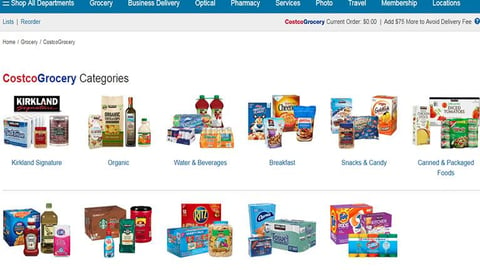
    Costco Wholesale Club is upping its home delivery game for online food orders as the grocery delivery market continues to heat up.   The retailer has introduced a new two-day delivery service, called CostcoGrocer, for customers across the U.S. (with the exception of those in Alaska, Hawaii, and Puerto Rico.). The service, which has a fee of $3, offers delivery of non-perishable foods and sundries, with about 500 items available. The delivery fee is waived for orders over $75.  

  • Moody's: No letup in sight to off-price growth

    Off-price retailers will remain among the top performers in the U.S. retail industry during the next 12 to 18 months.   That's according to a new report from Moody's Investors Service. The outlook is not as positive for department stores, which will continue to struggle as they seek to level the playing field with both off-price and online vendors.  
  • Costco ends year on an upbeat note

    Costco Wholesale Club reported better-than-expected profit and revenue for its fourth quarter.   Net sales for the 17-week fourth quarter ended Sept. 3 rose 15.8% to $41.36 billion from $35.73 billion in year-ago period, which had 16 weeks. Total same-store sales rose 6.1%, with a 6.5% increase in the U.S. and a 4.9% increase in Canada. International same-store sales rose 5.6%    E-commerce sales in the quarter were up 21%. Membership fees rose 13% to $943 million.   
  • Report: Amazon tries its hand at a different kind of pop-up

    Amazon is preparing for its newest physical store — and promoting its alcoholic products at the same time.   The online giant is opening a pop-up bar in Tokyo’s Ginza district. The location, which will be open for 10 days, will sell beer, wine, sake and cocktails sold on its Japanese website, as well as exclusive products and samples not yet for sale, according to Bloomberg.  
  • Big mall owner CBL launches a rebranding campaign

    Malls are not going away entirely, but the word “mall” may be an endangered concept.   CBL Properties, one of the nation’s biggest mall operators, with 121 of them in 27 states, has announced a rebranding campaign that that reflects a new strategic direction focused on operating community gathering places, not mere shopping centers.  
  • Chapter 22: Why Some Retailers Emerge from Bankruptcy Only to File Again

    As of August 31, 16 retailers have filed for Chapter 11 bankruptcy in 2017. Four of those sixteen retailers are filing for “Chapter 22”, meaning this is their second time declaring bankruptcy. Chapter 22 cases show that the first bankruptcy failed and that the firm and its advisors were too optimistic regarding the firm’s viability out of bankruptcy. The chart below summarizes the four Chapter 22 filings over the past year:  
  • Embattled department store retailer gets fresh cash infusion from owner

    As it heads into its most important selling season, Sears Holding Corp. is receiving another cash infusion from its CEO and largest shareholder.   Sears is borrowing $100 million from units of CEO Eddie Lampert's hedge fund ESL Investments for "general corporate purposes," according to a regulatory filing. The new infusion brings the total of Lampert's outstanding loans to Sears to $499.4 million.   
  • Study: Gens Y & Z prefer credit cards over other forms of payments

    Following suit of older generations, younger shoppers want to pay for purchases with credit cards.    Specifically, Gen Z (ages 18-24) and Gen Y (ages 25-34) are comfortable using credit to make purchases, and overwhelmingly prefer credit cards to monthly payment options, according to new data from Vyze, a provider of cloud-based financial technology solutions.   
  • Joplin power center changes hands

    Chase Properties has acquired North Point Shopping Center in Joplin, Missouri, from Kimco Realty Corp.

  • What Retailers Need to Know About Their Energy Bill — and How to Lower it

    Energy is the fourth largest in-store operating cost for retailers, with the average 50,000-sq.-ft. retail building spending around $90,000 each year on energy costs. Retail building managers are constantly trying to better regulate their buildings’ energy costs, so understanding where those charges come from can be extremely beneficial.   
X
This ad will auto-close in 10 seconds