Study: Buc-ee’s tops among convenience stores in brand equity

A Texas-based retailer known for its super-sized stores tops a list that ranks U.S. C-store banners on their ability to deliver customer loyalty and growth beyond fuel.
Buc-ee’s outperformed the other 40 convenience stores surveyed in Dunnhumby’s Convenience Retailer Preference Index (RPI), a nationwide brand equity study of 41 retailers that examines the approximately $860 billion U.S. convenience market. Buc-ee’s scored a 96, 17 points higher than Sheetz, which ranked second with a score of 79 on the RPI.
Wawa (78) , Kwik Trip (77) and Walmart C-stores (75)round out the top five C-store retailers with each excelling through distinct strategies focused on quality, affordability, frictionless transactions, visibility and product variety.
The retailers ranking in the top 13 (first tercile) include a mix of national and regional operators, as well as traditional C-store operators, chains that are extensions of core grocery chains or traditional gas brands. (See end of article for a complete listing of the top 13 retailers). Retailers that achieved higher RPI rankings experienced growth rates up to 2.5 times greater over a five-year period compared to those with lower rankings, according to Dunnhumby.
“We're at an inflection point in convenience retail, said Matt O’Grady, Dunnhumby's president of the Americas. “The stores that are thriving aren't just keeping pace — they're reimagining what matters most to their customers.”
The study noted that top-tier retailers are growing nearly two to three times faster than bottom-tier retailers, and when the c-store industry contracts, the top-tier still manages positive growth. Five-year compound annual growth rate in foot traffic, based on Placer.ai data, has been 7.2% for the top tier and only 2.5% for the bottom tier. In the past year, the top tier grew foot traffic by 0.8%, while the bottom tier contracted by 2.7%.
It also said that top-tier retailers have adopted three main strategies to be at the top of the rankings, including converting over half of their customers to consider them as a meal destination; outperforming 90% of C-stores in terms of quality of products, food taste and store experience; and maintaining clean, well-organized stores as well as providing core C-store needs such as fuel savings, while delivering affordable products.
Frictionless transactions — easy meal customization, convenient ordering and pickup — is also an customer perception pillar, particularly for C-store shoppers who see these stores as meal destinations.
The study found that the top tier is full of C-store chains that are increasingly blurring the lines between traditional C-store offerings, QSR offerings, and grocery offerings. In contrast, the bottom tier has been slower to change their established practices. The cost to retailers who do this is clear in this study.
Here are the retailers with the strongest customer value propositions according to Dunnhumby’s Convenience Retailer Preference Index.
1/Buc-ee's (96)
2/Sheetz (79)
3/Wawa (78)
4/Kwik Trip (77)
5/ Walmart C-stores (75)
6/Safeway Express (68)
7/HyVee Fast & Fresh Express (65)
8/76 (65)
9/QuikTrip (59)
10/GetGo (59)
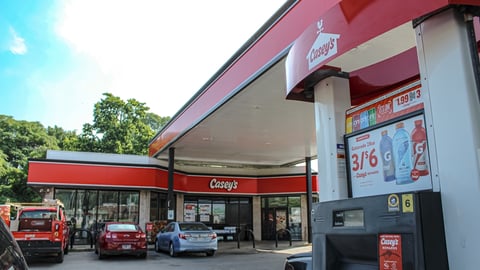
11/Casey's (56)
12/Stewart's Shops (54)
13/United Dairy Farmers (54)
Methodology
The Convenience RPI score is a measure of customer perception of the C-store offering, giving more weight to those dimensions that have a stronger association with sustainable retailer results. The study includes the largest 41 C-store retailers in the industry. The financial data used in the Dunnhumby model comes from Flywheel, and the customer perception data is sourced from a survey of 10,500 convenience store shoppers in the U.S.
The six drivers of the customer value proposition are in order: 1) Quality, 2) Affordability, 3) Frictionless Transactions, 4) Visibility, 5) Product Variety, and 6) Traditional Convenience/Speed.