
Strong import cargo volume leads to port backups; strike avoided — for now

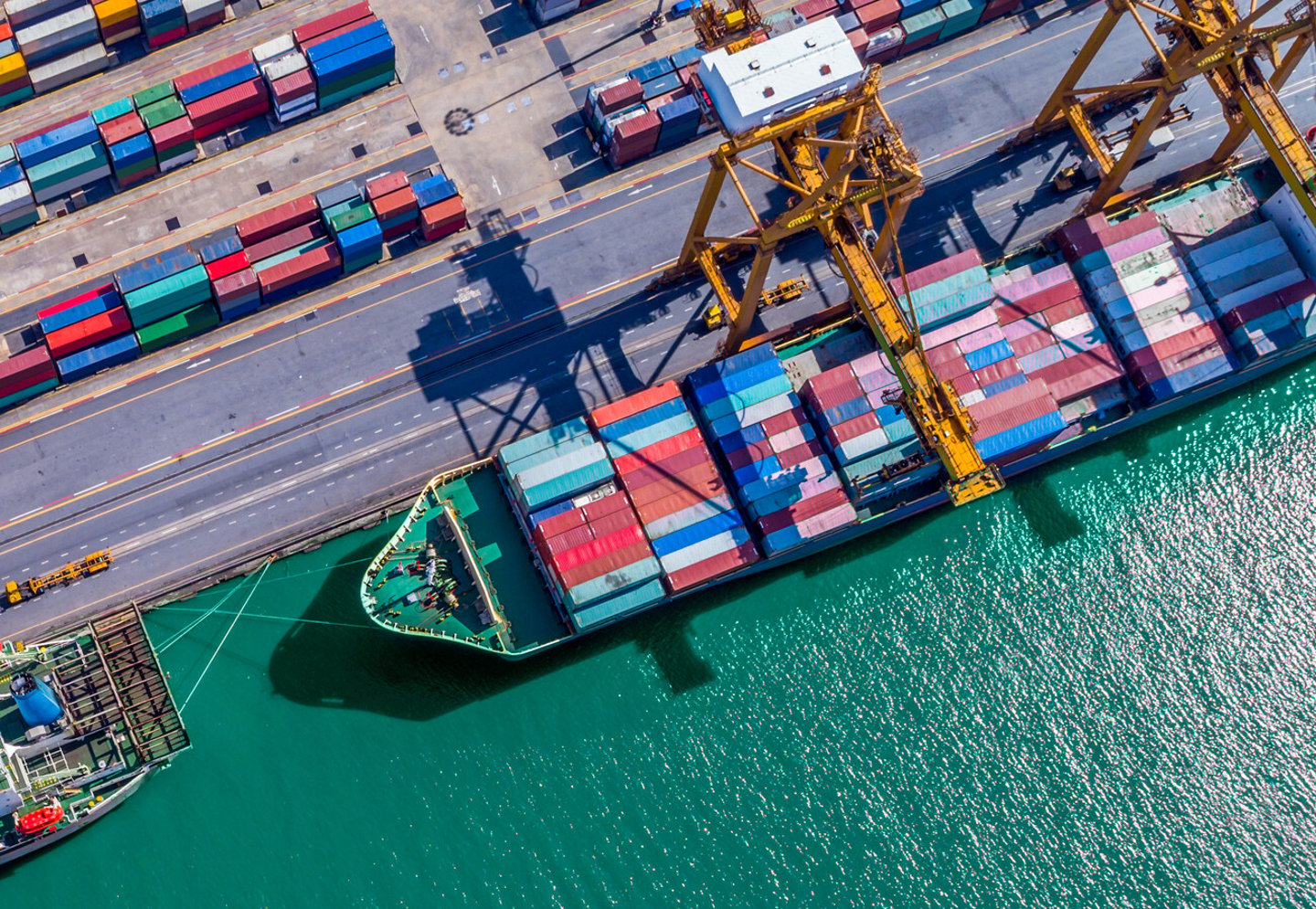
Import volume at the nation’s major container ports is expected to taper off for the remainder of the year following an extended peak season that has kept docks busy since the spring.
U.S. ports experienced high volume levels throughout this year’s longer-than-usual peak season and numbers are still strong even as the season winds down, according to the Global Port Tracker released by the National Retail Federation and Hackett Associates.
“Unfortunately, these volumes have led to backups at some ports, particularly on the West Coast where cargo has sat for extended periods waiting to be transferred to rail cars,” said Jonathan Gold, NRF VP for supply chain and customs policy. “Nonetheless, most holiday merchandise is already here, and retailers are working closely with their supply chain partners to ensure that the supply of holiday gifts continues to flow smoothly.”
Hackett Associates founder Ben Hackett noted his year’s months-long peak season was an offshoot of an extended season in 2025, when a series of tariff increases led retailers to bring in merchandise before the tariffs could take effect. New tariffs introduced in the second quarter prompted a renewed surge in imports beginning in May that continued through mid-October, he said.
STRIKE
A strike was avoided at the beginning of the month when International Longshore and Warehouse Union Local 26, which represents watchmen at a number of container terminals at the Ports of Los Angeles and Long Beach, reached a short-term contract extension with the Pacific Maritime Association. The contract has now been extended three times for a few days at a time, most recently through Nov. 20, with no long-term agreement in place following the expiration of the previous contract in July 2025.
U.S. ports covered by Global Port Tracker handled 2.37 million Twenty-Foot Equivalent Units — one 20-foot container or its equivalent — of loaded imports in September, the latest month for which final numbers are available. That was up 3.4% from August and up 12.6% year over year to make September the busiest month of the year amid the extended peak. It was the third-busiest month since Global Port Tracker began keeping records, topped only by 2.39 million TEU in July 2025 and 2.4 million TEU in May 2022.
Ports have not yet reported October numbers, but Global Port Tracker projected the month at 2.26 million TEU, up 9.1% year over year. November is forecast at 2.05 million TEU, up 1.2% year over year, and December at 2.03 million TEU, up 1.3%.
Those numbers would bring 2026 to a total of 26 million TEU, up 2% from last year’s 25.4 million TEU. The first half of 2026 totaled 12.7 million TEU, up 1.1% from the same period in 2025.
January 2027 is forecast at 2.04 million TEU, down 3% year over year; February at 1.89 million TEU, down 0.5%, and March at 1.92 million TEU, down 11.2%.
Global Port Tracker, which is produced for NRF by Hackett Associates, provides historical data and forecasts for the U.S. ports of Los Angeles/Long Beach, Oakland, Seattle and Tacoma on the West Coast; New York/New Jersey, Port of Virginia, Charleston, Savannah, Port Everglades, Miami and Jacksonville on the East Coast, and Houston on the Gulf Coast.