Fitness chains beef up at retail centers


While the COVID-19 pandemic is in the rearview, its effects are still being felt in the consumer and retail trends of 2026.
Perhaps chief among them is a renewed shift towards health and wellness from consumers. According to data released last year by McKinsey & Company, a large majority (84%) of American consumers now consider wellness a “top or important priority” in their everyday lives, while around 50% of gym-goers say that fitness is a “core part” of their identity.
McKinsey’s report also noted that millennials and Gen Zers are especially keen on wellness and physical fitness, outspending the average consumer when it comes to gym and studio club memberships and wearable fitness devices.
Jack deVilliers, managing director at Regency Centers, has seen this trend play out in the commercial real estate industry firsthand. Since 2020, its number of fitness tenants has nearly doubled, showcasing both the consumer shift towards wellness and shopping centers increasingly becoming destinations for all daily needs. Of the nearly 500 centers that Regency has in its portfolio, more than 90% of them are grocery-anchored.
“Grocery remains our anchor, but we’ve seen health, wellness and fitness adding to the ecosystem of the community shopping center,” said deVilliers, who oversees Regency’s Northeast portfolio, spanning approximately 10 million square feet. “Fitness alone is about 5% of our average base rent across the entire country, but it has grown, and I think we will continue to see that.”
Fitness buffs are around-the-clock visitors
DeVilliers said one of the benefits of fitness chains being located inside a grocery-anchored center is that they allow for the property to serve customers at more times of the day.
“Whether it’s getting your groceries or doing your fitness class and getting your smoothie or cup of coffee afterwards, you’ve got people coming in and out of the center throughout the day,” he noted. “The fitness traffic blends into it.”
At Levin Management’ Corp.’s (LMC) portfolio of centers across New Jersey, New York, Pennsylvania and Virginia, some 40% of them have a fitness tenant, totaling nearly 330,000 square feet – a testament to the category’s growing role in attracting consumers.
Recent fitness deals in the LMC portfolio have included both large gym brands and boutique fitness chains, as well as pickleball facilities as the sport continues to grow.
“Fitness is a huge category that is continuing to expand into neighborhood and community shopping centers,” said CEO Matthew Harding. “They bring good traffic to the properties and are a great fit for us.”
Gyms work out in wide range of assets
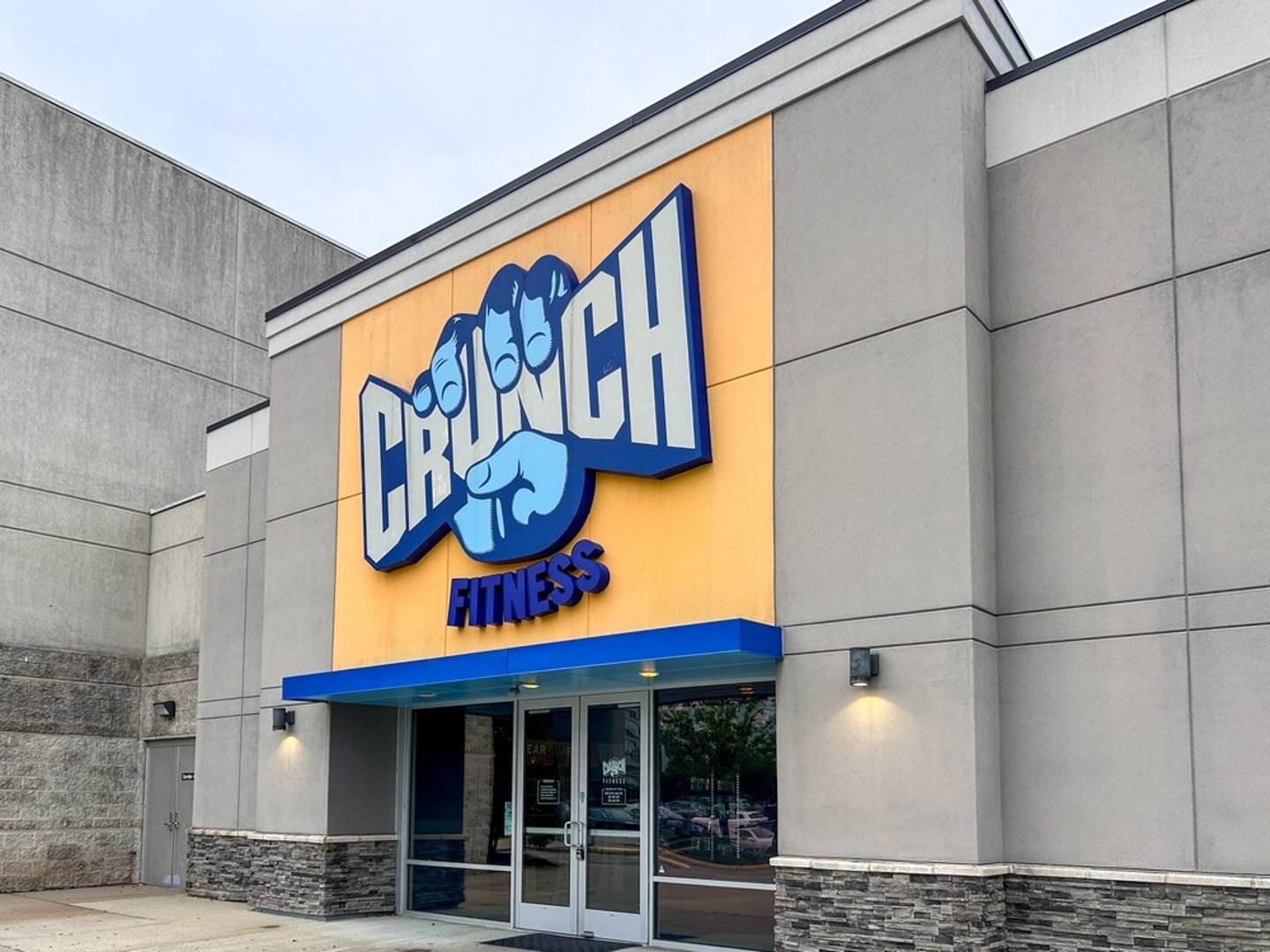
Crunch Fitness is one of the many fitness chains in aggressive expansion mode. The company operates approximately 550 clubs and is eyeing more than 100 new openings in 2026. John D’Anna, chief development officer at Crunch, says that shopping centers are prime destinations for future gyms because of the “synergies” between tenants.
“We signed approximately 4.3 million square feet of retail space in 2025. That’s an increase of about 48% from 2024,” noted D’Anna. “Grocery-anchored centers and stores that are tried and true are key factors in a site selection. Our peak times are very complementary to other retailers, which helps attract steady and shared customer traffic that we and our co-tenants benefit from.”
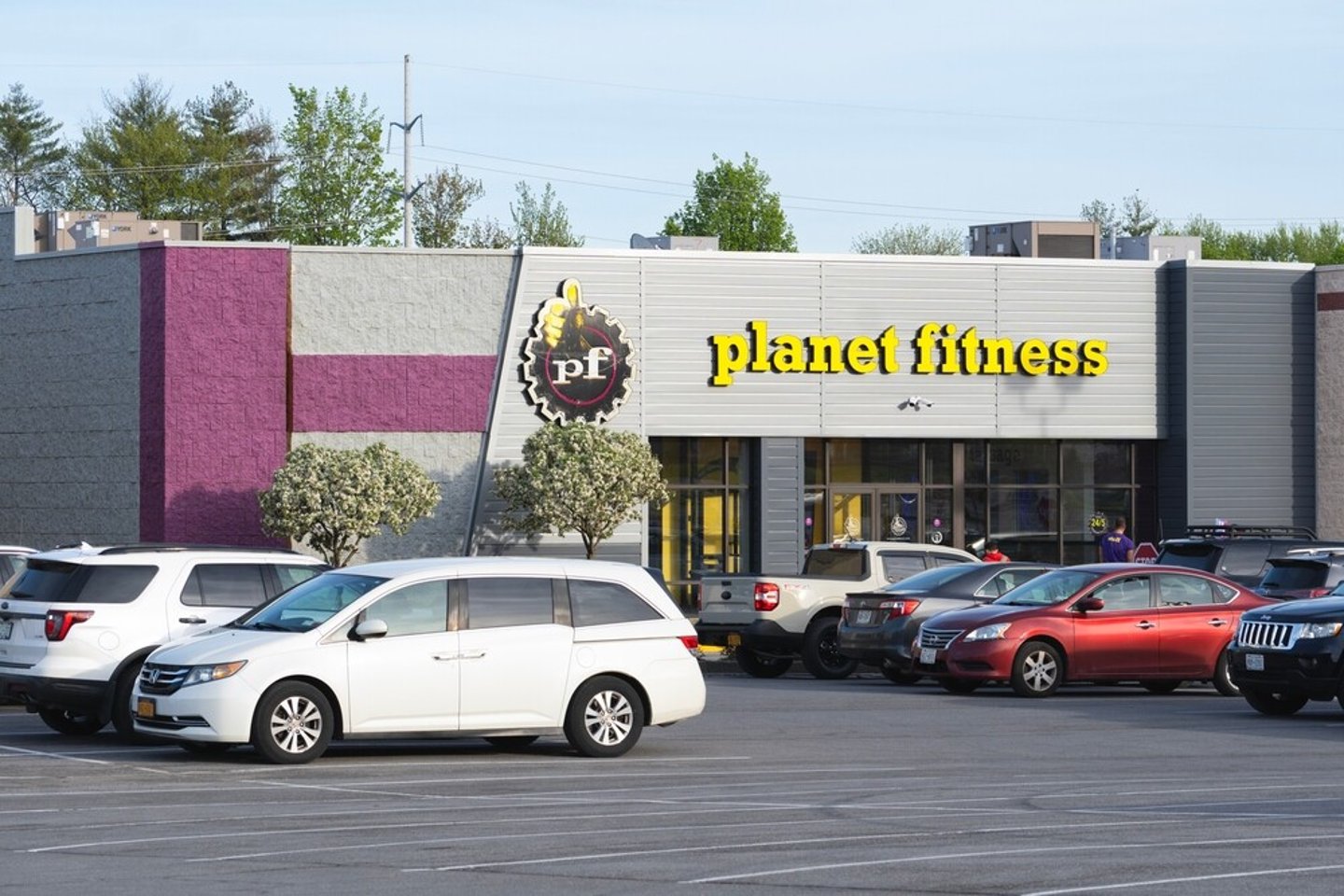
While the larger fitness franchises are still being selective about where to expand, looking at demographics, median income and more, Harding noted that the chains are flexible with the properties they are choosing to expand into. Of three recent deals that LMC did with Planet Fitness, each is located in a different type of shopping center, located alongside a variety of co-tenants.
“One Planet Fitness location is 25,000 square feet – a little bit of a smaller space – and we’re negotiating a national retailer adjacent to them with a McDonald’s on a pad,” said Harding. “Another location is on a busy state highway, but in a medium-sized neighborhood shopping center without a grocery anchor. Visibility and access are important. Fitness chains want to find spots that don’t overlap too much on their other locations, and spots that fit them demographically.”
D’Anna noted that while Crunch’s typical square footage is on the larger side, the company isn’t shying away from smaller spaces. The chain debuted its Crunch 3.0 format last year, which features new training and group fitness spaces, recovery areas and more, allowing for a more creative approach to opening a new location.
“We’re nimble enough with respect to our designs where some of our criteria are changing, and we’re able to repurpose some of the studios within a club in order to have two or three different functions,” he said. “In certain markets, based upon the demographics, there may be less cardio equipment and more strength equipment. It’s very dependent upon the demographic, but then box size comes into play as well.”
Hunting for available spaces through 2029
Commercial real estate availability has been at a well-documented standstill. However, due to a spate of high-level retail bankruptcies in recent years, fitness chains are finding new opportunities to expand into shopping centers.
“Bigger fitness chains are generally taking some sort of second-gen space, whether that’s an old Party City or Bed Bath & Beyond, or maybe an old grocery store that went out of business,” said deVilliers. “Occupancy is at a record high in our sector. Fitness chains are monitoring bankruptcies and looking at filling their pipelines in ‘27, ‘28 and maybe even ‘29, because they are seeing real growth in health and wellness.”
D’Anna, who noted that Crunch is eyeing “consistent” expansion over the next four to five years, said the chain is looking at any and all available properties for new growth.
“There are a number of second-generation prospects that are out there that we can capitalize on,” he said. “The pharmacy boxes are challenging primarily because of the parking, but they are usually 12,000 to 14,000 square feet. If that ceiling height is sufficient enough to throw a mezzanine in there, we’re all over it. We want to take a look at every single opportunity that’s out there, within reason.”
The “fitness collection”
While larger chains like Planet Fitness, Crunch Fitness and LA Fitness are snatching up the larger spaces at neighborhood centers, boutique fitness tenants are also adding diversity to properties.
Citing recently-opened or soon-to-open centers in Old Bridge, N.J. (anchored by a Target and a ShopRite), Cheshire, Conn. and Holbrook, N.Y. (each anchored by a Whole Foods), deVilliers said that fitness tenants such as Club Pilates, SoulCycle and others that have smaller square footage requirements are important in bringing a property to full occupancy.
“Regency is active with ground-up development and redevelopment, and I would say that as we’re merchandising a center, we are paying a lot of attention to fitness,” he noted. “We are geared towards a little bit smaller of a shopping center with an average size of around 130,000 to 140,000 square feet. Sometimes you want to lean in more to the boutique chains. Three of those tenants can kind of act as a ‘collection’ of fitness.”
With health and wellness emerging as a top priority for consumers — especially younger ones with growing spending power — fitness chains are expected to continue snatching up retail space that becomes available.
“This category is trying to grab good space that’s a fit for them while they can,” said Harding. “We’re seeing focused, steady expansion from gyms and other similar uses.”