Dining, decor and deals: Why Americans are spending more on holiday fun this year

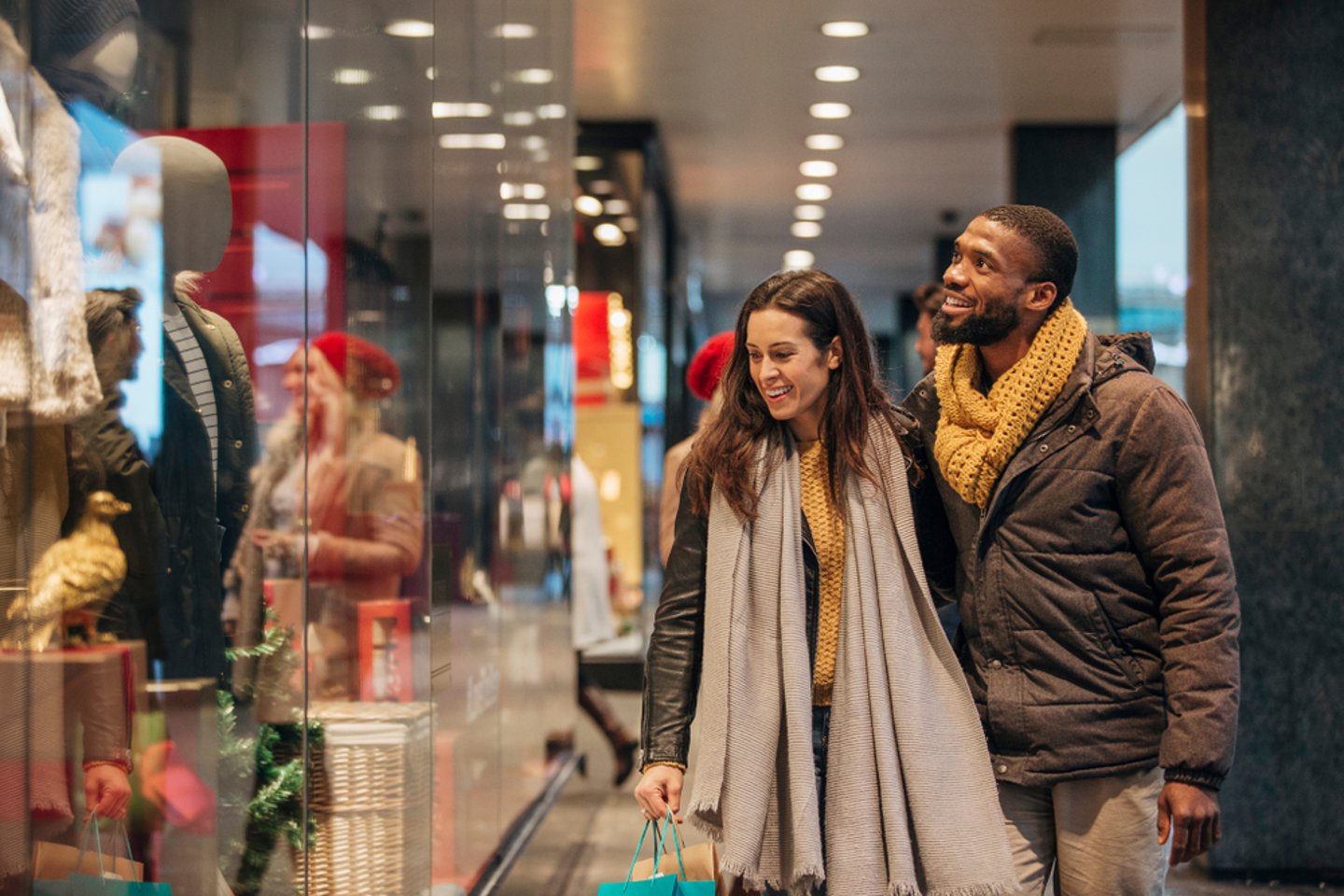
Holiday budgets are expected to rise this year, with dining and entertainment seeing an outsized portion of the spending.
JLL's Holiday Shopping Survey found that Americans plan to spend $1,243 on the holidays this season, up 9.7% from last year and nearly back to where budgets stood two years ago. The firm noted that consumers are prepared to spend after scaling back last year, when planned holiday spending was $1,133 per household.
The majority of the holiday budget increase is expected to go towards food and decorations, up 16.0%, and to entertainment and dining out, up 17.3%. Gifts, which increased only 3.1% compared to last year, now account for just under half (48.1%) of the season's budget which is slightly less than last year.
“Entertainment, food and decor are growing significantly, which isn't always the case year over year,” said Keisha Virtue, manager of retail research at JLL. “There is still a genuine desire to enjoy the holiday experience.”
Naveen Jaggi, president of retail advisory services at JLL, noted that the increased consumer spending is a sign of consumers’ resilience in the face of ongoing inflation and high gas prices, which have impacted consumers for most of the year.
“I am always surprised by the optimism and resilience of the consumer,” noted Jaggi. “For two years, I've been waiting for consumers to pull back given inflation, geopolitical conflicts, and rising gas and housing costs. Yet, surveys consistently show strong consumer confidence from back-to-school through the holidays.”
Mass merchandisers remain the most popular holiday shopping destination, according to JLL’s report, with more than half (54.6%) of respondents planning to make a trip to one, although this is a drop from 62.2% last year. Department stores moved to the second most-common destination at 53.4%.
Jewelry was the biggest gainer from last year, rising to 25.3%. Electronics retailers lost the most ground, falling to 32.2% from 39%, consistent with fewer shoppers buying tech as gifts for others, JLL said.
The average shopper plans about five stops, according to the survey. Those planning one or two stores expect to spend $863, while those planning to visit between six and nine expect to shell out $1,550. For the shopper who plans to visit more than 10 stores this year, the average budget is $1,656.
Another big winner from JLL’s report was enclosed malls. More than half of shoppers (55.3%) plan to visit an enclosed mall this season, up from 49.9% in 2025. Mall shoppers budget $1,357 for the holiday season, compared to $1,101 for those who aren’t planning to visit a mall.
“The mall sector has undergone a healthy reset over the last decade by shedding underperforming properties and focusing capital on quality locations,” said Jaggi. “Malls have improved their curb appeal, food options and entertainment offerings. Owners are also incorporating non-traditional anchors – like grocery stores, Target or Dick's House of Sport – into vacant department store wings. That variety makes the mall a true one-stop destination.”
JLL found that a majority of consumers plan to shop deal days both in-store and online, though there was some slippage from last year. Black Friday remains the anchor, but dipped to 39.8% in-store and 55.1% online. Cyber Monday fell hardest online, down to 46.9% from 55.2%. The all-season option, which was the top in-store answer last year at 46.3%, dropped to 39.8%.
Thanksgiving Day rose to 31.8% in-store from 25.8%, with affluent shoppers driving the increase. Nearly half of households that earn over $150,000 will shop in-store on Thanksgiving, compared to 14.7% of households that earn under $50,000.
Holiday shopping start dates keep drifting later, according to the report. Just a quarter (26%) of shoppers will begin before October, and only 42.4% by Halloween. The busiest starting points now sit between Halloween and Black Friday weekend, at 19.6% each.

“Modest-income shoppers are starting their shopping around Black Friday, while higher-income consumers begin as early as October,” said Virtue. “However, both groups are actively looking for deals.”
“Retailers need to be highly targeted with their promotional strategies,” added Jaggi. “Because supply chains are cleaner and inventories are balanced compared to previous years, deep storewide discounting isn't as necessary. The first two weeks of November represent the sweet spot to launch targeted promotions that drive foot traffic into physical stores before consumers default to ordering online.”
When it comes to finding holiday inspiration while on a budget, many Americans plan to use artificial intelligence tools. Six-in-10 shoppers will use it somewhere in their holiday shopping, with gift ideas being the most popular use at 40.5%, followed by using it to compare prices and save money at 33.7%.
Nearly one-in-five (19.4%) AI users will ask their chatbot where to shop this holiday season. Those in this group plan to spend 65 minutes per shopping trip, and they are close to twice as likely to head to a mall for their holiday needs.
“AI engagement is heavily skewed by income and demographic,” said Virtue. “Around 80% of high-income shoppers plan to use AI in some capacity, compared to roughly 40% of modest-income shoppers. The speed at which consumer adoption has surpassed 50% was surprising.”
Looking ahead, Jaggi said while the findings of JLL report are positive, consumer sentiment could still shift before consumers do the bulk of their holiday shopping, especially with the midterm elections around the corner.
“What consumers say in a September survey can differ from what they actually do in November,” said Jaggi. “Political developments, midterm elections, and broader global events create anxiety that could alter spending behavior as the season progresses. Retailers have sorted out their supply chains and pricing models, but external macroeconomic and geopolitical factors remain the primary wildcards.”
JLL’s full report can be found here.