
Claire’s Bankruptcy: A lesson in innovation without data-driven strategy
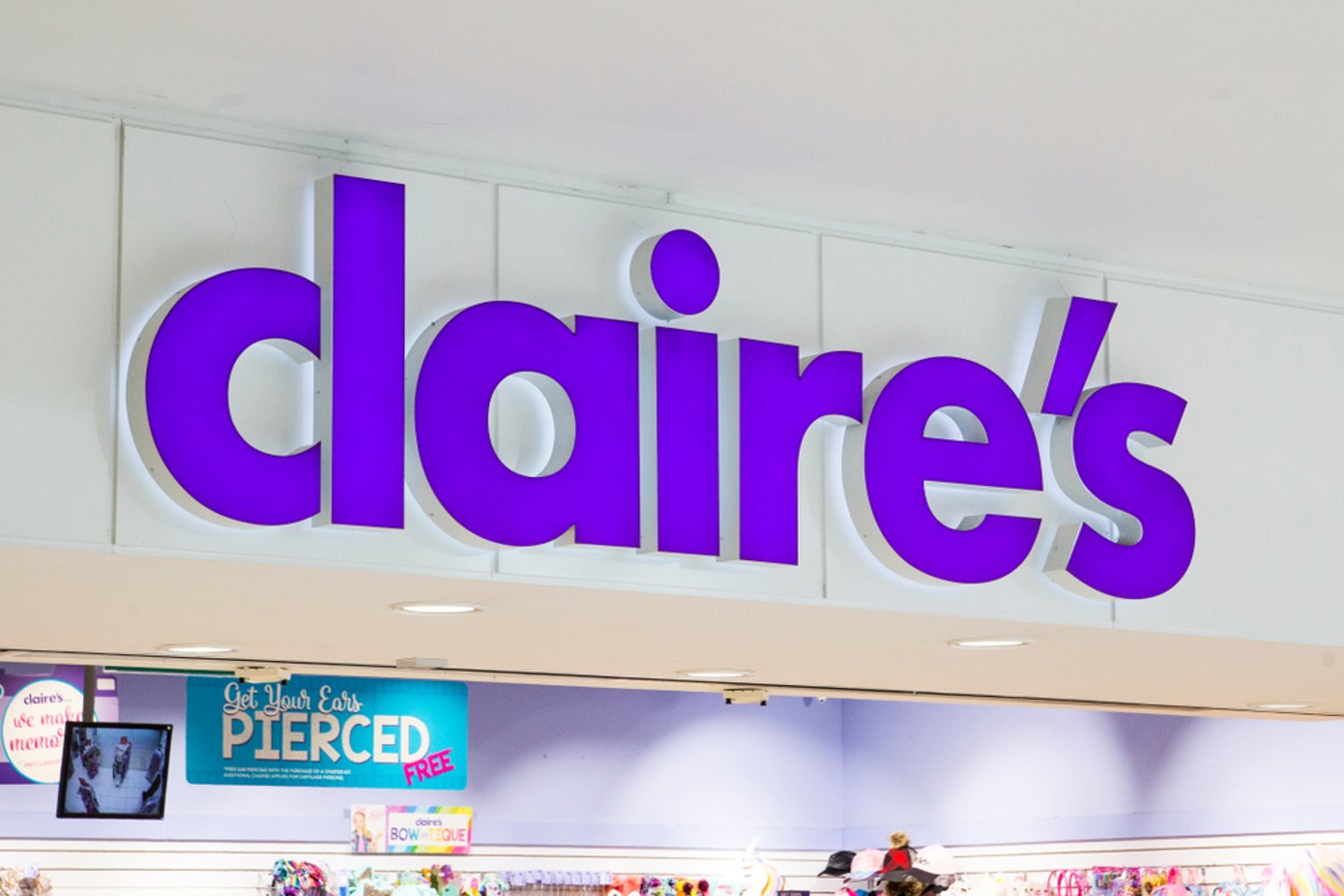
Claire’s journey — from bankruptcy to its recent acquisition by a private equity firm — has been a rollercoaster for one of the most recognizable names in accessories.
How did such an iconic brand end up needing a strategic rescue? While many factors influenced the retailer’s bottom line, such as changing consumer habits and retail headwinds, a more nuanced catalyst played an outsized role: Claire’s wasn’t short on innovation, it lacked a data-driven strategy.
In addition to its retail stores, Claire’s utilized a concessions-selling approach, a form of consignment selling, for its products at third-party retailers. This model enables a retailer to sell a product without purchasing the inventory upfront; the supplier is paid for its goods once it is sold, typically batched at an agreed upon timeframe (i.e. daily, weekly or monthly).
Using this approach, Claire’s boosted operational cash flow so successfully that the retailer transacted early $100 million in inventory on consignment at other retailers. And while this approach impacted their operating capital, the model lacked analytical rigor, limiting its ability to extract actionable insights.
By the time Claire’s filed for bankruptcy, the retailer was operating 2,600 of its own stores, 300 franchises and selling its products in thousands of other retailers, including CVS and Walmart. Their team strategically established demand and infrastructure for its products. But product distribution is only part of the equation for retail success. Inventory stocked without a deep understanding of what’s moving off the shelves puts business forecasting squarely in the guessing game.
Like most retail/supplier relationships, Claire’s only received sales and remittance data into its product movement at the thousands of third-party stores that sold its inventory.
Without a robust internal system to analyze this sales data and track it against deliveries, the retailer lacked valuable insights to reduce shrink or prevent out-of-stocks. Merchandising, as a result, was an exercise of prediction and forecasting, rather than being tied to sales insights.
The ability to analyze this data would have empowered their team to make more strategic inventory decisions to improve performance. Were charm bracelets a popular product, and headbands collecting dust on the shelves? Were purple accessories all the rage in East Coast stores and blue items in the South? Data would have highlighted these trends and influenced merchandising accordingly.
Concession-based models are gaining momentum. Many luxury brands, including Burberry, Louis Vuitton and Gucci, leverage this arrangement within department stores. It is also becoming popular online in the form of e-concession models, as well as in “store within a store.” Its success has grown because there is a clear advantage for both suppliers and retailers: retailers reduce inventory risks and suppliers gain better visibility into product performance. A mutually beneficial relationship is established where coordination gives way to efficient replenishment and stock management based on actual demand patterns.
But gaining these insights is wholly dependent on the availability of data and how quickly it can be accessed. The consignment model employed by Claire’s did not enable robust, real-time analytic tracking across sales, margins, out of stocks, and product performance at the SKU level. So while Claire’s inventory model helped free up capital and limited upfront investment in inventory, it failed to unlock data-driven insights that could influence effective product decision-making.
This example of embracing innovative models without leveraging accompanying data is a cautionary tale. As retailers face increasing challenges from economic uncertainty, evolving consumer preferences, and online bargain hunting, understanding sales at the granular level can mean the difference between growth and loss.
Consignment selling is an effective tool for both retailers and suppliers, but its impact is stunted if it fails to capture sales data in real time. Models like scan-based trading (SBT) can provide granular data revealing which products perform best, when, and where.
It can identify, for example, when purple items spike during LSU games or red items fly off shelves in Alabama territory. This fosters strong retailer-supplier relationships by offering detailed insights into inventory movement down to the UPC level, enabling retailers and suppliers to collaborate on pricing, product selection, and promotions. Claire’s, however, lacked the technology to capture insights that made managing consignment items on a SKU level successful.
As a business, Claire’s did not lack innovation. The retailer was clearly employing tactics that helped its bottom line and created opportunities to expand its customer base. But without access to data, these initiatives ultimately fell flat. Now, as the brand begins a new chapter under its private equity owners, a more strategic, data-driven reassessment of its sales model could be key to unlocking sustainable growth.
There is a lesson to be learned here for all retailers: Innovation without the foundation of data is more often a gamble than a growth strategy.

Mark Landgren is senior VP, Fintech and former CEO of Nexxus Group (acquired by Fintech). Fintech works with over 250,000 retail and hospitality businesses.