Finance & Capital Management

  • LIGHTING REBATE TRENDS

    About two-thirds (64%) of the United States is covered by prescriptive lighting rebates, according to BriteSwitch, a rebate fulfillment company. These rebates can significantly reduce the installed cost of new lighting in existing buildings and improve payback by 20% to 25%, which would reduce a two-year payback to about 1.5 years.

  • EXTENDED OVERTIME REGULATIONS

    How businesses should respond to the new rule

    In May, the Department of Labor unveiled new overtime regulations. The biggest change — and the one that will impact retailers the most — is the nearly doubling of the salary threshold that entitles most salaried workers to overtime pay from $23,660 to $47,476, which is based upon the 40th percentile of the lowest-wage region, the South. The previous cutoff was set back in 2004.

  • NO GROWING PAINS HERE

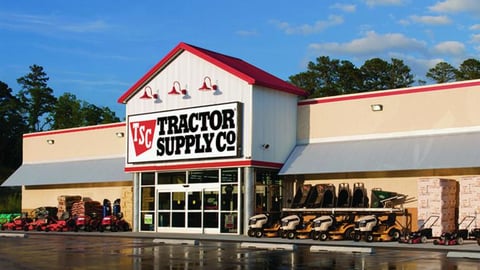
    Tractor Supply Co. supports expansion with science

  • TODAY’S CONSUMER IS SMARTER— IS YOUR BOARD?

    Today, when it comes to adding new members to your board of directors, creating a balance between industry experience and innovation is extraordinarily important. Filling board seats with industry veterans and compliance experts may feel comfortable in the short term, but to adapt to today’s savvy and demanding consumer, companies must be more forward thinking.

    We’ve all witnessed the recent evolution of the C-suite — companies bringing in new, young talent, often from other industries, to modernize a brand, enhance the store experience or to leverage technology.

  • TWO TYPES OF INVESTMENTS

    Joel Alden, partner in the retail practice at A.T. Kearney, said that investments in technology and physical stores mainly fall into two distinct categories: maintenance investments or growth investments.

    “For maintenance investments — replacing a degrading building infrastructure, for example — the cost of not making the investment is critically important,” Alden said.

  • ASSESSING IT

    It’s important to look beyond the traditional hard metrics of ROI to determine the bottom line value of an IT solution. Here are five key areas CFOs need to consider when evaluating technology:

    1. Sales growth: There are many types of applications that can drive increased sales, but some of the most common are solutions that optimize pricing, including markdowns. Determining the ideal price for maximizing sales without cutting profits at a store level is too complex for merchants to do on their own.

  • New strategies for CFOs

    From investments to support omnichannel initiatives to energy efficiency programs and equipment upgrades, prioritizing and approving capital expenditures has become increasingly complex for retail CFOs.

    “Retail CFOs are performing a high wire balancing act these days,” said Rod Sides, vice chairman and retail and distribution practice leader for Deloitte. “Online sales are growing while the traditional business is flat to declining, but still accounts for 80% of the revenue.

  • HOW REAL-TIME WORKFORCE MANAGEMENT BENEFITS CFOs

    Reflexis is a leading provider of real-time store execution and workforce management solutions.

  • NOW TRENDING ...

    Enough of the “retail is dying” narrative that has dominated so many headlines the past few months. It’s way overplayed.

    Brick-and-mortar is evolving, not dying. And it’s full of exciting new players — many of them digitally native — that are infusing the industry with something it can always use: new blood. Here’s a quick rundown of some of these newcomers to the physical space:

  • Cloud makes New Hampshire Liquor Commission ERP more potent

    When it comes to supporting liquor sales, the Granite State is looking for a rock-solid enterprise foundation.   The New Hampshire Liquor Commission, which operates 79 retail stores across New Hampshire, is turning to the Microsoft Dynamics AX ERP platform. The New Hampshire Executive Council has approved a contract with global Microsoft Dynamics partner AlfaPeople to implement and support the application. The $19 million dollar, 10-year contract was won in competition with multiple solutions and through a multi-year selection process.
X
This ad will auto-close in 10 seconds