Finance & Capital Management

  • E-commerce sales boost Express in Q2

    Express delivered solid second quarter results, buoyed in part by e-commerce sales which once again experienced a double-digit increase.

    Same-store sales increased 6%, up 1% from the year-ago quarter. Factoring into that same-store sales increase were the company’s e-commerce sales, which were$59.9 million, up 27% from last year’s $47.2 million.

    Net sales for the quarter increased a better-than-expected 7% to $486.2 million, from $454.9 million. Net income rose 7% to $16.8 million from $15.9 million and was in line with Wall Street expectations. 

  • Snyder's-Lance strengthens its national distribution network

    CHARLOTTE, N.C. — Snyder's-Lance has acquired all assets of Stateline Service Corporation, a snack food distributor in Massachusetts, as part of its growth initiative. 

  • Holidays looking happier for Zale

    Surprisingly strong sales at Zale’s nearly 1,700 stores propelled the company to its strongest full year financial performance in six years.

    Zale said total company same store sales for its fourth quarter increased 5.6% and margins expanded which allowed the company to delivered its highest net income in six years for its fourth quarter ended July 31. Same store sales at Zale branded stores were even higher at 8.1% on top of a prior year increase of 12.3% the prior year.

  • Hot on the heels of Whole Foods

    The Fresh Market is hungry for market share in the natural foods space and on the heels of solid second quarter growth said it was accelerating an already ambitious new store opening schedule.

    The operator of 139 stores said sales for the second quarter ended July 28 increased 13.3% to $354.8 million and same store sales advanced 3.4%. Profits increased to $15.6 million, or 32 cents a share, compared to $13.3 million, or 28 cents a share the prior year.

  • Williams-Sonoma sitting pretty for Q2

    SAN FRANCISCO — Specialty home products retailer Williams-Sonoma is reaping the rewards of a rebounding housing market this second quarter ended Aug. 4.

    The company’s net revenues grew 12.3% to $982 million versus $874 million in the year-ago quarter with comparable brand revenue growth of 8.4%, on top of 7.4% in the year-ago quarter.

  • Brown Shoe Co. swings from loss to profit

    St. Louis – Brown Shoe Company swung from a net loss in the second quarter of fiscal 2012 to net earnings in the second quarter of fiscal 2013. The retailer also boosted net sales and same-store sales.

  • Tiffany net earnings sparkle in Q2

    New York – Tiffany & Co. grew its net earnings 16% during the second quarter of fiscal 2013, and also increased net sales and same-store sales. Net earnings increased 16% to $107 million, from $92 million in the same quarter a year earlier.

  • Investing In Neighborhood Retail, Chicago-Style

    L3 Capital invests in what it calls prime urban retail, which includes a lot of street retail in the premier cities. "We own retail properties in several neighborhoods in New York City, Los Angeles and Chicago," said Greg Schott managing piincipal.

    At the end of last year, L3 made its first investment in its hometown of Chicago. The company bought four retail buildings along a flourishing four-block retail stretch of Southport Avenue in the Lakewood neighborhood. The cost was $13 million for 17,000 sq. ft.

  • Grocery Evolution

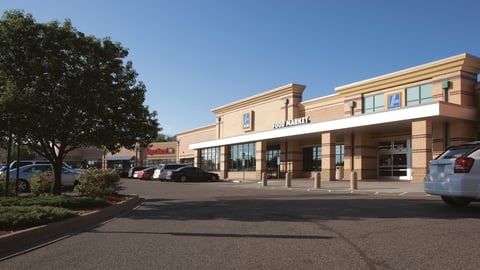
    Widening competition for commodity grocery sales is changing grocery-anchored shopping centers.

    Supermarket-anchored shopping centers haven't changed much since the invention of suburbia. Find a good location, sign a grocery anchor, get a construction loan and some inline local, regional and maybe national retailers, and you're in business.

    Today, however, supermarkets are beginning to change, and supermarket-anchored shopping centers, of course, must follow along.

    Why are grocers changing? Competition from all sides.

  • More Effective Procurement

    Generating revenue through electricity contracts

    The U.S. retail and wholesale establishments make up one of the largest sectors of electricity consumption in the nation. And they’re likely to use even more within the next few years, according to the U.S. Energy Information Administration, whose recent annual report indicates that commercial and industrial entities will lead domestic growth in primary energy usage through 2040.

X
This ad will auto-close in 10 seconds